Congress ceding ground as BJP and AIMIM squeeze India’s secular space
Chasing short-term electoral gains with AK Antony report, Congress dilutes its secular principles, leaving voters unconvinced and political centre hollowed out

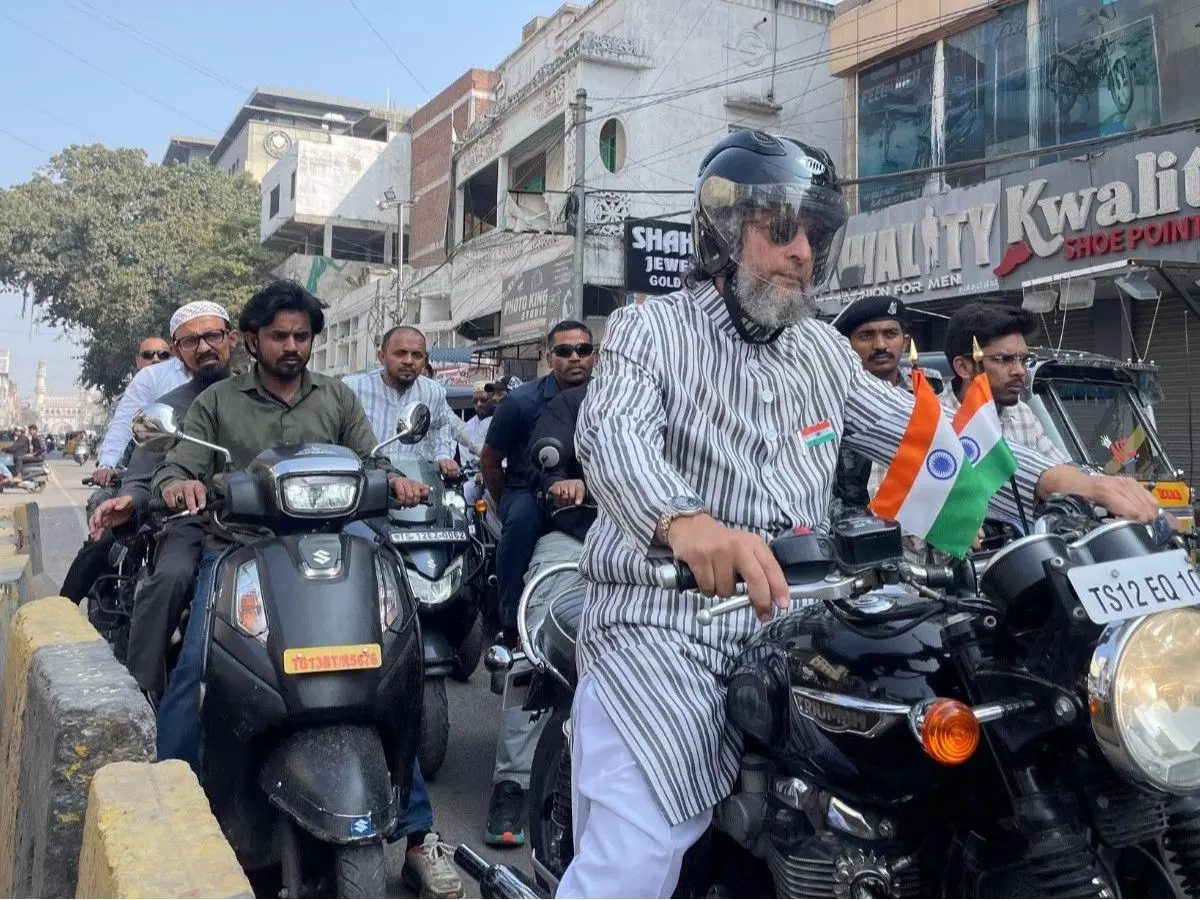
If the BJP has so far been successful in wooing the bulk of Hindu voters to win several recent state-level elections, now it is the All India Majlis-e-Ittehadul Muslimeen’s (AIMIM) turn to make inroads into Muslim-dominated pockets in diverse regions of the country.
This constricts the secular space which non-BJP and non-NDA parties could have well occupied, covered, and used to build upon a suitable discourse to expand their sphere of influence further. It was not to be.
The turn electoral politics has taken in places like Maharashtra and Bihar belies the possibility of any change anytime soon. Opposition parties faced their worst defeats in the recent civic bodies and Assembly polls respectively in the two states. In Maharashtra, the AIMIM won 121 seats in 29 municipal corporations for which polls were held earlier this month.
Growing discontent
In the Bihar Assembly polls last November, the Hyderabad-based mainly Muslim party led by Asaduddin Owaisi won five Vidhan Sabha seats. This left the Opposition in tatters, and the BJP-driven NDA scored its highest ever tally in the state polls. The extraordinary success of the saffron alliance in Bihar leaves no doubt about the deep disappointment of minority-community voters with secular parties.
Also read | Mumbra: AIMIM corporator Sahar Shaikh sparks row over 'green' remark
These parties seemingly drove the minority voters to the AIMIM to such an extent that the opposite effect could swing the majority’s tide in favour of the BJP and Janata Dal (United) alliance.
Similarly, Maharashtra’s secular space also seems to have vanished, at least for now. A newly elected AIMIM councillor, Sahar Shaikh from Thane district, has vowed to paint her ward Mumbra virtually green.
Growing saffron space
Thus, the BJP-Shiv Sena alliance could move ahead to put their saffron stamp on most of Maharashtra more sharply, leaving no chance for anybody to think of any change anymore. The politics of two distinct hues has come to signify two such extremes that together these may not allow any scope for any other shade of ideology or opinion to emerge from anywhere.
This may also not remain confined to Maharashtra since Owaisi’s party plans to jump into many forthcoming electoral battles in states as far from his Old Hyderabad’s ancestral bastion as West Bengal and Uttar Pradesh.
Also read: How AIMIM expanded its footprint in Maharashtra’s local body elections
His moves have already made some of the Muslim Congress leaders worried. The party’s former MP Rashid Alvi has openly expressed his concern about the rising graph of AIMIM among Muslim voters. “If the Muslim leadership continues to be ignored (by the Congress), leaders like Asaduddin Owaisi will continue to emerge,” remarked Alvi recently.
Congress’s desertion of secular space
Like his party peer Shakeel Ahmed, he bemoaned the lack of access for senior leaders like him to the party’s top leadership, particularly Rahul Gandhi. Another senior Congress leader, Nasimuddin Siddiqi, has left the party.
Ahmed quit even before that while vowing that he would never join another party as he wanted to remain loyal to Congress’s ideology. Alvi, too, pointed out that none of the Muslim leaders who resigned from the Congress for various reasons—though mainly because of being cold-shouldered by the party high command—joined the BJP like most of their disgruntled party peers belonging to the majority community. “They may well come back to their old party when the Congress comes to power again,” remarked Alvi.
This shows the Congress has been shy of promoting its Muslim leaders amid fears of a possible Hindu backlash. The roots of this lie in the report of a committee headed by the Congress’s former Union Minister AK Antony that went into the causes that led to the Congress’s loss of power to Narendra Modi and the BJP-led NDA in 2014.
Also read: Parties that lost in Maharashtra civic polls should introspect: Owaisi
The committee noted that the party’s secular approach had created a perception among voters that it favoured minority communities more than the majority. This generated a feeling of alienation among the majority community, leading to the loss in the 2014 Lok Sabha polls.
Then and now
But the virtual desertion of the secular space by the Congress after the Antony report has given an open field to its rivals of all sorts. These include communalists and caste leaders of myriad hues. Countering their charge by employing their tactics is not taking the party anywhere for years now.
The Congress’s secularism in the past was based on an imaginative modernism. It did not shun religion but dated parochialism because it had the potential to mar the collective emancipation of Indians, cutting across all distinctions. The top leadership of the Congress in the past used to be as good as that of the West and yet rooted in the Indian ethos.
As against this, the parties that rivalled the Congress gave up their inhibitions to flaunt these ideas, howsoever dated, as a route to salvation. If under the Congress rule Indians could dream, its opponents guided or rather pushed them into sleepwalking. The inability to demonstrate the difference between the two on the part of the Congress’s current leadership is what has made the party suffer.
Also read: Maharashtra civic polls: Amid saffron storm, ISLAM party dominates Malegaon contest
Today, the grand old party swings between social justice and soft Hindutva, though, for decades, it did not take sides with either Mandal or Mandir. But now, like the BJP, Congress too wants to have the best of both worlds whereas the task before the party has always been—and still is—to break this vicious cycle.
No possibility of redemption
By diluting, even if not foreclosing, the secular option, the party is eliminating the very possibility of any kind of redemption. It is so because secularism is a precondition to justice—whether social or economic—at both inter- and intra-community levels. The latter is the case since the caste divide often is as sharp—or maybe even sharper—than communal disconnect.
To add insult to injury, the larger secular brigade of non-BJP parties is hardly any different from the Congress, given their fast-waning interest in secularism. This cannot be starker anywhere than the most populous state Uttar Pradesh.
The Samajwadi Party (SP) led by Akhilesh Yadav is the main Opposition party in the state. It could win more seats in the 2024 Lok Sabha polls than the BJP in UP with a staunch Muslim support, besides that of other communities or castes. Yet, Akhilesh and his SP show more interest in battles raging within the Hindutva fold than showing concern over umpteen instances of quick encounters, razing of buildings by bulldozers and arrests of Muslims, including some of its own leaders like former UP minister Azam Khan. Some of these actions are often unleashed in disregard to the due process of law or even during trial.
Also read: 'Will shut down Akhilesh shop': Owaisi sets his eyes on Muslim votes in UP
This leaves little hope—at least at the moment—for parties like the SP, the Congress, and similar other social and democratic outfits that contest polls against BJP or its allies, to reclaim the secular space. More so since their leaders are also seemingly busy sleepwalking in their search for power rather than waking up to the socio-political challenges and a potential threat to peace at hand, thanks to both Hindu and Muslim communal entities, big or small.