Funeral diplomacy: India’s actions raise questions on its West Asia policy
Has India concluded that the fragile truce is temporary, fighting will resume soon, and that its interest lies in siding with the US and Israel rather than Iran?

The West Asia war has exposed some troubling aspects of India’s foreign policy. It’s increasing tendency to wait, watch and respond rather than anticipate and influence. The problem is not merely tactical caution.
It is also the erosion of strategic initiative and moral clarity that, in the past, made India a voice that mattered, even though it was neither an economic nor a military power.
India’s response to the 40-day US-Israel war on Iran highlighted New Delhi’s missteps. The point is not whether India supported Iran or Israel, but that throughout the crisis in its extended neighbourhood, Delhi remained largely an observer. There was no attempt to shape international opinion. No visible diplomatic initiative. Statements confined largely to appeals for restraint.
Muted response draws flak
“India’s foreign policy seems to be floundering, with no vision, no moral compass,” says Talmiz Ahmad, an expert on West Asia and a former ambassador to Saudi Arabia.
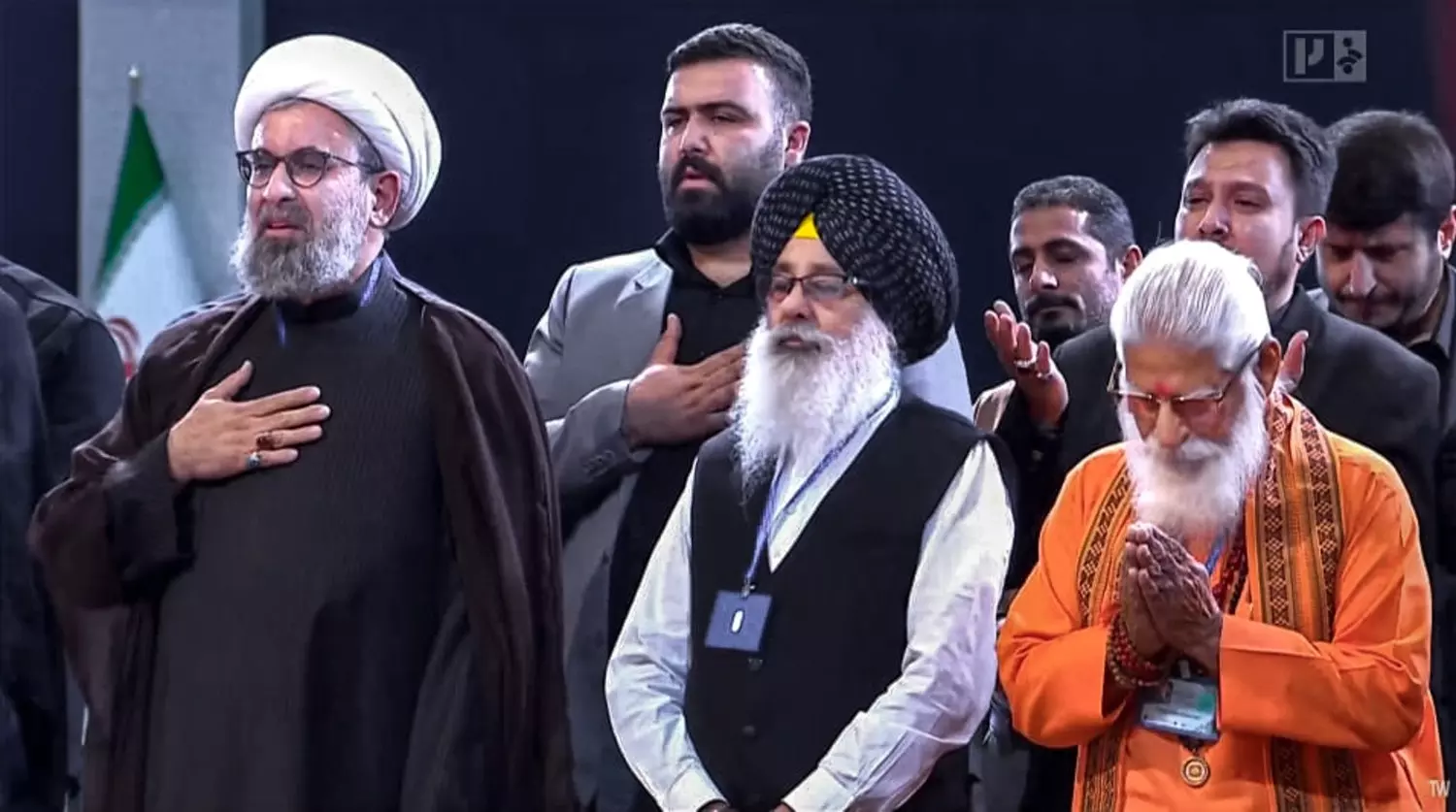
Also read | Who are the Indians attending Iran’s late Supreme Leader Khamenei’s burial?
Just about 48 hours before the Israel-US strikes began, Prime Minister Narendra Modi was rounding off a visit to Israel. Why he decided to travel at that particular time is not clear, when it was evident to even a casual observer that a strike on Iran was imminent. That made for bad optics.
When Iran’s head of state, Supreme Leader Ayatollah Khamenei, was killed, there was no condolence message. This for a country which describes its relations with Iran as both “historical and civilisational”. The logic for this remains a mystery.
Retired diplomats riled
India’s retired diplomats, including former NSA and foreign secretary Shiv Shankar Menon, normally reluctant to comment on the government, were riled. Menon openly about the lapse. When it came to signing the condolence book at the Iranian embassy, it was left to Foreign Secretary Vikram Misri. No foreign minister or a Cabinet minister.
The latest decision on the funeral delegation fits into the same pattern. One way to make up for the initial transgression by New Delhi would have been to send a high-level representation to attend the funeral of Iran’s former Supreme Leader Ali Khamenei, to begin on the fourth of this month.
India’s representation at the funeral will be the Governor of Bihar, Syed Ata Hasnain, and Minister of State in the MEA, Pabitra Margherita. Granted, Prime Minister Narendra Modi will be away on an overseas tour. Foreign Minister Subrahmanyam Jaishankar is accompanying him.
“A simple symbolic gesture would have gone a long way to send out the right signals to Iran,” says Talmiz Ahmad, former ambassador to Saudi Arabia.
India’s geopolitical calculations
“Prime Minister Modi had the option to change his programme and go to Iran. That would have compensated for India’s non-response when Israel assassinated the Supreme Leader on February 28,” says retired ambassador KP Fabian.
He went on to add, “Lt General Hasnain is a good choice as he would know the protocol to be observed at the funeral. But, the Vice President could have led the delegation as was done earlier.” In May 2024, when Iranian President Ebrahim Raisi and Foreign Minister Amir-Abdollahian were killed in an air crash, New Delhi sent then Vice President Jagdeep Dhankhar for the funeral. What happened between then and now is difficult to gauge.
What does this all mean? Surely it is clear to the Modi government by now that Iran will not buckle under; the Iranian leadership, despite the heavy blows, is here to stay. Why the short shrift to Iran?
Has India come to the conclusion that the fragile truce is temporary and that, sooner or later, fighting will resume, and that its interest lies in siding with the US and Israel?
India needs US technology and investments for development and does not wish to antagonise Trump, especially as the bilateral trade negotiations are on. China is also a factor in New Delhi’s calculations, though at the moment there is relative stability in US-China ties. Another factor in the equation is the Modi government’s ideological affinity with Israel, as well as the fact that Israel has often come to India’s aid when others looked away. Much of this is kept under wraps.
From principles to pragmatism
Scholar Prasanta Pradhan of IDSA points out that India, in recent years, has significantly expanded its engagement with the Arab states and Israel, both of which maintain close strategic partnerships with the United States. Iran, crippled by decades of international sanctions, and apart from the Chabahar port project, did not have much else to offer.
“The war in the region is unlikely to bring about a fundamental shift in India’s West Asia policy. India is expected to continue deepening its strategic and economic engagement with the Arab states and Israel while maintaining a pragmatic and largely transactional relationship with Iran based on specific areas of mutual interest,” says Pradhan.
Also read | Khamenei's funeral: Iran invites Nabin, Kharge; India to send delegates
India under Modi has broken from its past traditions. It is much more transactional and does not look to take moral positions, unlike in the past. There was a time when India was a leading voice against apartheid, was one of the first non-Arab nations to recognise the PLO, was a consistent supporter of Palestinian statehood, much before the two-state theory became popular, and a leading voice of the anti-imperial struggle.
Mahatma Gandhi’s non-violence struggle was a source of inspiration to people worldwide. All that has been abandoned, considering India has not raised its voice against Israeli action in Gaza or Lebanon. Pragmatism guides India’s decision-making. This explains much of India’s silence.
While every country looks to its national interest, this does not mean abandoning principle altogether. The diplomacy that earned India influence after independence was not built on military power or economic weight. It rested on the belief that India would speak when fundamental norms were at stake. The challenge today is to recover some of its lost moral ground while looking to self-interest.