Hurt by Operation Tiger, Uddhav’s Sena pivots to 'true' Hindutva; will it work?
By branding itself as the true guardian of Hindutva, the UBT Sena risks alienating its secular base and fracturing the delicate anti-BJP alliance with Congress

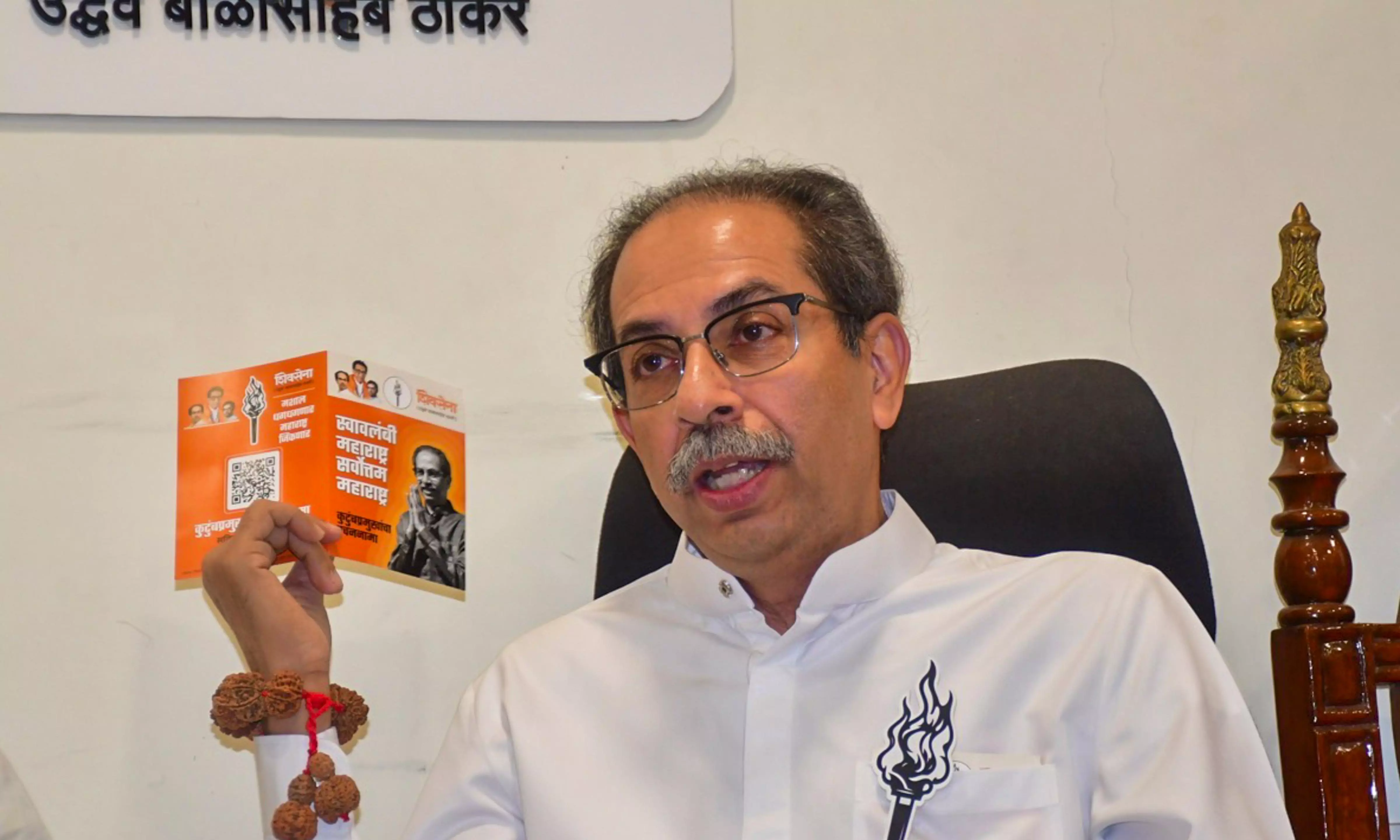
As speculation over the BJP’s alleged ‘Operation Tiger’ and a possible split within the Shiv Sena (UBT)’s parliamentary party becomes imminent, the Uddhav Thackeray camp has chosen to deflect questions about defections or numbers by reopening the oldest ideological battle in Maharashtra politics: Who truly owns Hindutva?
Party mouthpiece Saamana’s blistering editorial on Monday (June 22) did far more than raise questions over alleged irregularities linked to donations collected for the Ayodhya Ram Temple.
Uddhav is attempting to reclaim what his party considers the original and more honest version of Hindutva while accusing the BJP of reducing faith to political and financial capital.
By invoking Mahmud of Ghazni’s plunder of the Somnath Temple and suggesting that those who allegedly misused money collected in Lord Ram’s name had committed an even greater betrayal, the Uddhav-led party sought to strike directly at the BJP’s moral authority.
Hit by rebellion
The timing was not lost on anyone.
Six Shiv Sena (UBT) MPs — Omprakash Raje Nimbalkar, Sanjay Dina Patil, Sanjay Deshmukh, Sanjay Jadhav, Bhausaheb Wakchaure, and Nagesh Patil-Ashtikar — have confirmed speculation about their imminent defection to the Eknath Shinde-led Sena.
Since the Sena (UBT) has nine Lok Sabha MPs, six members crossing over would satisfy the two-thirds requirement under the anti-defection law, the Shinde faction of the Sena believes.
Also read: At 60, Shiv Sena battles its biggest survival crisis; will the tiger roar again?
While some MPs have remained guarded, Patil-Ashtikar said the issue of development funds had influenced the growing discontent. “Even at this juncture, the kind of language being used against us by the Sena (UBT) leadership only makes us feel we are right in our decision and should stick to it,” he said, without directly addressing allegations that disbursal of central funds was being used to engineer defections.
Party shifts debate to Ayodhya
Yet, even as questions mounted over the party’s parliamentary strength, the UBT leadership chose to shift the debate to Ayodhya. Saamana executive editor and Rajya Sabha MP Sanjay Raut defended his party's stand, recalling the Babri Masjid demolition.
Also read: Sena muddle: Uddhav says ready to quit; Shinde says there is more to come
“When BJP leaders distanced themselves from the demolition to avoid legal consequences, Balasaheb Thackeray had openly accepted responsibility of Shiv Sainiks, choosing not to hide behind politics of convenience,” he said.
The message is unmistakable. Uddhav is attempting to reclaim what his party considers the original and more honest version of Hindutva while accusing the BJP of reducing faith to political and financial capital.
Return of Hindutva pitch
This marks a significant departure from the political language Uddhav adopted after 2019. His alliance with the Congress and the NCP and his tenure as chief minister saw him increasingly invoke “constitutionalism, federalism and democratic institutions.”
Reclaiming Hindutva is only one part of the challenge. The larger question is whether the UBT retains the organisational machinery to convert ideology into votes.
That transformation broadened his appeal among urban liberals and minorities who had long viewed the Shiv Sena with suspicion, particularly after the 1992-1993 Bombay riots. But the electoral dividends have proved elusive.
Watch: 'Numerical strength isn't all': Why Sena-UBT thinks it can comment on Ram Mandir funds row
“The split in the original Sena, the loss of the symbol and subsequent setbacks have forced the Sena (UBT) leadership to confront a difficult reality,” says political commentator Santosh Pradhan. “Opposing the BJP solely through the language of secular politics might not sufficiently energise the Sena’s traditional base.”
Is ‘reclaiming Hindutva’ enough?
For Pradhan, the Somnath analogy is politically revealing because it challenges not merely the BJP's politics but its religious legitimacy. “The Sena was among the earliest political forces to champion Hindutva in Maharashtra. Uddhav appears to be arguing that one can oppose the BJP while retaining ownership of that ideological legacy. Whether voters accept that distinction is, of course, a completely different matter,” he says.
A senior Sena (UBT) leader, speaking anonymously, argues that his party was reclaiming moral ground surrendered to the BJP.
“The BJP wants a monopoly over Hindutva. We’re saying devotion to Lord Ram and respect for Kar Sevaks shouldn’t be weaponised for political management. Balasaheb’s Hindutva was emotional, direct, and honest. We’re reclaiming that tradition.”
Yet reclaiming Hindutva is only one part of the challenge. The larger question is whether the UBT retains the organisational machinery to convert ideology into votes. Pradhan believes the party can revive itself only if it returns to its shakha-based politics and reconnects with grassroots issues. “Years in power have weakened the Sena’s street-fighting instincts – its core strength. The leadership is disconnected from ground realities and local leaders have lost direct access to the top. Unless that changes, the BJP will keep strengthening the Shinde faction at the UBT Sena’s expense,” Pradhan says.
Will Shinde-BJP alliance last?
He also offers a cautionary note for Shinde, pointing to the BJP’s relationships with former regional allies like the Shiromani Akali Dal and the Asom Gana Parishad. “It may appear to be working perfectly today. Until it suddenly doesn’t. Regional allies often discover only much later that the BJP eventually occupies what their political space was.”
Also read: What Shiv Sena (UBT) MPs’ defection means for Shinde, BJP and Maharashtra politics
The Shinde camp calls the Sena (UBT)’s latest rhetoric “laughable”, underlining how it highlights political desperation.
“For four years, they attacked the BJP alongside the Congress and spoke the language of secularism. Now, when they face political extinction, they suddenly remember Hindutva. People can see through this double-speak,” a senior leader of the Shinde faction of the Sena said.
Deputy Chief Minister Shinde has repeatedly argued that his faction, not the Sena (UBT), carries forward Bal Thackeray’s political legacy. His alliance with the BJP, participation in the Ayodhya movement and continued invocation of traditional Sena rhetoric have reinforced that claim.
Sena (UBT)-Congress friendship at risk?
The Sena (UBT) nevertheless appears convinced that Maharashtra still offers space for a distinctly regional Hindutva rooted in Marathi ‘asmita’ rather than the BJP's pan-Indian nationalism. Bal Thackeray successfully fused these two strands for decades.
Whether this ideological pivot can revive the Sena (UBT) remains uncertain as the BJP today dominates the Hindutva space nationally, while the Shinde faction claims Bal Thackeray’s organisational inheritance.
The difficulty for Uddhav lies elsewhere – his alliance with the Congress. A sharper Hindutva pitch risks unsettling a coalition built on opposition to the BJP and a commitment to secular politics. Congress leaders have tolerated the Sena’s ideological ambiguities in the interest of anti-BJP unity.
But a sustained return to Hindutva could create tensions within the alliance and discomfort among minority voters. “The alliance with the Congress was born of political necessity,” says Pradhan. “If the Sena (UBT) foregrounds Hindutva again, it’ll eventually have to explain how that sits alongside its present alliances.”
Whether this ideological pivot can revive the Sena (UBT) remains uncertain as the BJP today dominates the Hindutva space nationally, while the Shinde faction claims Bal Thackeray’s organisational inheritance.
Uddhav appears to have concluded that the battle for the Shiv Sena’s future cannot be fought on the terrain of secular opposition alone. By questioning the BJP’s moral claim over Hindutva itself, he has taken the fight back to the political ground his party once owned. This, perhaps, is the only ground on which it believes it can still survive.