Maharashtra civic polls not a saffron-wash; BJP has reasons to worry, rivals have hope
The reasons for worry, if any, are for Eknath Shinde’s Shiv Sena and Ajit Pawar’s NCP, who, even in Mahayuti’s moment of triumph, stare at an uncertain future

At first blush, the temptation to brand the Maharashtra civic poll results as a massive BJP victory and a humbling of its rivals and allies alike is hard to resist. A closer scrutiny of the results, however, shows a peculiar political reality that blurs the simple binary of the victor and the vanquished.
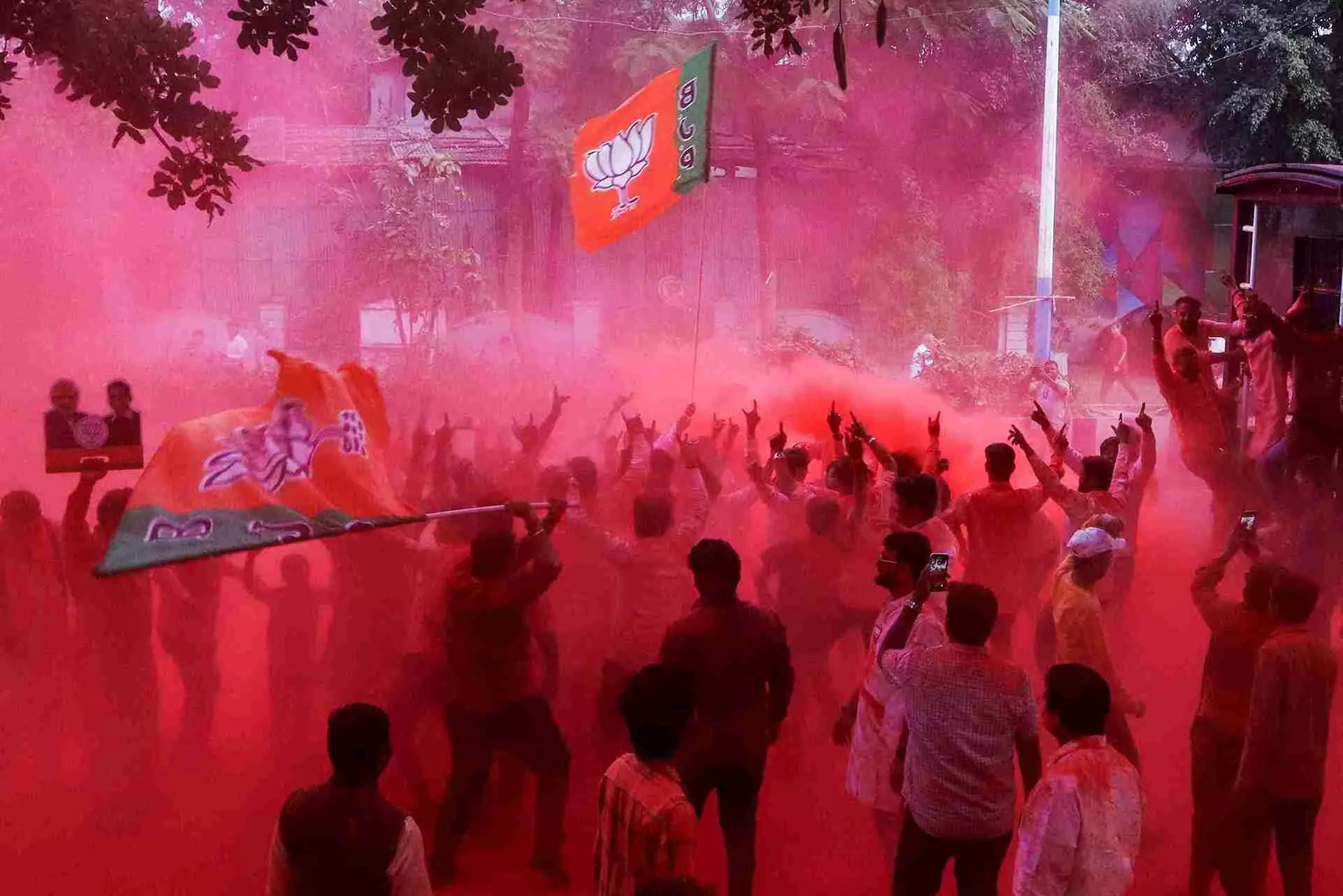
For, while the results declared on January 16 may have triggered instant jubilation within the BJP camp, there are as many reasons for the saffron party to tread forward cautiously as there are for its rivals to draw hope from once the drumbeats die down.
The reasons for real worry, if any, are for the BJP’s allies, Eknath Shinde’s Shiv Sena and Ajit Pawar’s NCP, who even in the Mahayuti’s moment of triumph now stare at an uncertain future.
BJP’s rise in 15 years
In a matter of 15 years, the BJP has gone from a party with just around 300-odd corporators (in the period between 2009 and 2013) across the state to one that now, with 1,425 corporators in its kitty, holds nearly half of the 2,869 corporator seats across Maharashtra’s civic corporations.
Once a pillion rider to the undivided Shiv Sena, whose split it engineered back in 2022 to its remarkable advantage, the BJP now commands a majority of its own in 13 of these 29 civic bodies.
Also read: Mumbai Mayor race: Shinde’s corporators move to hotel
In six others, including the all-important cash cow of the Brihanmumbai Municipal Corporation (BMC) with a budget of nearly Rs 75,000 crore, which exceeds the annual budgets of several Indian states, the BJP has wrested power along with its allies, who now have to contend with the real and present threat of either being gobbled up by the senior ally or be treated like chattel.
Brand Thackeray survives
The results have been such that they make it difficult to say with any degree of certainty who among the other parties had it worse. In Mumbai, the once-warring Thackeray cousins, Uddhav and Raj, buried the hatchet and united their Shiv Sena (UBT) and Maharashtra Navnirman Sena (MNS), respectively, under the Shiv Shakti Alliance banner.
They may have failed to prevent a Mahayuti victory in the BMC that the undivided Sena had controlled for nearly 25 years but it is evident even in their defeat that the Thackeray brand hasn’t altogether lost its hold on the Marathi Manoos.
Also read: BMC results dent Sena (UBT)’s power base, but ‘Brand Thackeray’ survives in Mumbai
The Shiv Shakti Alliance managed to retain nearly 50 of the 84-odd seats the undivided Sena had won in the last BMC polls held in 2017, signalling that in the old Sena strongholds, the Thackeray brand still trumps not just the Shinde imitation but also the BJP’s lotus, which could win just 18 and nine of these wards, respectively.
In fact, it may even be argued that had the Sena stayed united, it would have surpassed its 2017 tally of 84 seats considering that the combined tally of the Shiv Sena-UBT, MNS and Shinde’s Sena – all offshoots of Bal Thackeray’s original Shiv Sena and thus with an overlapping vote bank – stood at 100 seats on January 16.
Divided Opposition
Similarly, it is not difficult to imagine that the Mahayuti triumph in the BMC could just as well have been turned into a rout had the constituents of the Opposition’s Maha Vikas Aghadi (MVA) – the Congress, Sena (UBT), and Sharad Pawar’s NCP-SP – decided to rope in Raj’s MNC into the alliance instead of splintering into different formations of their own and thereby splitting what could have been their combined votes three-ways.
The final BMC results tally shows that with 71 seats of Uddhav and Raj’s Shiv Shakti Alliance, 24 seats of the Congress (which entered into an alliance with Prakash Ambedkar’s Vanchit Bahujan Aghadi that failed to win a single seat), two seats bagged by the Samajwadi Party and the lone corporator of Sharad Pawar’s NCP(SP), the MVA collectively is now a bloc of 98 corporators, just 23 short of the Mahayuti tally of 121 (including three corporators of Ajit Pawar’s NCP) and 16 short of the majority mark.
Also read: Thackeray cousins vow to continue Marathi identity politics despite BMC defeat
Had the MVA remained united and roped in additional forces such as the MNS or even Asaduddin Owaisi’s AIMIM, which bagged eight corporator seats (almost all at the expense of the Congress and the SP), the BMC results could have been starkly different, especially considering that in over two dozen wards the victory margin of the Mahayuti candidates was significantly lower than the votes individually polled by candidates from the Shiv Shakti Alliance and the Congress.
All is not well in Mahayuti
As such, what propelled the BJP to victory in the BMC wasn’t really an endorsement of its development pitch or allegations of corruption under the Sena-controlled BMC, as chief minister Devendra Fadnavis wants everyone to believe.
In fact, despite its humongous election war chest, a pitched campaign by Fadnavis and the perks of being in power (and its widely perceived misuse), the BJP’s seat tally in the 227-member BMC went up to only 89 seats from the 82 it had won in 2017, a major reason for which was a split of the Opposition votes.
With 106 corporators (including AIMIM’s eight), the Opposition bloc in the BMC still remains formidable. Furthermore, in a state where alliances and party loyalties have become increasingly fickle and are determined solely by self-preservation and not ideological commitment, the BJP’s temptation to act as a bully in victory could just as well force Shinde’s Sena and Ajit’s NCP back towards their parent parties the moment they feel protecting their personal and political interests outweighs the “consequences” of rebelling against a now habitually brutish BJP.
Also read: After civic poll loss, Shiv Sena (UBT) accuses Eknath Shinde of shunning ideology
That Shinde has been compelled to move his Sena’s corporators to the supposedly safe confines of a resort until the BMC mayor’s election or that, notwithstanding their utter decimation, Ajit had to tie up with his estranged uncle and NCP(SP) supremo Sharad Pawar in a desperate bid to remain relevant in Pune and Pimpri-Chinchwad speaks volumes of the widening gulf of mistrust within the Mahayuti.
Not a Congress ‘rout’
Beyond Mumbai, the situation isn’t too different. There is little doubt that Congress performed poorly, winning just 324 corporators across 27 civic bodies as against its previous tally of 439 (between 2015 and 2017) or the 614 corporator seats it held in these corporations between 2009 and 2013. Yet, the setback also needs to be put in perspective.
First, the party contested less than a third of the corporator seats up for grabs. Second, despite a steady attrition of leaders to the Mahayuti, repeated electoral routs in the Lok Sabha and assembly polls since 2014 (with 2024 being the only exception), cash-strapped election coffers, widely known intimidation tactics and alleged misuse of election apparatus by the BJP and its own infamous organisational deficiencies, the Congress still managed to secure a majority in Latur and emerged as the single largest party in Bhiwandi, Chandrapur, Parbhani and Kolhapur corporations.
Third, as the Congress’ seat tallies between 2009 and 2017 show, even in the period before 2014 when the party performed well in state and Lok Sabha polls, its performance in civic polls was largely below par.
Also read: How AIMIM expanded its footprint in Maharashtra’s local body elections
It was the combined result of poor grassroots outreach, factional feuds and a cavalier approach of its state and central leaders towards local body elections – all of which reflect poorly on the party leadership but are reversible if and when the party shows the willingness to course-correct.
The rise of AIMIM
What must worry the Congress and its so-called secular partners, though, is the steady and impressive expansion of the AIMIM across Maharashtra. Owaisi’s party now holds 125 corporation seats across the state; an impressive hike from the 81 seats it held back in 2017.
That the AIMIM is emerging as an acceptable choice across Muslim-dominated pockets of the state in districts as diverse as Mumbai, Malegaon, Dhule, Akola, Nanded, Solapur, Amravati, Aurangabad and Jalna—covering an expanse that spreads across north Maharashtra, Vidarbha, Marathwada and western Maharashtra—speaks volumes about the failure of the Congress, the SP and NCP(SP) to live up to the expectations of a religious minority that is desperate for an empathetic, vocal and visible leadership.
It, however, does not mean by any stretch that this increasing voter confidence in the AIMIM would sustain if the Congress and its allies began engaging with the Muslims by shedding the assumption that doing so would help BJP’s communal polarisation pitch.
The real losers
The silver linings for the Thackerays and the Congress, thus, aren’t hard to miss despite the current setback if the electoral results aren’t seen through saffron-tinted glasses. If there is, however, one political front in the state that now stares at a dire future it is the uncle-nephew duo of Sharad Pawar and Ajit Pawar and their respective variants of the NCP.
Also read: BMC mayor race intensifies amid power play between rival Sena factions
After successfully defending his legacy and political ground in the Lok Sabha polls when the NCP(SP) outfoxed and outperformed the NCP with ease, Senior Pawar has seen his party swiftly lose ground, first in the Assembly polls, then in the panchayat polls, and now in the corporation polls, while Ajit’s NCP showed signs of a bounce-back.
The corporation polls, however, presented an existential challenge to the Pawar duo, threatened as they were of losing whatever political ground they retained to an expansionist and ruthless BJP.
Pawars losing power?
To protect their ground in western Maharashtra, especially Pune and Pimpri-Chinchwad, Sharad and Ajit joined forces against the BJP but their unending saga of falling out and making up was squarely rejected by the public, leaving both factions of the NCP totally decimated.
For the Senior Pawar, the swift erosion of his party comes at a time when his advanced age, indifferent health and atrophying electoral muscle offer little time and hope for scripting a quick recovery. For Ajit, the drubbing presents a situation far more acute; he stands at a crossroads: return fully to the BJP-led alliance as a meek junior partner or attempt a deeper reconciliation with his uncle that doesn’t come across as brazenly opportunistic electoral convenience. Neither option guarantees revival, but indecision risks further erosion of Ajit’s political relevance.
The exception of the Pawars aside, the Maharashtra civic poll results still underscore that power is consolidating around the BJP not simply because of its popularity, unparalleled electoral spending or the so-called development agenda but because its Opposition remains fragmented; weakened by splits, leadership rivalries and organisational deficiencies while also lacking a unifying narrative that resonates with voters across the spectrum.
If the Opposition – and BJP’s own diminished allies – see this as a reality check, it could use an otherwise humbling corporation poll results as the scaffolding on which larger political edifices could be built.