Pinarayi meets Mohanlal: Cultural moment or political PR?
As the Kerala sits down with the star actor, questions whether celebrity interviews are bypassing democratic scrutiny ahead of the Kerala polls do the rounds

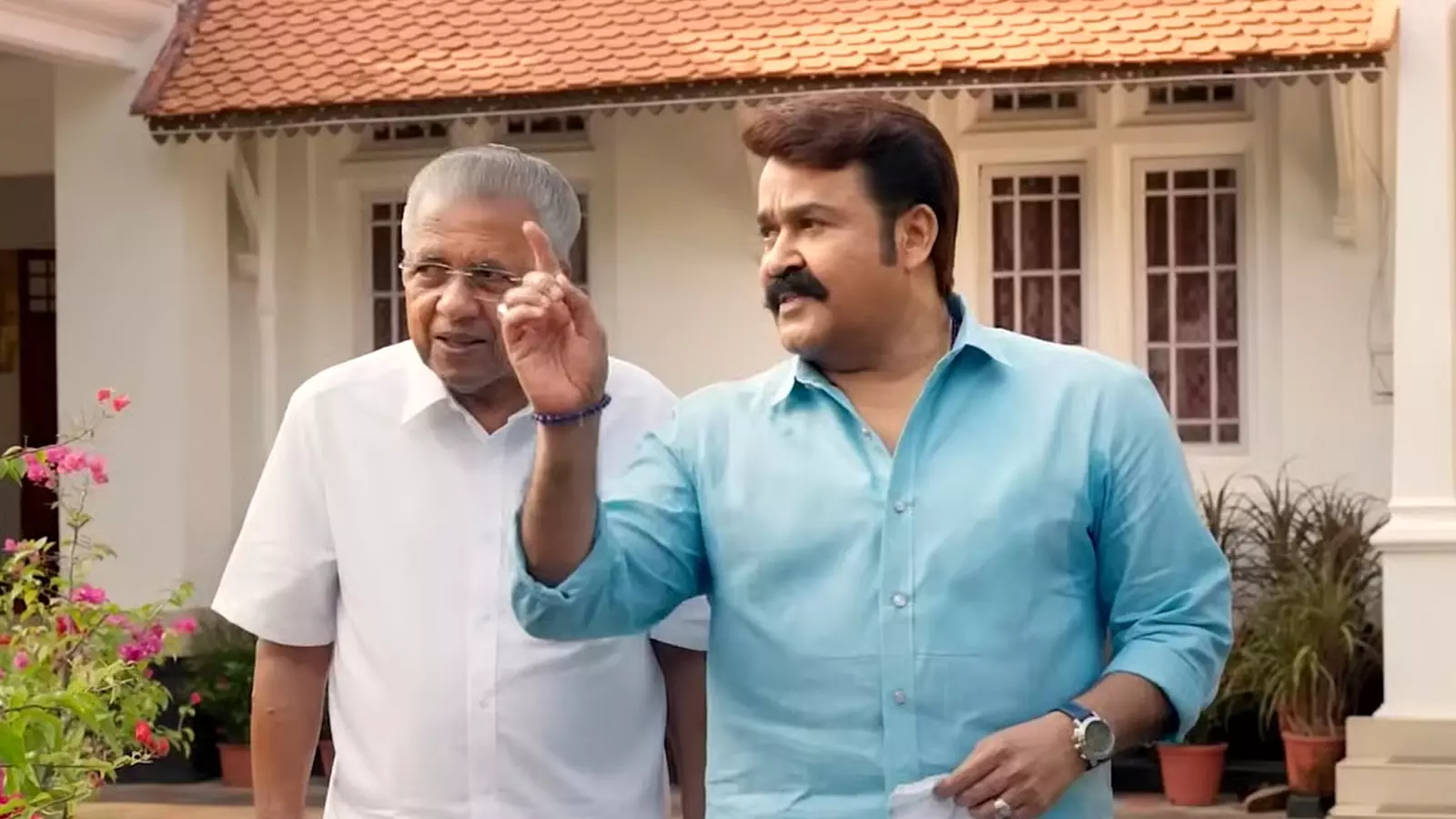
When Malayalam cinema icon Mohanlal sits down with Kerala Chief Minister Pinarayi Vijayan for a televised conversation titled ‘Iruvar’, it is more than a cultural moment. It is a political event.
The teaser of the interview, shot at the chief minister’s official residence, Cliff House, in Thiruvananthapuram, signals a carefully curated interaction between two of Kerala’s towering public figures. The political relevance and the moral questions surrounding such an interview inevitably follow.
Also read: BJP-CPM ‘understanding’ helped Kerala become Keralam; Bengal pleas ignored: Mamata
The optics are powerful. Mohanlal is not just a film star but one of the most recognisable public personalities in the southern state. Vijayan, on the other hand, is a two-term chief minister who has cultivated a reputation as a decisive administrator and disciplined communicator.
When the two come together in a non-confrontational setting ahead of the Assembly elections due in a few months, the message is as important as the content.
Critics of such exercises often point to a similar moment in national politics.
PM Modi's interview with Akshay Kumar
During the Lok Sabha election of 2019, Prime Minister Narendra Modi gave a widely discussed interview to Bollywood actor Akshay Kumar. The conversation included personal questions about the PM’s food habits and childhood anecdotes.
The interview drew criticism from sections of the media and the opposition, who argued that it deliberately avoided pressing political questions. The phrase “mango interview” entered political commentary as shorthand for a soft, image-building interaction involving the country's highest executive that sidestepped accountability.
The moral critique was clear. Should elected leaders choose friendly platforms with film stars while allegedly evading rigorous questioning from journalists? Is such a format a form of public relations rather than public accountability? Does it dilute the seriousness of democratic scrutiny?
Also read: Kerala to Keralam: Cabinet nod gives state’s linguistic heritage a major boost
“When an elected chief minister chooses to sit down for a soft, celebrity-style conversation with a superstar like Mohanlal, especially when elections are approaching, it raises serious questions,” said Anjana Shankar, a UAE-based senior journalist, who has been covering politics internationally for years.
“Governance is not a promotional exercise. What public office demands is transparency, not theatricality. When state resources like money, machinery, and the chief minister’s time are used for these kinds of soft-glove public relations exercises, it is mere image management at taxpayers’ expense.
“Imagine if every chief minister and every minister across India began bypassing independent media scrutiny in favour of celebrity conversations. What would that do to democratic accountability?” she asked.
Left defends Pinarayi-Mohanlal episode
However, the Left leadership has defended the event, arguing that the situation in Kerala is fundamentally different. They point out that since 2020, Vijayan has been holding regular and often lengthy press conferences.
“You cannot dismiss it as a mere PR exercise. In many ways, it is a new avenue to connect with people who no longer engage with legacy media. Gen Z audiences, unfortunately, do not depend on traditional media to understand current affairs. Their news consumption is largely driven by social media, so we have to adopt different methods of communication,” said a state Communist Party of India (Marxist) leader.
Also read: Union Cabinet clears proposal to rename Kerala as ‘Keralam’; what next?
Citing other instances of such interviews, including the Modi-Akshay Kumar conversation, he said, “The Modi–Akshay Kumar interview was entirely different. The prime minister rarely interacts with the media. That is not the case with our chief minister. He is accessible and does not shy away from questions. Even former chief minister Oommen Chandy had done an interview with Mohanlal.
Former Kerala chief minister Oommen Chandy during a conversation with Malayalam actor Mohanlal ahead of the 2011 state elections. Photo: Jaihind TV/ Youtube
The Left leader indirectly mentioned state Opposition leader V D Satheesan's interactions with social media enthusiasts, asking, “And what about the Leader of the Opposition, who has given a series of interviews to social media influencers?”
Since the full episode of the Vijayan-Mohanlal interview is yet to be released, he said he was not ready to offer a formal response.
During Kerala’s devastating floods of 2018 and again through the Covid-19 pandemic, Vijayan addressed the state almost daily. Reporters from across media houses posed questions on alleged policy failures, health infrastructure, migrant labour, economic slowdown and political controversies. The chief minister responded in detail, sometimes very sharply, but rarely avoided engagement.
Oommen Chandy's interview with Mohanlal in 2011
In Kerala, where cinema and politics have long intersected, such overlaps are not new. The late chief minister, Oommen Chandy, also gave an interview to Mohanlal during his tenure as the opposition leader ahead of the 2011 state polls. That interaction did not generate comparable moral outrage. It was viewed as part of the state’s culture where film personalities and political leaders often share platforms.
The present political moment, however, is more polarised. Mohanlal’s public image has been a contested terrain. On social media, he has often been portrayed by critics as being soft towards the Sangh Parivar. These perceptions have been shaped by selective readings of his public appearances and associations.
Also read: What is Kerala Nativity Card and who is eligible?
At the same time, he also declined to participate in the Ayodhya Ram Temple ‘pran prathishta’ ceremony in January 2024, a decision that was widely noted.
Following that, the Left in Kerala appeared to make a visible effort to engage with him. When Mohanlal was conferred the Dadasaheb Phalke Award — India’s highest honour in the field of cinema — last September, a felicitation event titled ‘Lal Salaam’ was organised. The event's symbolism was evident as it signalled an attempt to position Mohanlal within a broader Kerala cultural identity that transcends ideological caricatures.
In contrast, Mammootty, another renowned Malayalam cine personality, has long been seen as closer to the Left. He has served as the chairman of Kairali TV, a Malayalam channel owned by the Communist CPI(M). The differential treatment of the two superstars in political discourse reflects how cultural capital is negotiated in Kerala.
The Congress's dilemma
For the Congress-led Opposition in the state, the Mohanlal interview poses a strategic dilemma. Any attempt to criticise CM Vijayan for participating in what is seen as a soft, celebrity-led interaction risks drawing comparisons with Chandy’s interview with Mohanlal, even though he was not the CM then.
The party would find it difficult to argue that such formats are inherently unethical without inviting scrutiny of its own outreach methods, including the Lok Sabha's Leader of Opposition Rahul Gandhi’s informal engagements with the public, from interactions with elderly citizens and young people to activity-based appearances, such as cooking with village chefs and venturing into the sea with fishing communities in different states.
“The (2011) interview featuring Oommen Chandy and Mohanlal was also titled ‘Iruvar’. At the very least, that title could have been changed,” said VD Satheesan. He, however, added that they would not ridicule the interview, making the dilemma evident.
However, the broader ethical question remains.
Democracy depends on robust questioning. Leaders must answer difficult queries on governance, corruption allegations, economic distress and policy failures. If celebrity interviews become the primary mode of communication, they risk turning politics into performance.
Also read: How The Kerala Story franchise turns manufactured numbers into manufactured rage
But if they exist alongside regular press conferences and legislative scrutiny, they can be seen as complementary rather than corrosive. In Vijayan’s case, the record suggests that the institutional channels of accountability have not been abandoned, thanks to his briefings during the floods or the pandemic.
There is also the electoral calculus. Such interviews are often designed to reach undecided or apolitical voters. Cinema audiences cut across class, caste and ideological lines. A relaxed conversation between a chief minister and a beloved actor can soften political boundaries. In an era of fragmented attention, political actors seek new channels to remain visible.
In Kerala’s politically literate society, voters are unlikely to conflate a promotional teaser with governance performance. The state has a high level of media consumption and a tradition of sharp political debate. A single interview, however widely circulated, does not erase years of policy decisions, controversies or administrative records.
The Pinarayi-Mohanlal interaction reflects the evolving grammar of political communication. It sits at the intersection of cinema, personality and power and invites scrutiny, comparison and debate. It is in the balance between image management and institutional accountability where lies the real measure of the interview’s political relevance.