








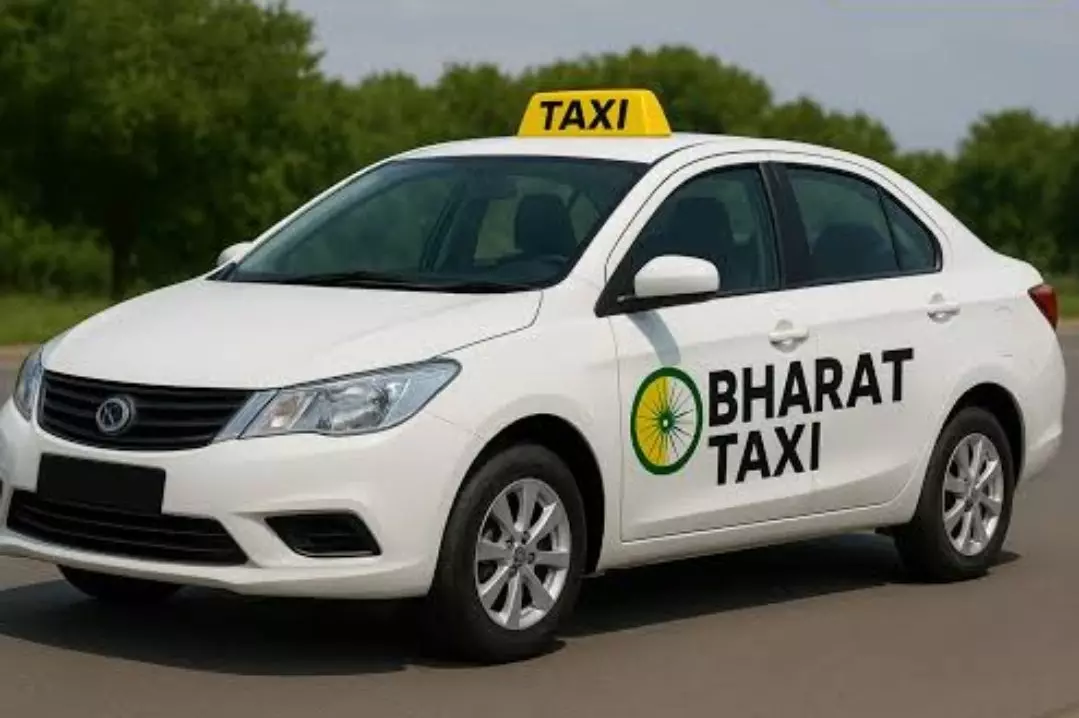
Bharat Taxi bets on Amul-style cooperative model to challenge Uber and Ola
Backed by the Ministry of Cooperation, the platform promises higher driver earnings and no surge pricing, but faces real-world and technological challenges

Amul is more than just a butter or milk brand. It represents the power of millions of small producers coming together to challenge large private players. A new entrant in India’s ride-hailing space, Bharat Taxi, is now drawing comparisons with the dairy giant by attempting to replicate a similar cooperative model.
Set to launch nationwide on January 1, 2026, Bharat Taxi has already begun pilot operations in select locations. Like Amul, it is betting on collective ownership rather than private capital to build scale and trust.
Also read | Sabka Bima Bill: Why 100 pc FDI push may not fix India's insurance woes
The idea behind Bharat Taxi is straightforward. It is structured as a cooperative, meaning there is, at least in principle, no profit-driven private company running the platform. Instead, thousands of drivers have come together to form a cooperative that owns and operates the service. This arrangement is projected as beneficial for both drivers and passengers, at least in theory.
Drivers retain most earnings
Bharat Taxi is being run by the New Delhi-based Sahakar Taxi Cooperative Limited. The leadership has strong links to Amul, with its Managing Director Jayen Mehta serving as the chairman. The initiative is backed by the Union government’s Ministry of Cooperation and is integrated with the National e-Governance Division (NeGD). While this institutional backing lends credibility, the cooperative says the real owners of the platform are its driver-members.
Unlike private ride-hailing platforms such as Uber and Ola, Bharat Taxi is designed as a zero-commission service. This means drivers are expected to retain almost all of their daily earnings. While no official figures have been disclosed, reports suggest drivers may take home between 80 and 100 per cent of their fares. However, it is likely that a portion of earnings will be pooled as a platform fee to cover operational costs.
Even with such contributions, driver earnings could be significantly higher than on existing platforms. Drivers working with aggregators like Ola, Uber and Rapido often complain that fuel costs, vehicle EMIs and platform commissions of 20–30 per cent leave them with slim margins. The promise of higher take-home pay appears to be attracting interest, with reports claiming over 51,000 driver enrolments within 10 days of the announcement.
Stakeholders, pricing and tech
The cooperative model also gives drivers a voice in decision-making. Drivers are not just service providers but stakeholders, with elected representatives expected to be part of the governing board of Sahakar Taxi Cooperative, according to reports.
For passengers, the service promises predictable pricing and an end to surge fares that often inflate costs during peak hours or bad weather. Frequent routes, such as daily commutes between home and work, are expected to have stable fares rather than fluctuating prices. How consistently this will work can only be assessed once the service expands beyond pilot stages.
The larger question is whether the cooperative model can succeed in an app-based taxi business. Amul’s success rests on scale, trust and volumes. Bharat Taxi does not need to outperform Uber or Ola financially; it needs to be sustainable for drivers. If drivers earn even a few hundred rupees more per day and passengers save on surge pricing, the platform could see organic growth through retention and word-of-mouth.
Technology, however, remains a challenge. Private ride-hailing companies have spent years refining ride-matching algorithms and navigation accuracy. To bridge this gap, Sahakar Taxi Cooperative is using the same backend technology as the ONDC-backed Namma Yatri app, developed by Moving Tech Innovations. India Today Tech has tested the Bharat Taxi app, noting that it functions largely as intended, though improvements are expected as it moves out of beta.
Challenges beyond the model
The real test will play out on the ground. Unlike Amul, where farmers are not directly involved in product distribution, Bharat Taxi’s drivers are both the service providers and the face of the platform. In ride-hailing, the “product” is the driver and the vehicle, making human behaviour and real-world conditions critical variables.
Also read | Fortis to acquire Bengaluru’s People Tree Hospital for Rs 430 crore
Handling disputes, accountability and edge cases will be key challenges. Questions remain over responsibility when things go wrong, whether liability rests with individual drivers or the cooperative itself, and how grievances will be resolved.
There are precedents. In New York, the Drivers Cooperative has operated since 2021 as a driver-owned alternative to Uber and Lyft. Despite limited resources, it remains the largest ride-hailing cooperative in the United States.
At the other extreme is Goa, where taxi unions, while not formal cooperatives, collectively block large aggregators and charge high fares, often drawing criticism from passengers. Attempts to regulate the sector have faced strong resistance.
Which path Bharat Taxi ultimately follows remains to be seen.