








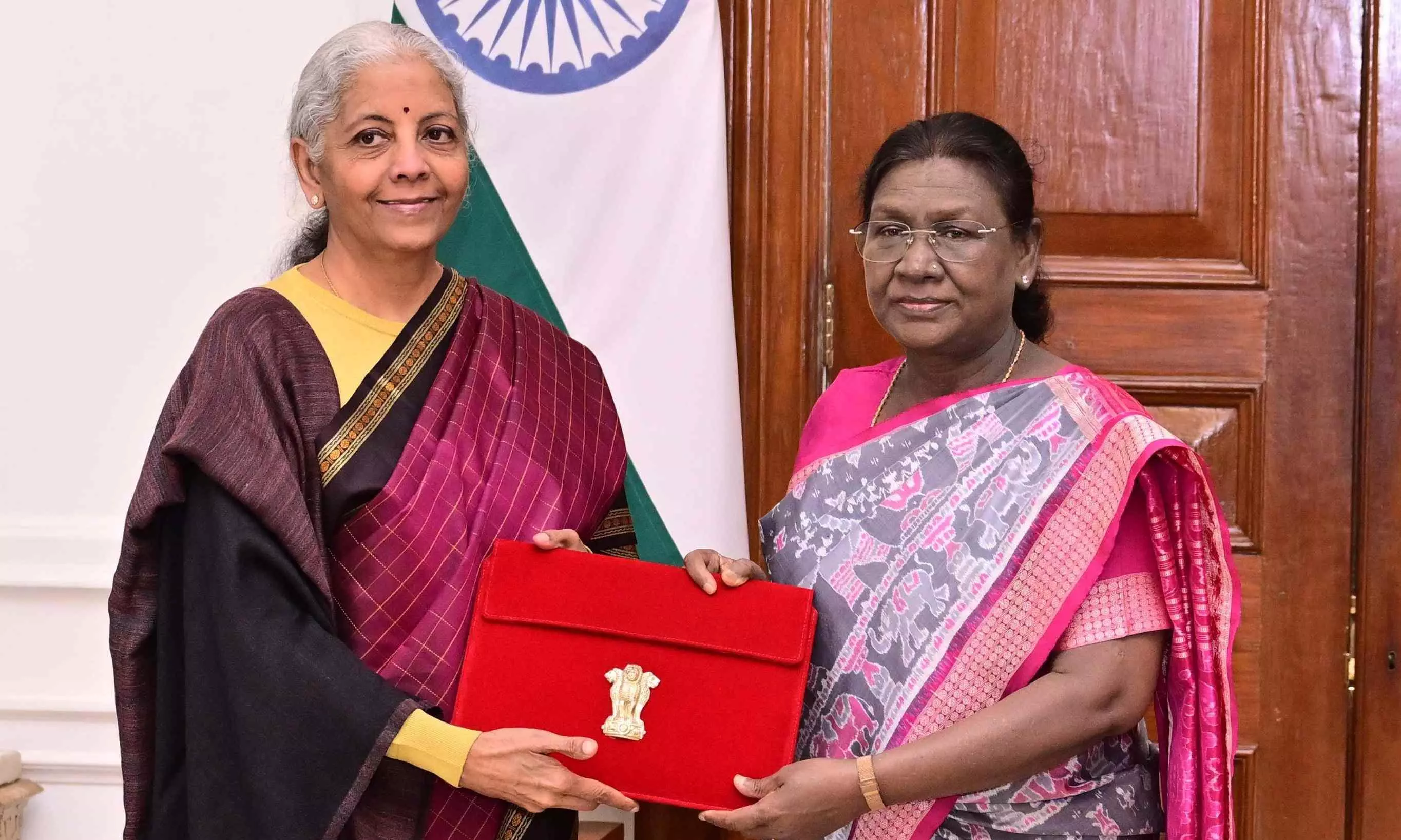
Finance Minister Nirmala Sitharaman meets President Droupadi Murmu ahead of presenting Budget 2026-27 at Rashtrapati Bhavan in New Delhi on February 1.
Budget 2026: Govt accepts Finance Commission 16 recommendations
Recommendations aim to rebalance Centre–state fund sharing, reduce distance criterion and boost funding for panchayats, cities and disaster management

Finance Minister Nirmala Sitharaman has confirmed that the government has accepted the Finance Commission 16 (FC 16) recommendations in her 9th Budget speech.
The recommendations cover the five-year period from April 1, 2026 to March 31, 2031.
The Finance Commission decides how financial resources of Centre and the states are devolved from a divisible pool of taxes vertically (between the Centre and the states) and horizontally (among the states) based on a formula.
Also read: Exclusive | Budget 2026: Centre accepts 16th Finance Commission recommendations
Apart from deciding on the Centre-states tax division, the 16th FC was also tasked with recommending the principles that should govern the grants-in-aid transferred by the Centre to the States, and also the measures needed to augment the funds of the States to supplement the resources of their panchayats and municipalities.
On November 17, 2025, Finance Commission Chairman Aravind Panagariya called on the President and submitted his report. Earlier, on November 29, 2024 the Union Cabinet had accepted the terms of reference of the FC. The Commission therefore worked for nearly a year consulting the Centre and the state governments.
Significance
The FC recommendations are significant for the states, especially those from the South as they have been demanding a higher 50 per cent share in devolution of funds.
The 16th Finance Commission is expected to substantially reduce the weight of this distance factor to ensure more equitable distribution and allow more states to receive improved funding.
Also read: States wary as 16th Finance Commission report heads to Parliament
The 16th Finance Commission is expected to recalibrate fund devolution by reducing the weight of the controversial “distance” criterion, reassessing population factors after the next census, and moving towards performance-linked transfers that reward fiscal discipline and second-generation reforms. Its recommendations also emphasise greater funding for panchayats, urban local bodies and aspirational districts, alongside structured central allocations to strengthen disaster preparedness and response across states.