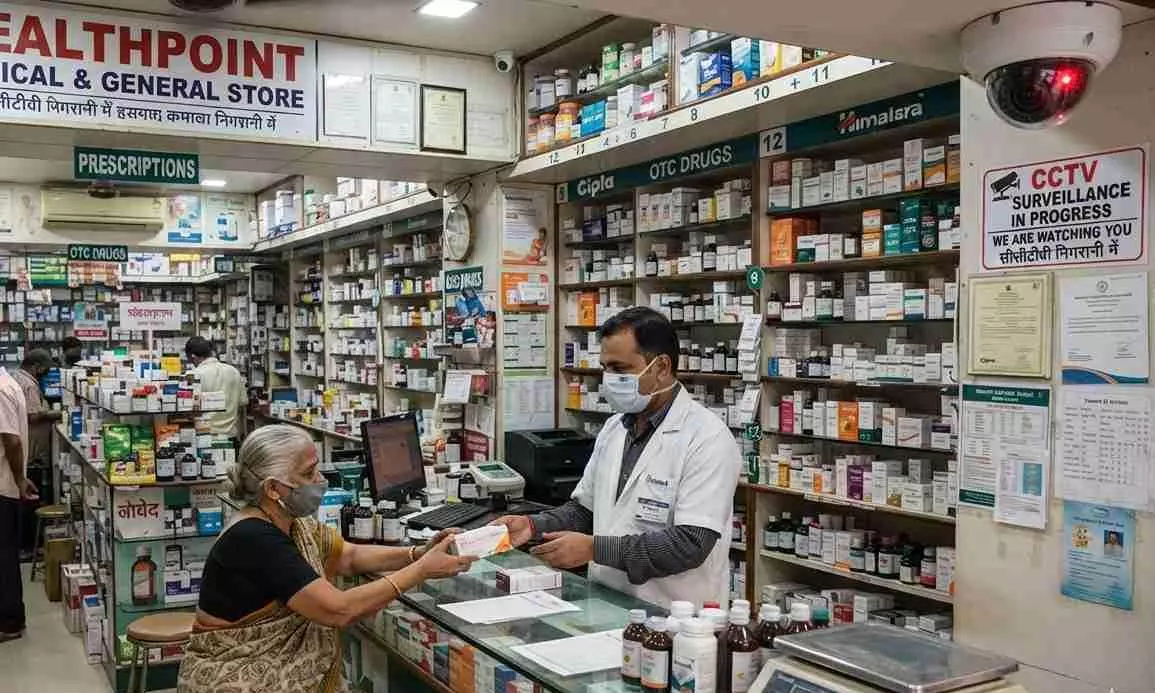
Making CCTV mandatory at medical stores would be a disaster: Chemists’ body
AIOCD general secretary Rajiv Singhal says mandatory CCTV would impose heavy costs on chemists and could open the door to excessive inspections

The Union Health Ministry has proposed mandatory CCTV surveillance at all medical stores selling Schedule H, H1 and X medicines, with the stated aim of preventing unauthorised prescription-drug sales and strengthening accountability at the point of sale.
The Federal spoke to Rajiv Singhal, general secretary of the All India Organisation of Chemists and Druggists (AIOCD), which represents 12.4 lakh chemists, pharmacists and distributors, in this regard.
Edited excerpts:
Have you seen the proposal for CCTV installation at chemist shops?
Yes. The draft notification has come to us and we have read the proposals. We have also drafted a letter to the (department) secretary, as they have invited our views and suggestions.
Also read: Centre proposes mandatory CCTV surveillance at medical stores, invites responses
The government had made this proposal earlier too. Then also, we had submitted our reservations and suggestions. Our association includes 12.5 lakh chemists, of which 9.8 lakh are retailers and the rest are wholesalers. Making it compulsory will be a disaster for us.
First, it will be a financial burden. Installing one or two cameras will not be sufficient. It will require five or six cameras and a DVR. Apparently, three months of data should be maintained. For that, you must have enough storage capacity. That will be a burden.
The burden on a chemist would amount to Rs 70,000–80,000 or even Rs 1 lakh. In urban areas or metro cities this might be doable. But in small areas, where the sale is Rs 5,000–10,000, or even in metro cities, where some chemists have similar sales figures, how will they survive?
Second is the maintenance of the system. In remote areas, where there are no technicians at all, that will be another headache. Sometimes there are prolonged power cuts.
The government says the proposal is aimed at making sales of Schedule H, H1 and X drugs more transparent. What is your view on that?
Under Schedule H and Schedule H1, especially Schedule H1, the government has 51 or 52 drugs. For that, we have a Schedule H1 register. Every chemist has to record whatever Schedule H1 medicine he has delivered.
Also read: UPI MDR unlikely to push up cash transactions: Finance Ministry
Schedule X licences are very limited in our country. In every city, you will find only a few people who have Schedule X licences. It’s the same for NDPS drugs.
We are getting Schedule H1 registered. We also promote that you should not give medicine beyond the prescription limit. If a seven-day prescription is given, only seven days’ medicine should be given.
AIOCD has introduced technical courses for its members regarding keeping prescriptions and how they should give medicines to people.
If these sales are already regulated and recorded, do you see CCTV surveillance creating another layer of inspection or an “inspector raj”?
Of course, a drug inspector will come. Drug inspectors always come to inspect our shops; that is the system under the Drugs Act which we have to follow.
But why does the government want surveillance only at chemist shops? For the past eight years, we have been requesting the government to stop the online sale of medicines, but nothing has been done till today.
Also read: US influence behind decision to impose MDR on UPI? What govt says
Consumers in rural areas say they sometimes have difficulty accessing doctors and rely on pharmacists for medicines. Could CCTV surveillance hurt that access?
That is not true. Because our chemists are not treating people.
We do not promote self-medication. Our AIOCD president always says that we should follow the prescription and follow the law.
If CCTV becomes mandatory, how will chemists bear the additional cost?
The government should bear the cost and make electricity available round the clock. There should not be any inspector raj.
What is the view of chemists on the proposed Rs 5 mandatory charge on UPI transactions from October 15? How will chemists bear that cost?
We have requested the government to withdraw this charge for chemists, as they have given the facility to fuel and essentials. Medicines are very costly nowadays and Rs 2,000 is a very small amount.
Also read: Retail, apparel bodies slam UPI fee ahead of festive season; fuel dealers seek exemption
You are asking the government not to make CCTV mandatory and also to remove the MDR charge on medicine sales. Have you received any response from the government?
Nothing so far. Around 5 to 6 crore people in the country are dependent on this business. Of them, 85–90 per cent survive only on this business. So, we are requesting the government only for our survival.