Davos delegation debate: Is taxpayer money being wasted?
India’s massive Davos delegations spark debate on costs, outcomes, and accountability. Is global visibility worth the taxpayer’s money?

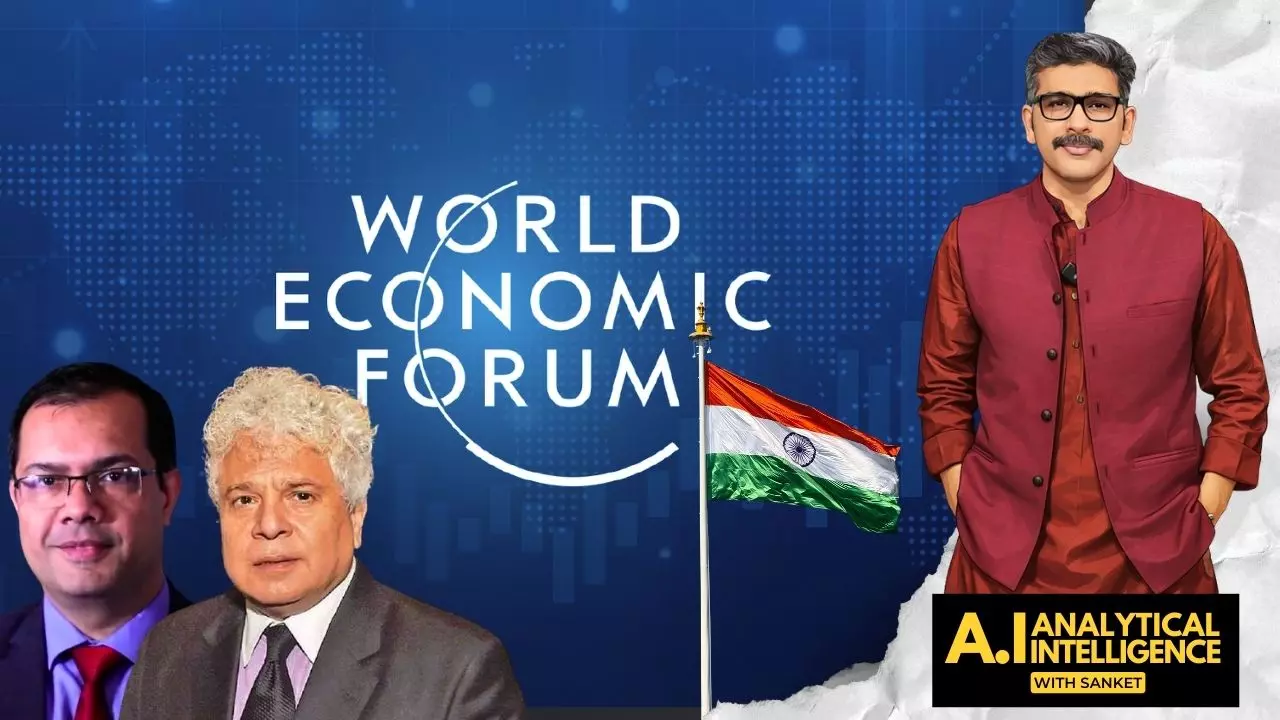
Businessman-columnist Suhel Seth and economist-entrepreneur Dr Jaijit Bhattacharya recently came together to debate India’s expanding presence at Davos, Switzerland, questioning the value of large government delegations and the outcomes of memoranda of understanding (MoUs) signed at the World Economic Forum.
The discussion focused on taxpayer-funded participation, the optics of domestic meetings held at the picturesque alpine resort, and proposals to make India’s global outreach more strategic.
'Indian delegations have only grown bigger'
Seth described himself as “anti-Davos” only in the way India uses the forum, arguing that Davos “doesn’t work by having a junket or a party.” He said he had made 14 trips to Davos between 2000 and 2014 and had seen how the forum functioned at a time when India’s messaging was tighter, and delegations were smaller.
Also read: Canadian PM at Davos: Old order not coming back, middle powers must unite
He contrasted earlier Indian participation with the current scale, saying the delegation size had risen sharply from “31 people” to “4,118 people.” He questioned whether all attendees were business leaders or senior political decision-makers, and flagged the cost of participation, citing registration fees, hotels, and travel expenses.
The businessman said his concern was not personal spending but whether public-funded engagements translated into results, especially when India's political leaders and domestic business figures met overseas for agreements that, in his view, could have been pursued back home.
MoUs and optics
Seth pointed to examples of MoUs signed at Davos and asked what logic justified signing domestic-facing deals in Switzerland. He referenced Abhishek Lodha signing an MoU with Maharashtra Chief Minister Devendra Fadnavis and questioned the optics of such agreements, linking his criticism to broader doubts about how announcements convert into investment.
Also read: WEF: European leaders warn Trump over Greenland, tariffs; California Guv mouths expletives
He contrasted these with what he described as more outcome-focused outreach by leaders such as Assam Chief Minister Hemanta Biswa Sarma, whom he said was meeting global CEOs to discuss investment, and former Union minister Smriti Irani and chairperson of the Alliance for Global Good: Gender Equity and Equality, whom he cited for building an investment alliance focused on women’s projects.
Seth also claimed that attracting investment required sustained work beyond ceremonial meetings, saying that “investments are serious work,” and criticised what he saw as performative engagements — “give them a plug, give them a shawl” — without follow-through.
What Davos is meant for
Seth framed Davos as a space where business and politics intersect, with politics shaping policy conditions and businesses pursuing a global footprint. He recalled India’s earlier branding in Davos, citing the “India everywhere” line associated with the era of former prime minister Dr Manmohan Singh, when Kamal Nath was the Union commerce minister.
He also described Davos’s access hierarchy through badge categories — blue, white, and green — arguing that visible scale and entourage culture added to the perception of a junket when officials travelled with large personal teams.
Also read: India's power-packed presence at Davos summit 2026: Who all are attending?
Seth said he believed “brand India is here to stay”, but criticised what he described as weak messaging. He referenced telling Piyush Goyal, the current Union commerce minister, that branding lines should be sharper and cited “Advantage India” as a clearer formulation he associated with Sarma.
'Davos gives a context'
Dr Bhattacharya acknowledged that some meetings at Davos could be “frivolous” and could happen anywhere, but maintained that others carried context and signalling value. Citing his own experience with the WEF, he said his family office had signed an MoU in Davos to invest in Maharashtra, adding that the investment had been implemented on the ground, involving ingots and wafers linked to semiconductor supply chains.
He said signing in Davos could be a signal to foreign investors that a government “means business”, though he also compared the situation to the Olympics, where the number of officials can exceed the number of sportspersons, suggesting a “mixed bag”.
He opined that Davos created a different environment than India for certain interactions, saying it was not realistic to expect the same kind of informal access — such as walking into a café and meeting a chief minister — to happen in India in the same way.
Domestic meetings in Switzerland
The discussion listed examples of meetings involving Indian political leaders, state delegations, and Indian business figures, including references to a Maharashtra MoU with Lodha Developers; a Jharkhand government interaction with Tata Steel on green steel; Madhya Pradesh representatives meeting JioHotstar; and other meetings involving Everstone Group's Jayant Sinha, Eros Innovation' Kishore Lulla, Karnataka minister M B Patil, and N Chandrasekaran, the Tata Group chairman.
Also read: Why Donald Trump is fuming at UK over ceding Diego Garcia to Mauritius
The central question raised was whether domestic-facing meetings and announcements needed an international stage, and whether such optics weakened the purpose of Davos participation when taxpayers funded large delegations.
Social events took over Davos?
Seth described a shift in the character of the Davos participation over time, saying he stopped going when, in his view, the culture tilted toward social events and badges without engagement in plenaries.
He listed business leaders he described as “serious people” who attended meaningfully, including Mukesh Ambani, Anand Mahindra, Adi Godrej, Pirojsha Godrej, Azim Premji, Shyam Bhartia, Shobhana Bhartia, and Pawan Munjal.
He also referenced legacy India-branding evenings at Davos, citing the TCS dinner, the Rahul Bajaj dinner, and the Infosys dinner, and said such spaces earlier enabled direct interaction with global leaders.
Seth’s argument was that India had an opportunity to use a “global marquee event” strategically but was not consistently doing so, and that India could “do it better, sharper, and cheaper”.
ROI, follow-through, and risk
Bhattacharya agreed that taxpayer money should not be wasted on junkets and said the question applied broadly, including to major events inside India. He said optics amplified public scrutiny when government money was involved.
Also read: Trump's world: Are global leaders sleepwalking into World War I-like crisis?
He also described what he saw as practical realities behind MoUs not converting fully into investment, including concerns about regulatory stability and assurances. He said large investments could face pullbacks, and that even if only “10 per cent comes through”, it could still be meaningful in absolute terms.
He also cited Davos as a place where unplanned but useful exposure could happen, describing how conversations could trigger interest in emerging areas such as small nuclear reactors.
Building an alternative platform
A key thread in the discussion was whether India should build a Davos-style platform at home. Bhattacharya said that Indian companies and state governments already spend heavily to participate, citing an annual membership figure “per company”, and suggested that equivalent resources could fund a comparable platform in India if leadership and structure were created.
Seth supported the viewpoint, saying that playing on “someone else’s plot” meant accepting someone else’s rules. He cited Dubai’s World Government Summit model and described Klaus Schwab partnering with Dubai’s platform using similar systems and programming.
Bhattacharya added that if India created an alternate platform, it should serve the Global South, asserting Davos reflected “Western hegemony” and that India’s role as a leader for the Global South required a comparable convening space.
Representation and relevance
Seth questioned why key Union ministers tied to trade were not present, naming Goyal, saying that India did not always send the most relevant people for the agenda.
He also referred to earlier Davos participation by the late Arun Jaitley as the Union finance minister and cited bilateral meetings he described as serious, alongside references to other ministers’ engagement.
Seth also cited a personal anecdote about former Kerala chief minister Oommen Chandy slipping on ice in Davos and being hospitalised, using it to put forward his view that government participation required stronger organisation and planning.
Six-point solution package
Seth proposed creating a “Davos Committee of India (DCI)” led by the prime minister, without party polarisation, to decide which states and union ministers should attend, what India would prioritise in discussions, and how bilateral engagements would be structured.
As the discussion closed, six solution points were listed for government participation: reducing delegation size; explaining taxpayer spending and outcomes; sending better and more relevant representatives; developing Davos-like events in India; creating a DCI to decide representation; and building a platform for the Global South rather than only an India-focused alternative.
The content above has been transcribed from video using a fine-tuned AI model. To ensure accuracy, quality, and editorial integrity, we employ a Human-In-The-Loop (HITL) process. While AI assists in creating the initial draft, our experienced editorial team carefully reviews, edits, and refines the content before publication. At The Federal, we combine the efficiency of AI with the expertise of human editors to deliver reliable and insightful journalism.