








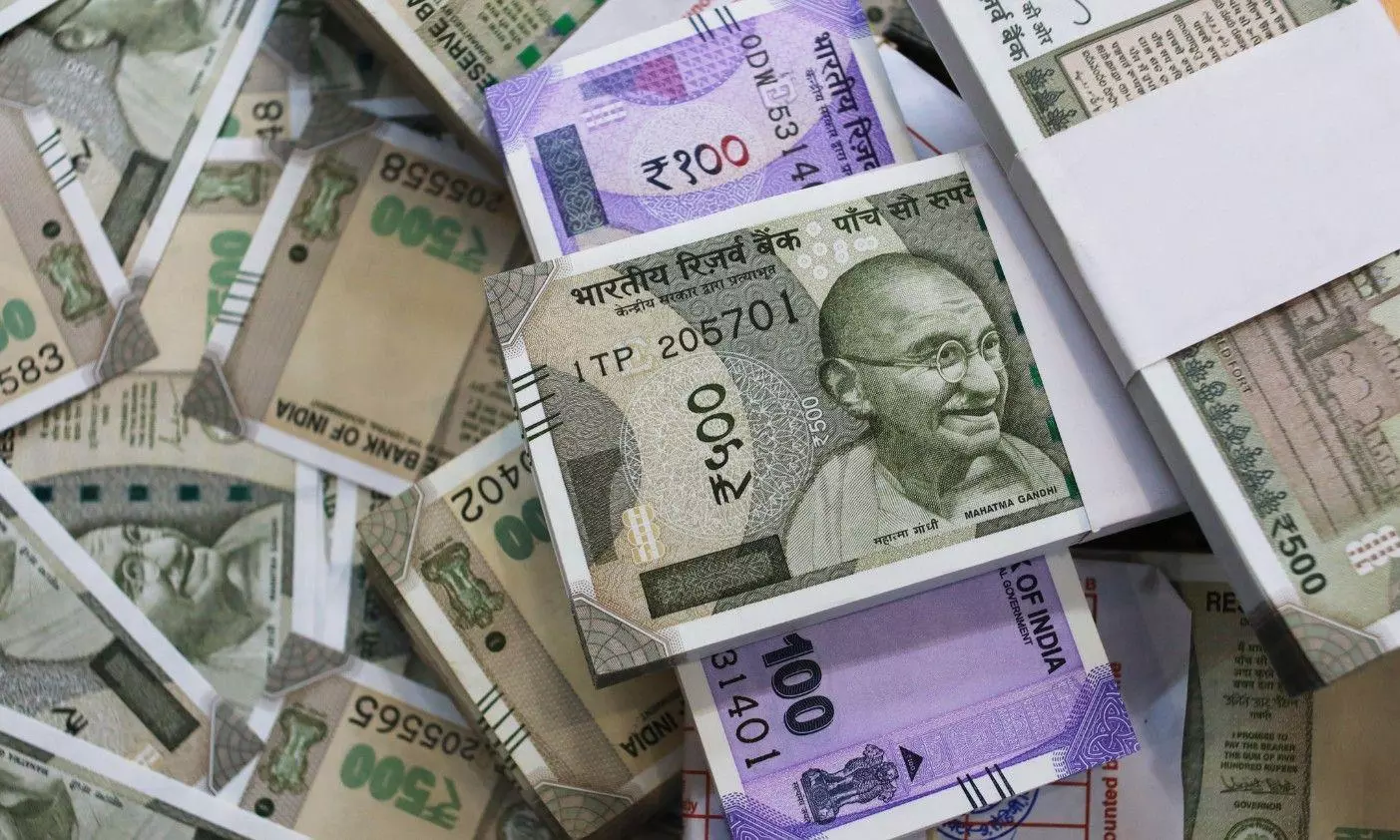
FPIs pull out Rs 36,000 crore in Jan amid tariff threats, weak rupee
The proposed STT hike is likely to cloud the investors' sentiment in near future

Foreign Portfolio Investors (FPIs) withdraw nearly Rs 36,000 crore (about USD 3.97 billion) amid global uncertainties. Meanwhile, a higher securities transaction tax (STT) proposed in the Union Budget may weigh on overseas investor participation in the near future.
According to data from NSDL, FPIs pulled out Rs 35,962 crore from Indian equities in January. This continued selling pressure by FPIs reflects a combination of global and domestic drivers impacting foreign investor sentiment.
Also read: FPIs pull out Rs 7,608 cr from Indian equities on first 2 days of Jan
The recent flight of foreign capital followed the worst outflow of Rs 1.66 lakh crore (USD 18.9 billion) recorded in 2025, triggered by volatile currency movements, global trade tensions and concerns over potential US tariffs and stretched market valuations.
STT hike
Going ahead, the sharp increase of STT in futures and options is likely to act as a marginal negative for FPI flows in the near term, particularly for high-frequency and derivative-focused global funds, said Aakash Shah, Technical Research Analyst at Choice Equity Broking.
"While the STT hike may help boost tax collections, it risks dampening trading volumes and could slow tactical FPI participation. To meaningfully revive sustained FPI inflows, investors will be looking more closely at macro stability, the rupee movement, and consistency in tax policy rather than just growth optics," he added.
Also read: Budget 2026: Fiscal consolidation and incremental changes; no big bang reforms
Finance Minister Nirmala Sitharaman, in her Budget speech for 2026-27, announced a proposal to raise the STT on futures to 0.05 per cent from the present 0.02 per cent and STT on options premium and exercise of options to be raised to 0.15 per cent from the present rate of 0.1 per cent and 0.125 per cent, respectively.
Global sentiments
The key reasons for the FPIs sell-off include US tariff threats on Europe amid the Greenland dispute, which sparked global risk-off sentiment, alongside a stronger US dollar, elevated bond yields, rupee weakness to Rs 90-92 levels, and stretched valuations, Vaqarjaved Khan, Senior Fundamental Analyst, Angel One Ltd, said.
Himanshu Srivastava, Principal, Manager Research, Morningstar Investment Research India, said, "Globally, persistent risk aversion, still elevated interest rates in developed markets, and a strengthening US dollar have encouraged capital to remain on the sidelines or rotate into other markets perceived to offer better risk-adjusted returns".
Also read: Rupee at 92: How will it affect trade, overseas education, foreign travel?
At the same time, geopolitical uncertainties and ongoing tariff and trade tensions have weighed on emerging market risk appetite, further dampening overseas interest in Indian equities.
On the domestic front, mixed corporate earnings momentum and looming macro events such as the upcoming federal budget have prompted caution among foreign funds. The weakening rupee has also magnified the impact of outflows in dollar terms, reinforcing short-term risk aversion, he added.
Equities market
On Monday (February 2), the rupee gained 42 paise to close at 91.51 (provisional) against the US dollar, a day after the Union Budget 2026-27 was presented, largely as crude oil prices retreated from their elevated levels.
Also read: Sweet start, sour finish: Why markets bled on Budget Sunday
Sensex jumped 943.52 points to settle at 81,666.46, while the Nifty surged 262.95 points to 25,088.40.
On Sunday, equity markets reacted negatively to the Budget 2026 as it proposed a higher securities transaction tax on derivatives and changes to buyback taxation, raising concerns over increased costs for investors.