








Gold demand drops 70 pc; here’s how buyers are adapting to record prices
Rising import duty, elevated gold prices and weaker consumer sentiment are reshaping buying patterns across jewellery market, with demand slowing sharply in recent weeks

As gold prices hover near record highs and the government’s recent import duty hike pushes costs even higher, consumers across India are increasingly turning to old jewellery to fund new purchases, while many others are opting for lighter and lower-carat products to stay within budget.
Jewellers say the shift in buying behaviour has become more pronounced in recent weeks, with customers exchanging old ornaments, reducing purchase volumes and postponing discretionary spending amid broader cost pressures.
High prices reshape demand
Industry estimates indicate that gold demand stood at around 7.5 tonnes in the fortnight ending May 27, compared with nearly 25 tonnes during the corresponding period last year.
Also read | What India's 15 pc gold import duty hike means to you, the consumer
The sharp slowdown followed the government's decision to raise the import duty on gold from 6 per cent to 15 per cent with effect from May 13, according to a report by The Economic Times.
With gold prices remaining elevated, many consumers are scaling down purchases rather than abandoning them altogether.
Rather than buying entirely new jewellery, many customers are bringing in old ornaments to offset the cost of fresh purchases. Jewellery that has remained unused for years is increasingly being viewed as a financial asset that can help reduce out-of-pocket expenditure at a time when gold prices are near record highs.
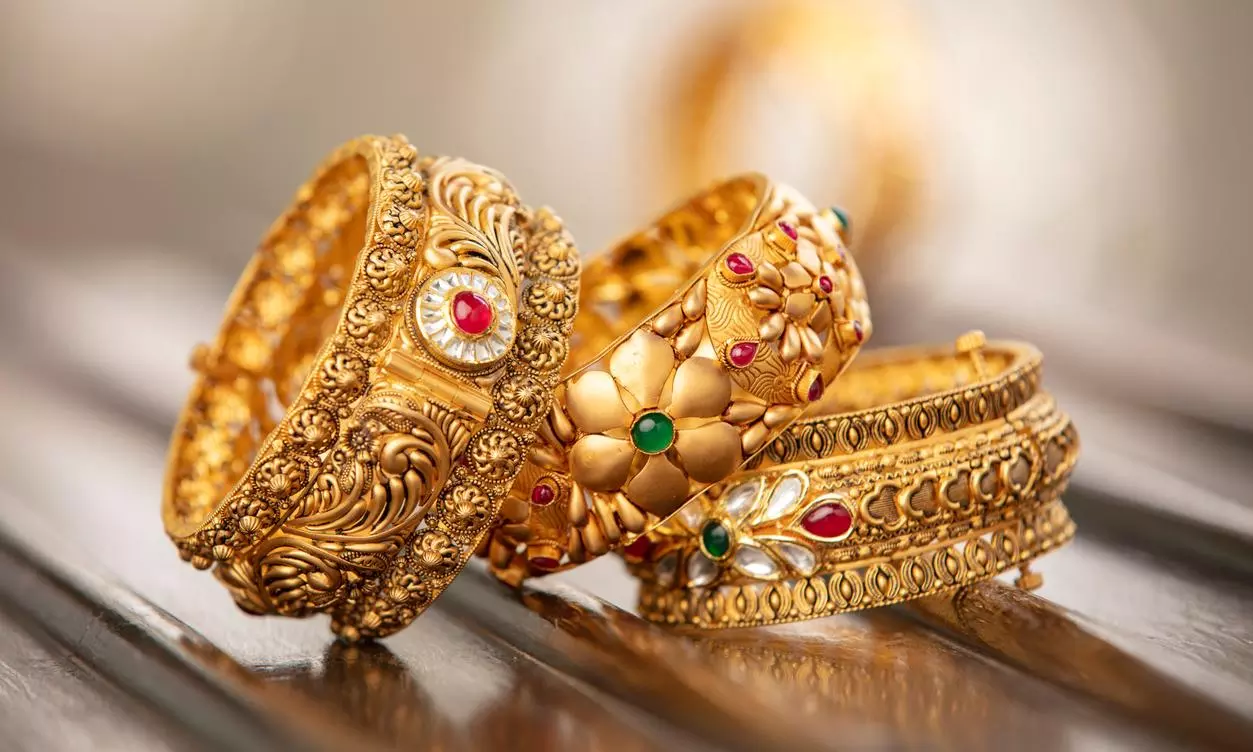
Jewellers say customers are exchanging old bangles, chains and inherited ornaments to lower the cost of new purchases. For many households, using existing gold has become a practical way to manage expenses while continuing to buy jewellery.
Old gold sales surge
On Friday, gold of 999 purity was trading at about Rs 1.57 lakh per 10 grams in Mumbai's spot market, excluding GST.
Demand has weakened particularly in southern India, one of the country's largest gold-consuming regions. “Consumers are not stretching their budgets,” B Govindan, Chairman of Bhima Jewellery, told the daily. “They are buying whatever fits their budget and therefore choosing lightweight and lower-carat jewellery.”
Retailers are also witnessing a sharp increase in customers selling old jewellery for cash. “There is a huge rush among consumers to sell old gold and take cash back home,” Govindan added.
Industry executives say the duty increase has coincided with rising petrol, diesel and food prices, reducing consumers' willingness to spend on discretionary purchases such as gold.
Jewellers report demand slump
The India Bullion & Jewellers Association (IBJA) said jewellers across the country have reported a significant drop in purchases since the duty hike came into force.
“Reports trickling in from jewellers across India show that there has been a 70 per cent drop in demand after the import duty was hiked,” Surendra Mehta, National Secretary of IBJA, told ET. According to Mehta, the unorganised sector, which accounts for nearly 65 per cent of India's gold trade, has been among the hardest hit by the increase in duty.
Mehta said buying gold is no longer a priority for many households at present. He also pointed to the ongoing Adhik Maas period, during which many Hindus traditionally avoid purchasing precious items. “What is more surprising is that even investment demand for gold has slowed down,” he said.
Demand at Joyalukkas stores has fallen by more than 35 per cent, Joy Alukkas, chairman of jewellery retailer Joyalukkas, told the daily.
Following the revision, the effective tax burden on gold, including Goods and Services Tax (GST), has risen to 18.45 per cent from 9.18 per cent.
The government introduced the higher duty at a time when the rupee was under pressure, crude oil prices remained elevated and geopolitical tensions persisted, while also tightening certain import regulations.
Retailers brace for slowdown
Industry experts said the impact of the duty hike has not been uniform across different segments of the jewellery market.
Kavita Chacko, research head at the World Gold Council (WGC), said large retail chains initially witnessed some panic buying immediately after the announcement, as consumers rushed to purchase gold before prices adjusted. However, she said many retailers are now bracing for slower sales growth in the months ahead.
Also read | How will Modi’s gold appeal impact consumers, jewellers and economy? | AI With Sanket
Mid-sized and regional jewellers are expected to depend more on gold exchange programmes and tighter inventory management, while smaller retailers appear most exposed because of weak demand and shrinking margins.
The slowdown comes after a strong beginning to the year for investment demand. India’s demand for gold bars and coins increased 34 per cent year-on-year to 62.3 tonnes during the March quarter.
Industry observers caution that higher import duties, elevated prices and weaker consumer spending could continue to reshape buying patterns in the months ahead, with more consumers opting for exchanges, lighter jewellery and smaller purchases unless market conditions improve.