








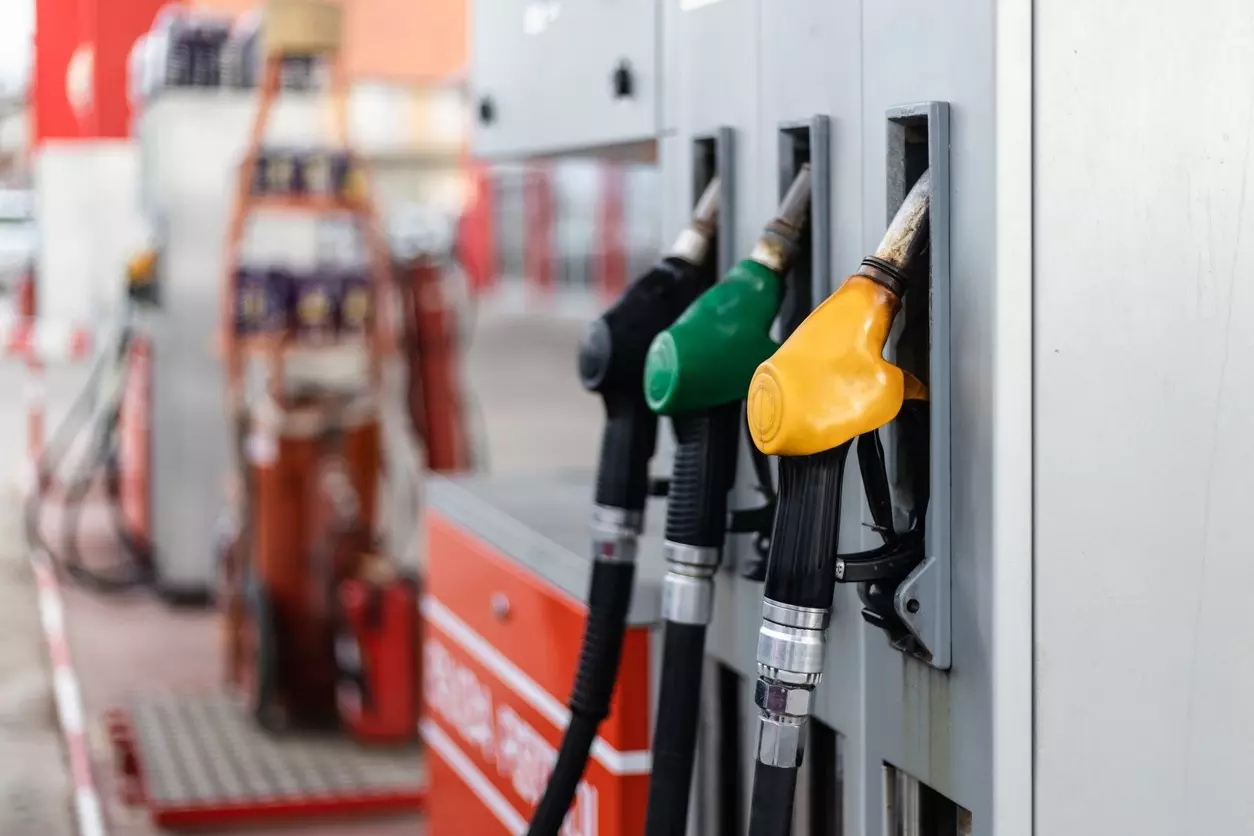
India may make blending isobutanol with diesel mandatory this year to improve energy security and decarbonise the road and highways sector. Photo: iStock
India eyes diesel-isobutanol blending mandate this year to enhance energy security
One top govt official said since diesel usage is almost two times that of petrol, the impact on blending in terms of diesel will be more consequential than petrol blending

New Delhi, May 29 (PTI) India is likely to bring a mandate on blending isobutanol with diesel as early as this year to improve energy security in the country and decarbonise the road and highways sector, Ministry of Roads, Transport and Highways (MoRTH) Secretary V Umashankar said on Friday.
Addressing the 'CII Multimodal Transportation and Logistics Summit', Umashankar further said that the highways ministry may bring a draft notification on truck-trailers interchangeability soon to build an ecosystem that needs battery-swapping and battery charging for electric heavy duty commercial vehicles.
"Blending of diesel has been looked into with great seriousness. Bharat Petroleum is already undertaking strategic research for isobutanol blending with diesel. And the results are very encouraging.
"It is quite likely that the blending mandate will start coming in somewhere later this year," he said.
Umashankar said since diesel consumption is almost two times that of petrol, the impact on blending in terms of diesel will have a far greater impact on India's energy security than even petrol blending.
The transport secretary said the blending programme, which has taken off in the last 10-12 years, is further being expanded, and the ministry has issued a draft notification for E85 (a blend of 85 per cent ethanol with petrol) and E100 (which would allow vehicles to run on nearly pure ethanol) vehicle manufacturing requirements.
"There have been some concerns about blending at the lower level (E20), but here it is a little different because the vehicle is manufactured differently. It will have a separate (fuel) dispenser also at the petrol pumps for dispensing E85 or E100 fuel, unlike normally blended petrol, which is done through a common dispenser," Umashankar said.
The Ministry of Road Transport and Highways has proposed amendments to vehicle emission rules to widen the scope for higher ethanol blends and alternative fuels, paving the way for flex-fuel and pure biofuel vehicles across all vehicle categories.
India has already achieved 20 per cent blending of ethanol (produced from biomass like sugarcane, corn or rice) with petrol to create a cleaner-burning fuel, reducing reliance on imported crude oil and cutting carbon emissions.
He said the transport ministry is looking at bringing a draft notification on truck-trailer soon.
Explaining the rationale for the same, Umashankar said, this will, to a large extent, take care of the concerns that pertain to building an ecosystem that needs battery-swapping and battery charging for electric heavy duty commercial vehicles.
"If you have to look at battery swapping, then there will have to be several points which will have to be provided with this kind of infrastructure for swapping to happen. If you look at battery charging, then it is going to take a good amount of time for the charging to happen. So, does the truck lie idle at that point in time? "So, what we are looking at is what we call a tractor-trailer interchangeability," he said.
Referring to the government's experiments with hydrogen logistics, the secretary indicated, "The results are very good. The key cost is comparable with respect to other forms of logistics travel. It's not high. The only high-cost element is the hydrogen refuelling stations. And presently in the pilot projects, government support (is) being provided." He added that recently in Delhi, between Delhi and Faridabad and Delhi and Noida, hydrogen buses at the public transport level have also been introduced.
"...the hydrogen refuelling station has already been supported and set up under this scheme. On fuelling, it travels 450 kms before it needs a refuel. So if you take Delhi-Mumbai as a corridor, then maybe three refuelling stations along the highway at the new expressway," the secretary said.
Additionally, the secretary also shared that Multi-Lane Free Flow (MLFF), the barrier-less tolling system that eliminates the need for vehicle to stop or slow down at toll-plazas, is likely to be introduced in the 'forthcoming year'.
He said this (MLFF) has already been introduced at two toll plazas, and it's working very successfully.
"And the third one is likely to go live in the next 8-10 days. We plan to expand this to all the toll plazas, four-lane plus toll plazas across the country within the forthcoming year," Umashankar said.
Along with that, the government is going to put an advanced traffic management system.
"We have got the first proposal for the Delhi NCR approved. And the issuance of the bids and the implementation of the project will start very shortly," he added.
To increase the average speed of vehicles that move on the roads and highways, MoRTH plans to focus on expressways and access-controlled highways so that slow-moving and fast-moving traffic can be segregated. PTI
(Except for the headline, this story has not been edited by The Federal staff and is auto-published from a syndicated feed.)