



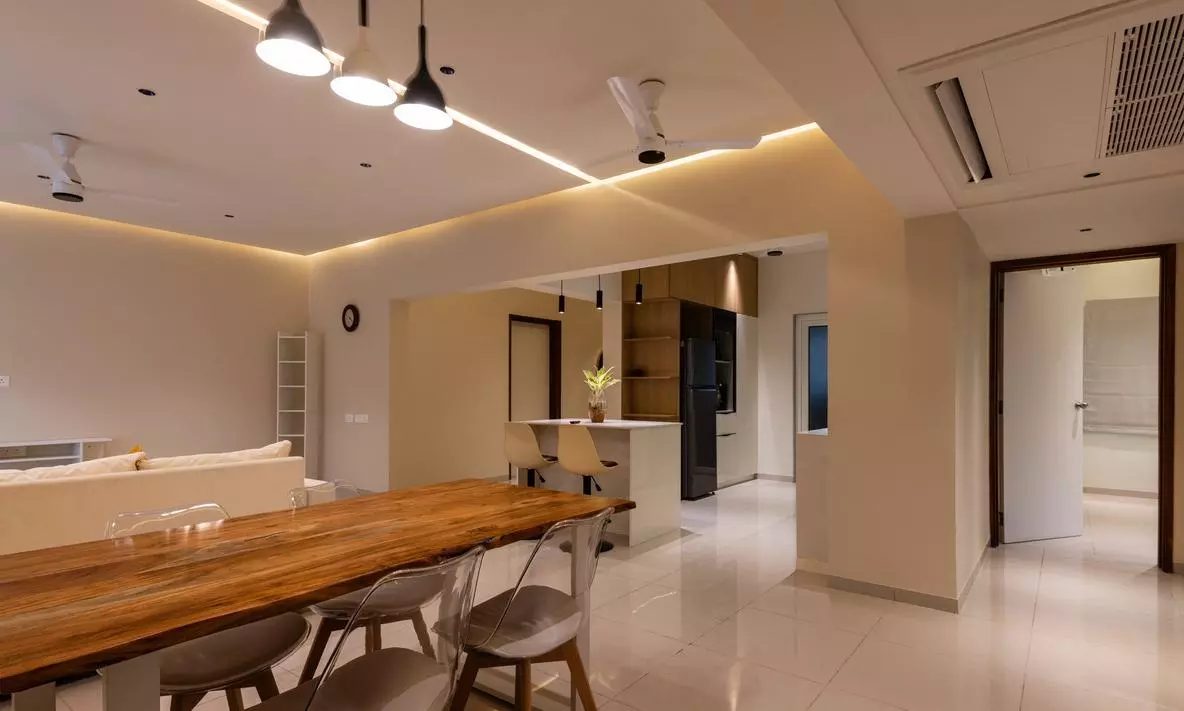
India’s real estate market heads into 2027 with strong demand for premium housing
Rising incomes, changing lifestyle, demand for larger homes expected to support sales, but high prices, construction costs and borrowing expenses could constrain demand in price-sensitive segments

India’s residential real estate market is heading into 2027 with demand holding firm, but the next phase of growth is likely to be more selective, favouring premium housing, established developers and infrastructure-led locations over broad-based expansion.
After several years of strong post-pandemic activity, the market is transitioning towards a more measured growth cycle. Homebuyers continue to demonstrate an appetite for homeownership, while developers are increasingly targeting higher-value properties to capture changing lifestyle preferences and stronger purchasing power among affluent households.
Premium, luxury housing to lead market
The Reserve Bank of India's decision to raise the benchmark repo rate to 5.5 per cent in October 2026 introduces another consideration for prospective buyers. Higher borrowing costs could influence affordability, particularly among first-time purchasers, although demand from families buying homes for personal use is expected to provide stability.
Ravi Shankar Singh, managing director, Residential Transaction Services, Colliers India, expects the market to maintain its resilience through 2027, with premium and luxury housing likely to outperform the broader residential segment.
Also Read: Beyond festive discounts: India's real estate market sees shift towards premium homes, flexible paym
“Assuming stable interest rates and continued economic growth, residential sales could see high single-digit to low double-digit growth over the next year, supported by rising incomes, urbanisation and sustained demand for larger, higher-quality homes,” Singh said.
He expects price appreciation to moderate from the sharp increases recorded after the pandemic, although infrastructure-led corridors and established urban micro-markets could continue to see positive growth.
Premiumisation reshapes demand equation
The growing preference for larger homes, better amenities and established neighbourhoods is changing the composition of residential demand. Developers are increasingly focusing on premium and luxury projects, where higher ticket sizes offer stronger revenue potential.
Industry estimates point to this shift becoming a significant driver of market value. ICRA expects residential sales value across India's top seven cities to increase by 8 per cent to 11 per cent in FY27, reaching approximately ₹7.9 trillion. However, the area sold is projected to grow by a more modest 2 per cent to 5 per cent, indicating that higher-value homes, rather than substantial expansion in transaction volumes, will account for much of the growth.
Also read: India's realty investment hits Rs 57,917 crore, but affordable housing lags
This divergence highlights an important structural change: India's housing market could generate higher revenues without a corresponding increase in the number of homes sold.
The trend also raises questions about affordability. As developers concentrate on premium offerings, first-time buyers and middle-income households may face fewer options at accessible price points. Balancing product quality with affordability will therefore become increasingly important.
Mumbai shows strength of end-user demand
Mumbai's residential market provides an indication of the underlying demand supporting India's housing sector. The city recorded 12,690 property registrations in October 2026, an increase of 9 per cent from a year earlier, according to Maharashtra government registration data analysed by Knight Frank India.
Stamp duty collections reached ₹1,173 crore, up 13 per cent year-on-year. Registrations also remained above 12,000 for the ninth consecutive month, despite the impact of Shraddh and fewer effective registration days during Navratri.
Between January and October, Mumbai recorded 132,040 registrations, representing 7 per cent annual growth. The sustained activity suggests that demand is not entirely dependent on festive incentives or favourable borrowing conditions.
Also read: Real estate deals slump 69 pc: What it means for homebuyers and investors
Shishir Baijal, chairman and managing director of Knight Frank India, said the market's ability to deliver growth despite seasonal disruptions reflected the strength of end-user demand and sustained buyer confidence.
Devanshu Bansal, director, UK Realty, similarly sees purchasing decisions among end-users being driven by longer-term housing requirements rather than short-term movements in interest rates.
For developers, continued demand brings greater execution responsibility. Construction quality, transparent communication and reliable possession timelines are becoming important differentiators as buyers become more selective.
Luxury complexes reflect changing aspirations
The premiumisation trend is also visible in new project launches. Pioneer Urban's Alura development in Gurugram, announced in November 2026, involves an investment exceeding ₹3,500 crore, with expected sales realisation of more than ₹9,000 crore.
Also read: Affordable housing is real casualty of India’s property boom: Niranjan Hiranandani
Spread across nearly seven acres in Sector 62, the development will comprise approximately 250 residences, with unit sizes ranging from 7,000 to 15,000 square feet. Designed by Skidmore, Owings & Merrill, the project combines private residences with hospitality services, wellness facilities and extensive recreational amenities.
Such developments illustrate how luxury housing is increasingly being positioned around an integrated lifestyle proposition rather than simply larger residential spaces.
Selectivity to define next growth cycle
Despite the positive outlook, the sector faces risks. Higher home prices, construction costs and borrowing expenses could constrain demand in price-sensitive segments. Developers will also need to manage inventory carefully, particularly as premium launches account for a growing share of new supply.
Also read: Beyond the Metros: India’s next 11 real estate hotspots
Buyer preferences are evolving alongside these pressures. Proximity to workplaces, transport infrastructure, social amenities and certainty of possession are likely to influence purchasing decisions more strongly than promotional offers alone.
Colliers expects festive-season incentives to accelerate some transactions, but Singh believes the market's longer-term trajectory will depend on economic fundamentals rather than temporary sales initiatives.
The real test
As India moves into 2027, residential real estate appears positioned for continued expansion, although growth is unlikely to be uniform across price segments or cities. Premium housing, established developers and well-connected urban locations are expected to remain important growth engines.
Also read: Indians want bigger homes, but soaring prices impact purchases: Survey
The defining test for the industry will be whether developers can sustain buyer confidence while delivering homes that justify increasingly higher prices. In a market moving from rapid expansion towards more calibrated growth, execution and affordability may matter as much as demand itself.