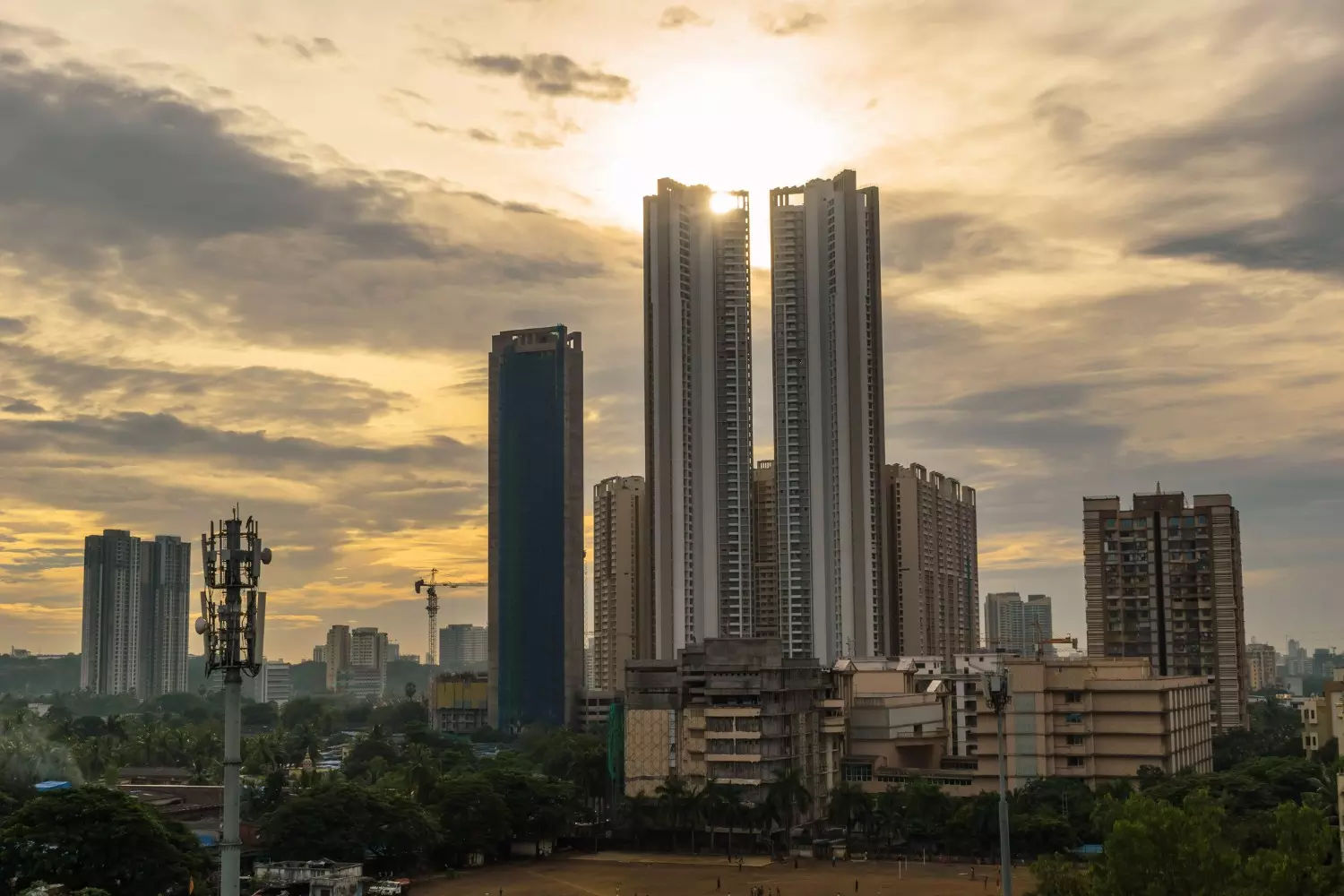
Mumbai enters global top 10 as luxury home prices rise 6.2 pc: Knight Frank
Bengaluru and Delhi among the top 20 markets globally; the sharp divergence between cities underlines how much local factors continue to matter in luxury housing

Mumbai has emerged as one of the world’s strongest luxury housing markets, with prime residential prices rising 6.2 per cent in the year to the second quarter of 2026, according to Knight Frank’s Prime Global Cities Index. The city ranked eighth among 46 global markets, with price growth more than double the 2.6 per cent rise recorded across the index.
For luxury homebuyers in Mumbai, the numbers point to a market where premium properties continue to command higher prices despite a more measured pace of global growth. Prices in the city also rose 1.7 per cent during the April-June quarter, suggesting that demand for high-end homes remained firm.
Mumbai was the only Indian city in the global top 10. Bengaluru ranked 12th, with prime residential prices increasing 4.5 per cent annually, while New Delhi was placed 17th with 3.9 per cent growth. The performance puts all three Indian cities among the top 20 markets globally.
What it means for buyers
For consumers looking at luxury housing in Mumbai, the latest data indicates that waiting for a broad-based correction may not necessarily translate into lower prices in the most sought-after locations.
Knight Frank said demand at the top end of Mumbai’s residential market continues to be supported by factors such as location, quality, and differentiated residential offerings. The supply of genuinely premium homes in established locations is also relatively limited, supporting prices when demand remains strong.
Also Read: Angel One's Dinesh Thakkar buys Juhu luxury tower for Rs 711 Cr: All about the deal
“This reflects the depth of demand at the top end of the market, where location, quality, and differentiated residential offerings continue to support values,” Shishir Baijal, chairman and managing director of Knight Frank India, said.
For buyers, however, the headline 6.2 per cent figure should not be interpreted as a uniform increase across every luxury housing project in Mumbai. Prime residential markets are highly location-specific. The price trajectory of an established luxury neighbourhood can differ significantly from that of a newly-developing corridor, while the quality, age, and specifications of individual projects can also affect valuations.
Local factors influence luxury housing pricing
Globally, prime residential prices increased 2.6 per cent in the 12 months to Q2 2026, compared with 2 per cent in the previous quarter, according to Knight Frank.
The recovery, however, remains uneven. Thirty-two of the 46 cities recorded annual price growth, while several markets continued to see declines.
Tokyo topped the ranking with a reported 50.7 per cent annual increase, followed by Manila at 14.6 per cent, Dubai at 10.9 per cent, and Singapore at 9.5 per cent. Nairobi, Christchurch, and Seoul completed the next three positions before Mumbai at No. 8.
Also Read: DLF sells all 1,137 Gurugram flats for Rs 8,000 cr in 3 days
The sharp divergence between cities underlines how much local factors continue to matter in luxury housing. Currency movements, interest rates, wealth creation, and availability of premium housing can influence prices differently from one city to another.
At the lower end of the ranking, Beijing recorded an 8.4 per cent annual decline, followed by Toronto at 7.3 per cent and Wellington at 5.4 per cent. London’s prime residential prices fell 3.6 per cent over the year.
Bengaluru, Delhi also record positive growth
India’s other major luxury housing markets also recorded positive growth, although at a slower pace than Mumbai.
Bengaluru’s 4.5 per cent annual increase placed it at No. 12 globally. New Delhi recorded 3.9 per cent growth and ranked 17th. The figures indicate that demand for premium homes is not confined to Mumbai, with India’s major urban centres continuing to feature prominently in the global luxury housing landscape.
Also Read: Sobha Group to enter Mumbai luxury homes market, says founder PNC Menon
For prospective buyers, the relatively moderate increases in Bengaluru and Delhi may also reinforce the importance of looking beyond headline city-level numbers. Prime housing represents a small segment of the overall residential market, and its price movements can differ substantially from those of mid-market and affordable housing.
Knight Frank global head of research Liam Bailey said the latest results point to a modest improvement in global luxury housing conditions, although performance remains highly differentiated between cities.
Investment appeal, but location remains key
The Mumbai data is also likely to strengthen the appeal of luxury residential property among high-net-worth buyers and investors. But rising prices do not automatically translate into equivalent investment returns.
Transaction costs, rental yields, financing costs, liquidity, and holding periods remain important considerations for anyone buying a high-value residential property. A 6.2 per cent increase in city-level prime prices also does not mean that every individual property appreciated by the same amount.
Also Read: Trump Tower partner Tribeca ties up with Tricon for Pune luxury housing project
The broader takeaway for consumers is therefore more nuanced: Mumbai’s luxury housing market continues to show pricing strength, but buyers still need to evaluate individual micro-markets and properties rather than rely solely on citywide growth figures.
With global prime residential prices showing a gradual improvement but wide differences between markets, Mumbai’s position among the top 10 reflects the continued resilience of demand for scarce, high-quality homes in one of India’s most supply-constrained premium housing markets.