








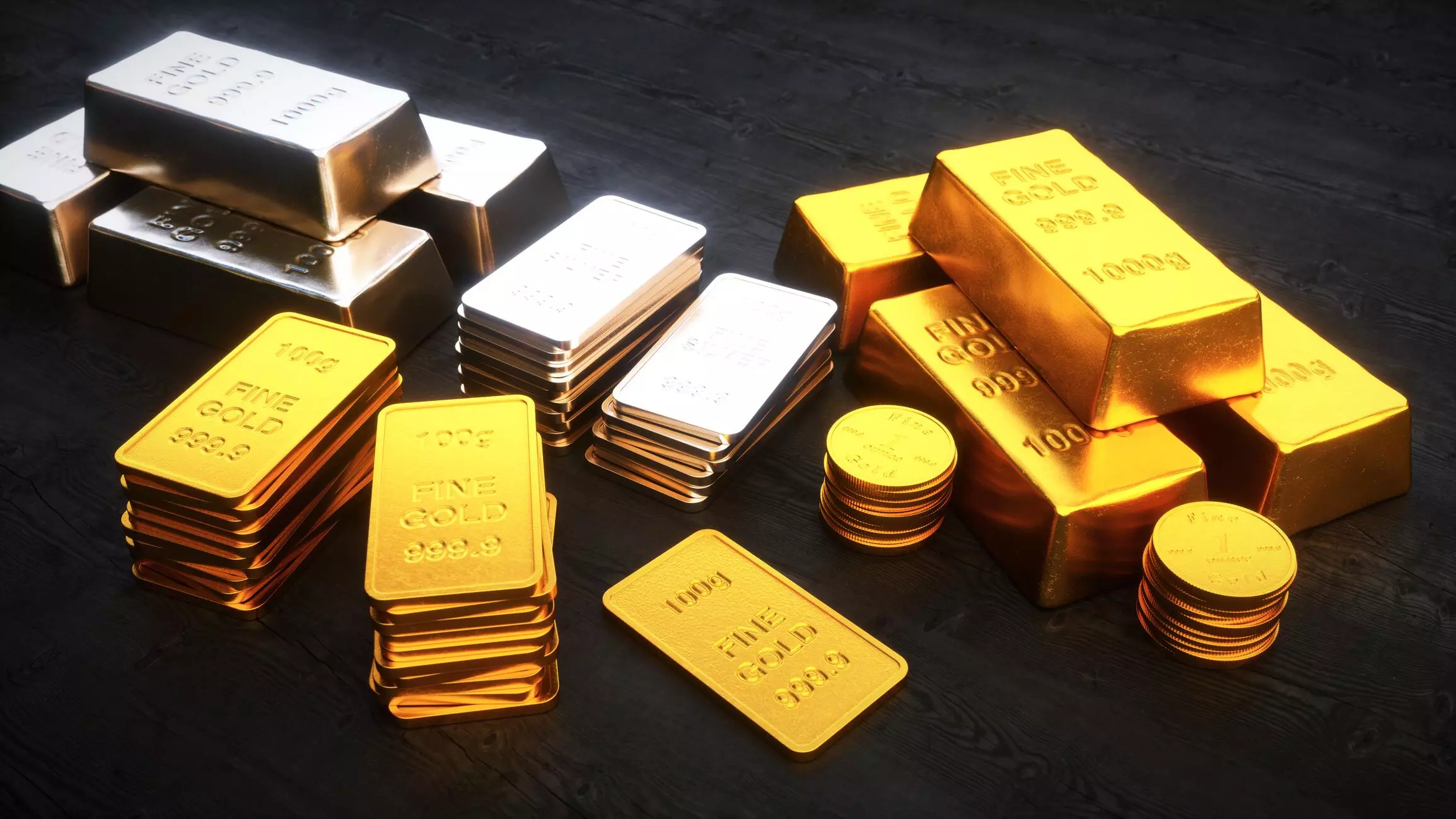
Why PM Modi urged Indians to avoid buying gold; experts decode
Stressing the need to save foreign exchange due to the crisis, Modi called for postponing the purchase of gold and foreign travel for one year

Prime Minister Narendra Modi has appealed to Indians to follow “Covid-era measures” including judicious use of petrol and diesel, using Metro rail services in cities, carpooling, maximum use of EVs, utilising railway services to send parcels, and working from home to save foreign exchange.
Addressing a rally organised by the Telangana BJP in Hyderabad on Sunday (May 10), he also called for reducing the consumption of edible oil, lowering the use of chemical fertilisers, promoting natural farming and Swadeshi products to save foreign exchange and make the country self-reliant.
'Save foreign exchange'
Stressing the need to save foreign exchange due to the crisis, Modi called for postponing the purchase of gold and foreign travel for one year.
Also read: Rahul slams Modi as ‘compromised PM’ over fuel, gold austerity appeal as market tumbles
"We have to save foreign exchange by any means," he said, adding that due to the West Asia conflict, prices of petrol and fertilisers had increased significantly.
All these measures, according to Modi, were necessary due to the Iran war. He emphasised that the Centre was trying to shield people from the adverse impact of war but, at the same time, called for measures by citizens to overcome the challenges and to “help the country”.
Decoding Modi’s remarks
While Modi’s remarks are seen as austerity measures, experts have decoded what it means for Indians and why the Prime Minister has urged citizens to adopt these things.
According to experts, Modi’s appeal is a crisis management response to the current account deficit (CAD) problem caused by high crude prices.
Also read: Iran effect | Polls done, PM seeks Covid-era measures from people: WFH, don’t buy gold
Brent crude, the global oil benchmark, traded 4.32 per cent higher at USD 105.7 per barrel on Monday (May 11).
"Fresh concerns emerged after Donald Trump reportedly dismissed Iran’s response to the latest US peace proposal as 'totally unacceptable', dampening hopes of an immediate diplomatic breakthrough. The development has once again brought the Strait of Hormuz and broader risks of supply disruption in global energy markets back into focus," Ponmudi R, CEO of Enrich Money, an online trading and wealth-tech firm, said.
VK Vijayakumar, Chief Investment Strategist, Geojit Investments Limited, said, the market will face pressure from two headwinds.
"One, the expected resolution of the West Asia crisis has again slipped away following US President Trump’s rejection of Iran’s letter. Consequently Brent crude has again spiked to USD 105 potentially aggravating the current account deficit.
"Two, PM Modi’s appeal to the nation to curb the consumption of petrol/diesel, gold, chemical fertilisers and edible oil and refrain from avoidable foreign travel is a crisis management response to the current account deficit problem caused by high crude prices," he added.
Not buying gold linked to India’s import management
Modi’s message to avoid buying gold is to help India’s forex position.
The country’s forex reserves are around $690.69 billion, according to data compiled by Trading Economics, a report on NDTV said.
In February, as per Reserve Bank of India (RBI) data, reserves rose close to USD 728 billion in February before slipping to around USD 691 billion in April.
At the same time, the IMF has projected that India's current account deficit (CAD) could widen to USD 84.5 billion in 2026, roughly 2 per cent of GDP. A widening CAD means one thing: more dollars going out than coming in, the report added.
India imported approximately USD 72 billion worth of gold in FY26 – a 24 per cent increase from the previous year, according to the report.
India, one of the largest gold consumers, typically imports 700 to 800 tonnes annually to meet over 90 per cent of its domestic demand. These massive gold imports form a major part of our import bill, especially now that rising prices are also increasing import costs. Gold imports stood at USD 58 billion in 2024-25. It was USD 45.54 billion in 2023-24 and USD 35 billion in 2022-23, according to a report in Mint.
Jateen Trivedi, VP Research Analyst, Commodity and Currency, LKP Securities, said PM Modi's remarks on delaying gold purchases should be viewed primarily from the perspective of India's macroeconomic stability and import management.
"India is one of the world's largest gold importers, and during periods of elevated crude oil prices and global uncertainty, high gold imports put additional pressure on the country's trade deficit and the rupee," Trivedi said.
The timing of the statement is important because India is facing a combination of higher crude prices, geopolitical tensions linked to the US-Iran situation, and pressure on the currency due to rising import bills, he said.
"The appeal is unlikely to significantly change long-term Indian demand for gold because gold remains deeply linked to savings, investment, and cultural buying patterns. However, in the short-term, it may slow discretionary purchases, particularly in jewellery demand, and create cautious sentiment across bullion and jewellery-related businesses," Trivedi added.
(With agency inputs)