








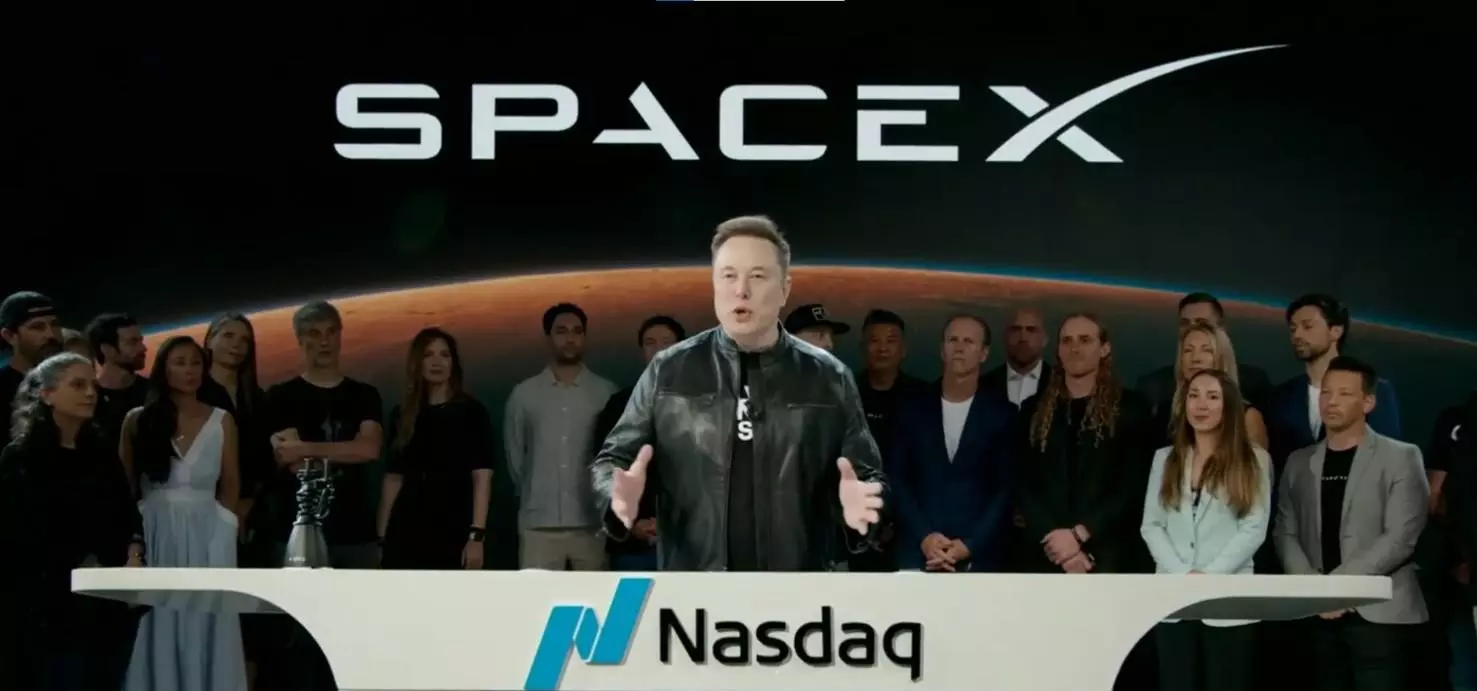
Shares of SpaceX soared 23 per cent in their Wall Street debut on Friday (June 12), making the rocket maker's CEO Elon Musk the first-ever trillionaire. Photo: X screengrab
What Elon Musk's trillion means in real terms
Musk's blockbuster Wall Street debut lifts him to an estimated USD 1.1 trillion fortune, even as critics question SpaceX's lofty valuation and widening wealth inequality

Catapulted by the market debut of his rocket company SpaceX, Elon Musk is now the world's first trillionaire.
That level of wealth, all owned by just one person, was once unfathomable. Before Friday (June 12), the trillion-dollar mark was reserved for measures like the GDP (or staggering debt) of a handful of major economies — and, in the last decade alone, the value of some of the biggest companies to ever trade on the stock market.
Musk's new title arrives amid a wider acceleration for the richest of the rich. Year after year, his former (although now very distant) billionaires club has reaped a growing number of members — from tech titans to celebrities.
All the while, more and more people worldwide are struggling to pay their everyday bills. Many have decried the arrival of the first trillionaire as the latest and most alarming example of that wealth gap.
The number “one trillion” is hard in itself for the human mind to comprehend. One trillion dollars is a thousand times greater than USD 1 billion. And a million times more than USD 1 million.
According to Forbes, Musk's net worth actually hit USD 1.1 trillion as of midday Friday, after SpaceX soared in its first moments on the market.
What USD 1 trillion looks like
Thinking about what USD 1 trillion looks like is almost as astronomical as the interplanetary — and at this point, still far from realised — goals SpaceX has laid out for itself.
In terms of physical cash, one trillion US dollar bills laid end to end would stretch nearly 97 million miles (or almost 156 million km). That would account for the distance of more than 200 round trip journeys to the moon — which NASA says sits an average of 238,855 miles (nearly 384,400 km) away from Earth. It would also surpass the roughly 93 million miles (about 150 million km) between Earth and the sun.
There are nearly 8.2 billion people living on Earth today, per the latest numbers from the U.S. Census Bureau. If USD 1 trillion was divided among the entire population, each person would receive almost USD 122.
One trillion dollars is more than double the annual GDP of South Africa, the country where Musk was born. According to the 2026 numbers from the International Monetary Fund, the nation's output of goods and services stands at nearly USD 480 billion.
Also Read: Elon Musk's net worth hits $500 billion, halfway to becoming the first trillionaire
Only about 21 countries in the world have a GDP over the trillion-dollar mark today. The US and China lead the pack at more than USD 32.38 trillion and USD 20.85 trillion, respectively, but that's far ahead of most other economies.
Houses sold in the US have a median sales price of about USD 403,200, per the latest numbers from the Federal Reserve Bank of St Louis. With USD 1 trillion, you could buy nearly 2.5 million homes at that cost.
At current US gas prices — which averaged at nearly USD 4.11 a gallon on Friday per AAA — USD 1 trillion could buy more than 243 billion gallons of regular fuel.
To help put that in context, that far surpasses the nearly 137 billion gallons Americans used on finished motor gasoline all last year. And prices at the pump were much less expensive in 2025. Steep oil prices, spanning from the US and Israel's ongoing war against Iran, propelled the national average above USD 4 a gallon for the first time in four years.
Gap between Musk and second-richest person
According to Forbes, the second richest person in the world today is Google co-founder Larry Page — who carried a net worth of nearly USD 295 billion as of midday Friday. That's USD 705 billion under the trillion-dollar mark.
In fact, the combined net worth, as of Friday, of the four men following Musk on Forbes' richest list — which, beyond Page, includes fellow Google co-founder Sergey Brin (USD 272 billion), Amazon's Jeff Bezos (USD 247 billion) and Oracle's Larry Ellison (USD 228 billion) — amounted to just over USD 1.04 trillion.
Also Read: Musk set to become world's first trillionaire as Tesla approves pay package
Those fortunes can oscillate by tens of billions of dollars by the day, or even a matter of hours. Musk's own net worth has rapidly ballooned in value. Just last year, his net worth sat at USD 342 billion per Forbes — up from USD 195 billion in 2024.
SpaceX shares soar 23 per cent
Shares of SpaceX soared 23 per cent in their Wall Street debut on Friday, making the rocket maker's CEO Elon Musk the first-ever trillionaire. The shares opened at USD 150 and kept rising, reaching USD 166.90 around 12.20 pm ET. That price gave the company a market value of USD 2.18 trillion. Forbes is now estimating Musk's net worth at USD 1.1 trillion.
Also Read: Tesla shares fall in premarket session after Musk launches ‘America Party’
Institutional and retail investors jumped at the opportunity to buy 555.6 million shares of SpaceX at the offering price of USD 135 apiece. The USD 75 billion in proceeds easily topped the previous record IPO from oil giant Saudi Aramco in 2019.
Why SpaceX has gone public
Musk says SpaceX is going public now because it needs money to fund its ambitions of putting satellites and data centres in space and eventually establishing a colony of people on Mars.
Known for his technology breakthroughs, as well as wild claims and missed deadlines, Musk was widely expected to break the trillion-dollar mark despite SpaceX generating losses as big as its ambitions.
To reach its goals, SpaceX needs billions more than it currently takes in from its rocket and satellite business. Between the start of 2025 and March 31, 2026, the company lost USD 8.7 billion.
Also Read: Elon Musk predicts AI will replace all jobs, ‘working will be optional’
Wall Street bankers that helped take SpaceX public are enthusiastic about the company — and the big fees they will earn — but not everyone thinks the stock price is justified.
Analysts at research firm Morningstar, which doesn't earn any investment banking fees, wrote that the IPO is “significantly overvalued" because of SpaceX's unproven technology and massive capital needs. They estimate the company is only worth USD 780 billion — less than half its IPO value.
(With agency inputs)