








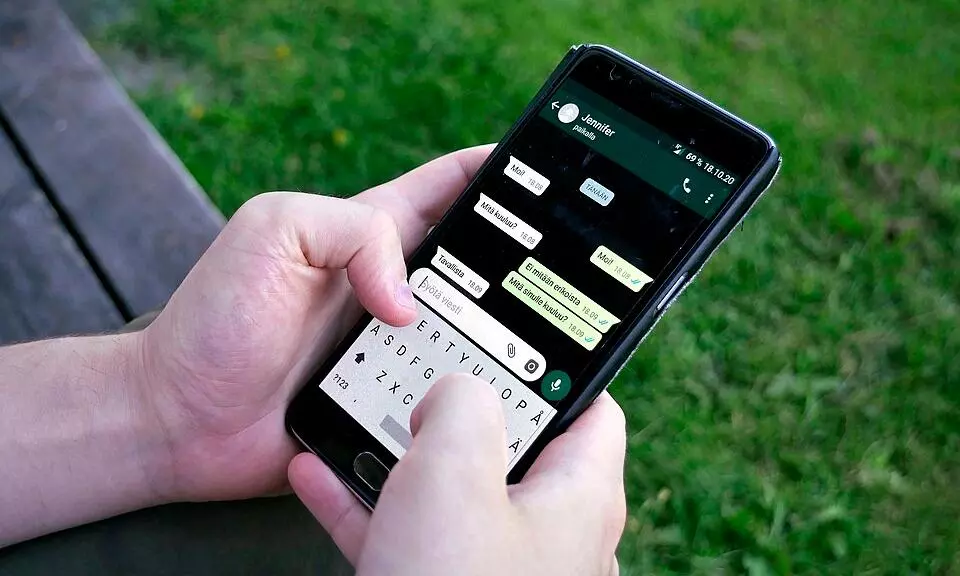
Unlike Telegram, WhatsApp is not turning usernames into a discovery tool. Representative photo: Wikimedia commons
WhatsApp’s username feature: How is it different from Telegram and Signal?
17 years after its launch, WhatsApp has introduced a new privacy feature. While the idea is not new, how is it different from its rivals?

WhatsApp’s decision to introduce usernames has been welcomed by users who have long wanted a way to communicate without revealing their phone numbers. The feature allows users to create a unique username that can be shared instead of their mobile number while starting conversations.
However, the idea itself is not new. Telegram, Signal and Instagram have offered username-based identities for years. So, after nearly 17 years since its launch, why has WhatsApp introduced this feature now and how is its approach different from its rivals?
Privacy concerns
The answer lies in how each platform treats usernames.
Also read: WhatsApp launches 'username' feature; now chat without sharing phone number
For years, WhatsApp’s biggest limitation was that a phone number was the primary identity of every account. While this made the platform simple and convenient, it also meant users had to share their personal number to start a conversation. This raised privacy concerns, especially in cases involving strangers, businesses, public figures and users in regions where phone numbers are closely linked with financial and government identities.
WhatsApp’s new feature attempts to solve that problem without changing the platform’s core identity.
Unlike Telegram, WhatsApp is not turning usernames into a discovery tool.
Telegram: Username as a public identity
Telegram has had usernames for years and uses them as a major part of its ecosystem. A user can create a handle that allows others to find them through search without knowing their phone number.
But Telegram’s model is built around discovery and large-scale communication. Public usernames can appear in search results, allowing strangers to find and contact users. The platform also supports massive communities, channels and broadcast features, with groups that can host hundreds of thousands of members and channels that can reach unlimited subscribers.
Also read: WhatsApp Pay's India struggle: Can Kunal Shah turn it around?
Telegram treats usernames as both a privacy feature and a way to expand reach, meanwhile WhatsApp is taking the opposite approach.
Signal: Privacy first, but limited
Signal introduced usernames to address one specific privacy concern - preventing users from sharing their phone numbers with strangers.
Similar to WhatsApp, Signal does not use usernames as a public identity system. The feature is designed mainly to protect personal information rather than encourage discovery.
However, WhatsApp stands out with its optional “username key”. This four-digit code acts as an additional barrier. Even if someone knows a user’s exact username, they may still need the key before initiating contact.
Also read: 9,400 WhatsApp accounts banned in crackdown on digital arrest scams: Centre to SC
This creates an extra layer of protection against spam and unwanted messages.
Instagram: Public directory
Instagram represents the opposite end of the spectrum.
On Instagram, a username is not about privacy; rather, it is the identity. It is how people search, follow, tag and discover someone. The entire platform is designed around visibility, profiles, followers and public engagement.
WhatsApp, however, is deliberately avoiding this model.
There will be no public username directory, no username suggestions and no browsing system. Users must know the exact username before they can message someone for the first time.
This means WhatsApp is not trying to become another social network. It is simply reducing phone number exposure while keeping communication private.
WhatsApp Business: Privacy with transparency
The username feature will also impact WhatsApp Business accounts, but with some differences. For businesses, usernames will help customers contact them without immediately revealing their personal numbers. When a customer messages a business using a username for the first time, the customer’s phone number remains hidden.
Also read: WhatsApp’s privacy policy and the myth of user choice
However, business profiles will continue displaying phone numbers to maintain transparency and trust.
Meta is also introducing safeguards against impersonation and brand misuse. Businesses can claim existing Instagram or Facebook usernames, while verified businesses may have their handles protected.
WhatsApp’s username feature may look like a late arrival compared with Telegram, Signal and Instagram, but its approach is designed to allow people to connect without unnecessarily exposing their phone numbers.