








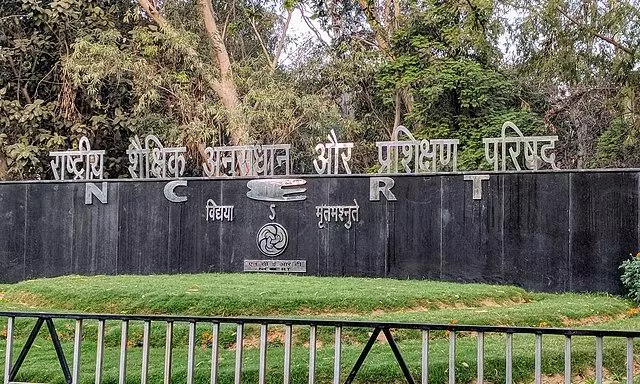
NCERT introduces an Emergency chapter in Class 9 social science textbook for first time
NCERT has included the 1975-77 Emergency in a Class 9 Social Science textbook for the first time, highlighting its impact on Indian democracy and constitutional rights

For the first time since the Emergency was imposed in India about 50 years ago, the National Council of Educational Research and Training (NCERT) has added the topic in a class 9 textbook of Social Science. The Emergency has been described in the next textbook titled "Understanding Society: India and Beyond," as "one of the major challenges" faced by democracy in India.
Emergency enters Class 9 syllabus
The Emergency has been added in a chapter which deals with the Indian democracy’s strengths and challenges faced by it. According to an NDTV report, an NCERT official has confirmed that it is the first time the topic of Emergency has been added in a Class 9 textbook.
The development comes at a time when it has been 50 years since the Emergency was imposed in 1975. The chapter focuses on the circumstances that led to the imposition of the Emergency.
Also Read: Who writes NCERT textbooks, and who really controls what goes in them?
"One of the major challenges to democracy in India was recorded when an Emergency was imposed in 1975-77. In the early 1970s, public dissatisfaction with the government led by Indira Gandhi was growing. Rising unemployment, inflation, and allegations of misgovernance led to widespread protests," stated the textbook.
"In June 1975, a National Emergency was imposed by the government on the grounds of internal disturbance. During this period, a majority of Fundamental Rights were suspended, the press was censored, and numerous political leaders and activists were arrested. Democratic institutions came under severe strain, and citizens' freedom was restricted."
Focus on 1975-77 period
The textbook also mentions the agitation led by Jayaprakash Narayan against the Emergency, especially in Bihar and Gujarat.
"Mass movements led by Jayaprakash Narayan -a political leader and socialist thinker, popularly known as Lok Nayak-mobilised students and citizens, especially in Bihar and Gujarat. The Emergency was lifted in 1977, and general elections were held, allowing people to express their will through the ballot. The defeat of the ruling government demonstrated the strength of Indian democracy and highlighted the importance of Democracy," stated the book.
Also Read: NCERT gets deemed-to-be-university status; can award own degrees
Beyond the Emergency, the revised NCERT textbook examines a range of issues that continue to test democratic functioning in the country. These include the spread of fake news and misinformation, persistent poverty, regional divisions, social exclusion and gender-based disparities.
Broader democratic challenges
A new segment, titled "Democracy and You", has also been incorporated into the chapter. The section is intended to encourage students to reflect on their responsibilities as citizens and understand how democratic values extend beyond textbooks into everyday civic engagement.
Also Read: NCERT textbook ban: Judiciary moves fastest when it's the one being judged
The book also discusses the working of democratic institutions in India, the media's role as the "fourth pillar of democracy", electoral participation, voting mechanisms and the functioning of local self-governance through panchayats. It covers the evolution of women's voting rights and the system of reservations for women in local governance bodies.
As the country marks 50 years since the declaration of the Emergency, Prime Minister Narendra Modi remembered those who stood against what he described as a difficult phase in India's democratic journey.
PM recalls 'darkest chapter'
"Today, we pay homage to all those who steadfastly defended democratic values during one of the darkest chapters in India's history, the Emergency,” stated PM Modi in a post on X.
"The Emergency was a direct assault on our Constitution. It witnessed the suspension of civil liberties, curbs on freedom of expression, arrests of political leaders, journalists, social workers and an assault on institutions that are the bedrock of our democracy,” he added.
Recalling the resistance mounted by ordinary citizens during the period, the PM said, "At the same time, it also revealed the extraordinary courage of countless citizens who refused to remain silent and upheld the ideals enshrined in our Constitution."