'NEET PG data breach could have happened only via government portal'
Aspirants contacted by private admission agents, coaching centres, touts with access to detailed personal information; there's a pattern, say doctors' bodies

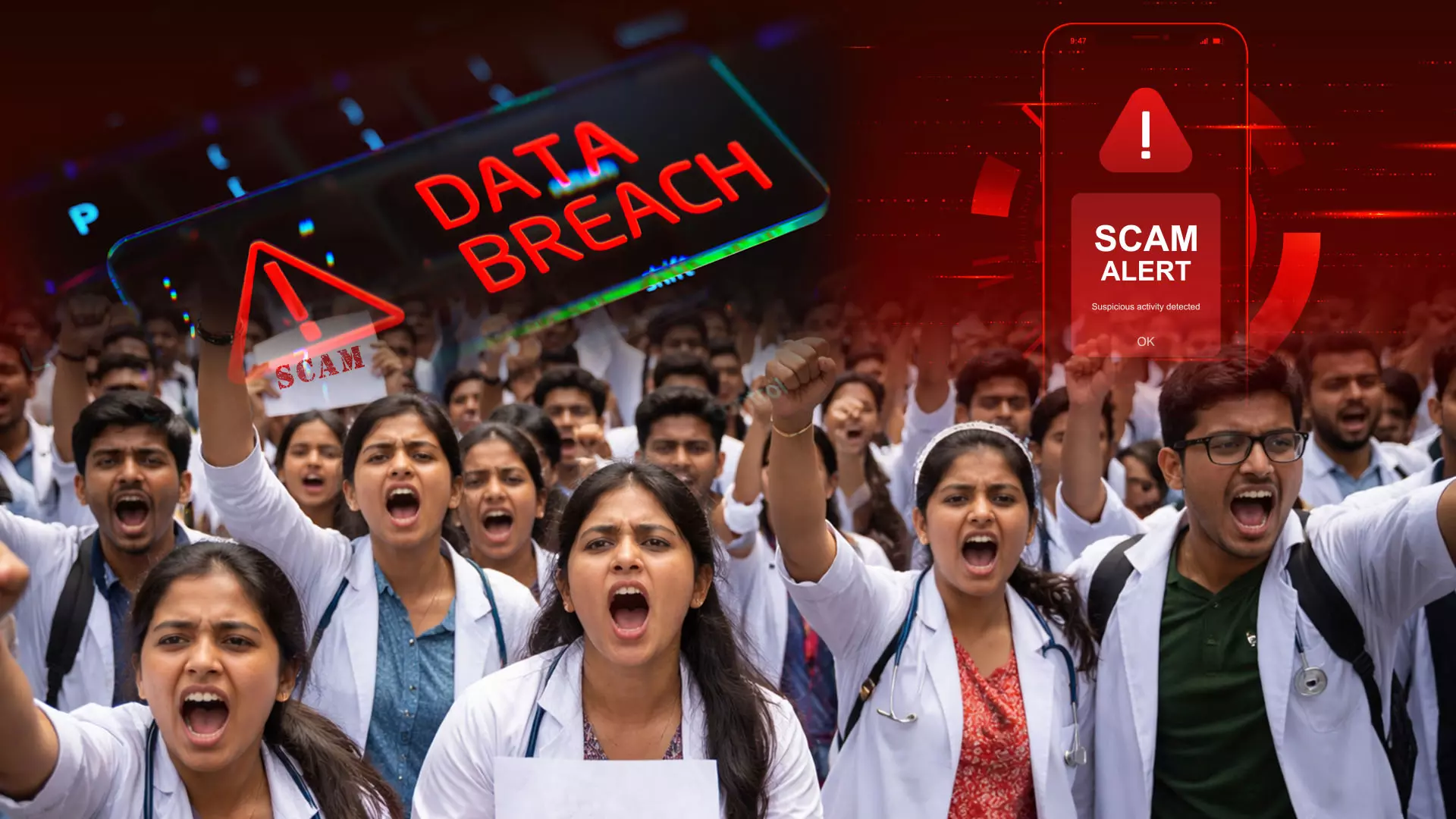
The NEET PG 2025 examination, conducted by the National Board of Examinations in Medical Sciences (NBEMS), is meant to be the gateway for postgraduate medical admissions. However, thousands of aspirants are now alleging a serious data breach, claiming their personal details were leaked and misused by scammers during the ongoing counselling process.
Candidates say the breach has resulted in a barrage of targeted calls and messages offering “guaranteed” MD and MS seats in government colleges for exorbitant sums, bypassing the official Medical Counselling Committee (MCC) process. With counselling underway, the allegations have sparked widespread concern and demands for accountability.
Aspirants across the country report being contacted by private admission agents, coaching centres, and touts who appear to have access to detailed personal information, raising red flags about data security in one of India’s most sensitive examinations.
Targeted scam calls
According to aspirants, the callers not only know their phone numbers but also their NEET PG ranks, scores, and even preferred branches. Many claim they were promised confirmed seats for fees running into Rs 25 lakh or more, often specifically citing government medical colleges.
The precision of these pitches has alarmed candidates, who say such information was shared only with official authorities during the application process. “These are not random calls,” several aspirants have pointed out, noting that the scammers appear to know exactly where a candidate stands in the merit list.
Sensitive data such as full names, contact numbers, email IDs, ranks, scores, and seat preferences is believed to have been compromised, exposing candidates to harassment and potential financial fraud.
Data for sale
The scale of the alleged breach became clearer after a database containing details of over 200 NEET PG aspirants was reportedly found for sale online for as little as Rs 3,599. Sellers on online platforms are said to be offering such datasets to agents, who then use them to approach candidates with personalised offers.
Aspirants insist that they have never shared this information with any private entity. Many have pointed fingers at possible lapses during data transfers from NBEMS to the MCC or state counselling authorities.
The recurring nature of such allegations has intensified fears that the personal data of medical aspirants is not being adequately protected at any stage of the admissions process.
Doctors raise alarm
Doctors’ bodies have taken up the issue, calling it a major breach of trust. Dr Lakshya Mittal, President of the United Doctors Front (UDF), said aspirants have been approaching the organisation with complaints at a critical stage of counselling.
“At this crucial stage when NEET PG counselling is going on, UDF has been receiving multiple complaints from aspirants as they are getting targeted calls like guaranteed admissions, fixed packages, and confirmed seat promises,” Dr Mittal said. “The pattern and timings of these calls are raising serious concerns, possibly indicating data misuse or a data leak.”
He added that the UDF is compiling complaints to submit to authorities and warned aspirants against falling prey to fraud. “One thing is very clear—NEET PG admissions are happening completely through transparency and strict counselling. No admission will be done outside counselling. Aspirants should be alert and avoid fraud,” he said.
‘How is data leaking?’
Echoing these concerns, Dr Dhruv Chauhan, National Spokesperson of the Indian Medical Association Junior Doctors’ Network (IMA JDN), said the issue has surfaced repeatedly over the years.
“I have raised this issue multiple times—that our personal details of NEET PG aspirants, including contact numbers, ranks, and marks, are getting leaked,” Dr Chauhan said. “How is this happening? It can only happen via the government portal, because only they have access to our data.”
He questioned how agents could contact candidates whose numbers were registered nowhere else. “Every year, new candidates face this. That means there is a serious breach. The government should answer this, and if they do not, they are liable for breach of our security and privacy,” he said.
Doctors have also pointed out that more than 2.5 lakh aspirants could be affected, making it one of the largest alleged data breaches in the medical education system.
Official response
In response to the allegations, NBEMS has denied any data leak from its end. The examination body has said it shares candidate data only with authorised agencies such as the MCC, using secure methods including password-protected pen drives.
NBEMS has suggested that the leak, if any, may have occurred after the data was shared with other authorised bodies. An official report has been submitted to the Union Health Ministry, and a probe is currently underway.
So far, no formal findings of the investigation have been made public. Aspirants continue to urge authorities to trace the source of the leak, punish those responsible, and put stronger safeguards in place to prevent future misuse.
Wider impact
The controversy comes amid ongoing Supreme Court proceedings related to NEET PG, including challenges to cut-off reductions. With counselling in full swing, aspirants fear that repeated data breaches could undermine confidence in the integrity of the entire medical admissions system.
As anxiety mounts among candidates, doctors’ groups and aspirants alike are calling for transparency and swift action. For now, authorities maintain that counselling remains secure, even as questions over data protection remain unanswered.
The content above has been transcribed from video using a fine-tuned AI model. To ensure accuracy, quality, and editorial integrity, we employ a Human-In-The-Loop (HITL) process. While AI assists in creating the initial draft, our experienced editorial team carefully reviews, edits, and refines the content before publication. At The Federal, we combine the efficiency of AI with the expertise of human editors to deliver reliable and insightful journalism.