


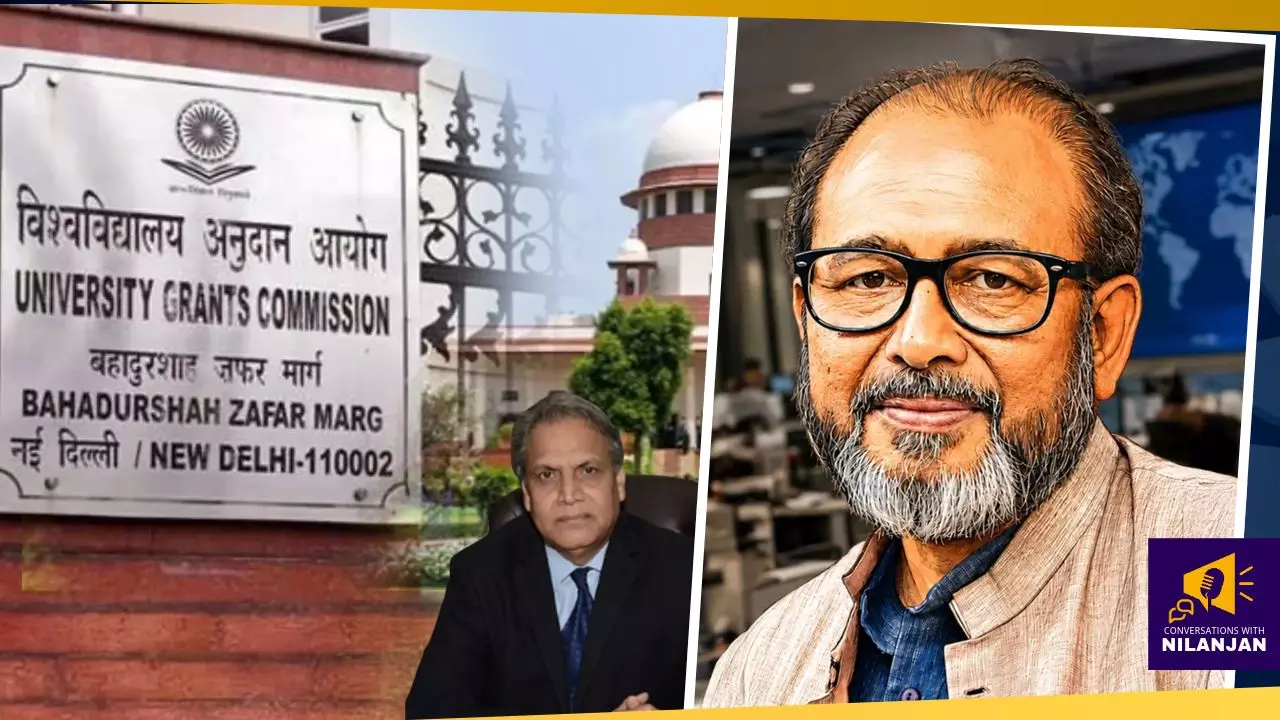
Former UGC chairman Professor Sukhadeo Thorat discusses the UGC controversy, the political response to the regulations, their shortcomings and the structural changes needed to address discrimination on campuses
UGC equity rules: Why former UGC chief Sukhadeo Thorat opposes SC stay
SC's stay on UGC Equity Regulations, 2026, has reignited the debate over caste discrimination, equality and institutional accountability in higher education

The Supreme Court's stay on the UGC Equity Regulations, 2026, and the Union government's decision to review the framework have reignited the debate over caste discrimination, equality and institutional accountability in higher education.
Former UGC chairman Prof. Sukhadeo Thorat told The Federal, “The 2026 regulations have some positive aspects but also contain legal inconsistencies and fall short of certain provisions in the 2012 framework.” He believes the Supreme Court should have identified the shortcomings and asked the UGC to address them rather than stay the regulations.
He also rejects the arguments raised by protesters that upper-caste students have been excluded from protection, calling this a “deliberate misrepresentation” of the provisions. He says the broader definition of discrimination and the provisions on equality before the law apply to everyone. He also argues that claims of widespread false cases are “bogus”, pointing out that existing criminal laws already provide for action against false complaints.
Thorat also places the controversy within what he describes as a wider ideological shift towards the “Brahmanisation” of the state and its institutions. He argues that the RSS and BJP have sought to expand their support among OBCs and Dalits while continuing to promote Brahmanical ideology. He describes the political appropriation of BR Ambedkar's legacy as “hypocrisy” and questions the absence of a sustained anti-caste movement within the RSS.
He is not optimistic about the government's review of the regulations, saying he doubts it will address the need for compulsory sensitisation courses. He also raises concerns about moral education courses under the UGC and NCERT frameworks, arguing that their content places disproportionate emphasis on Brahmanical texts and traditions.
Watch the full video here: