In Bihar, a ‘badlao’ mood brews even in Nitish’s backyard
Rising unemployment and lack of development are reshaping voter sentiment ahead of a tight contest between the NDA and RJD-led Mahagathbandhan

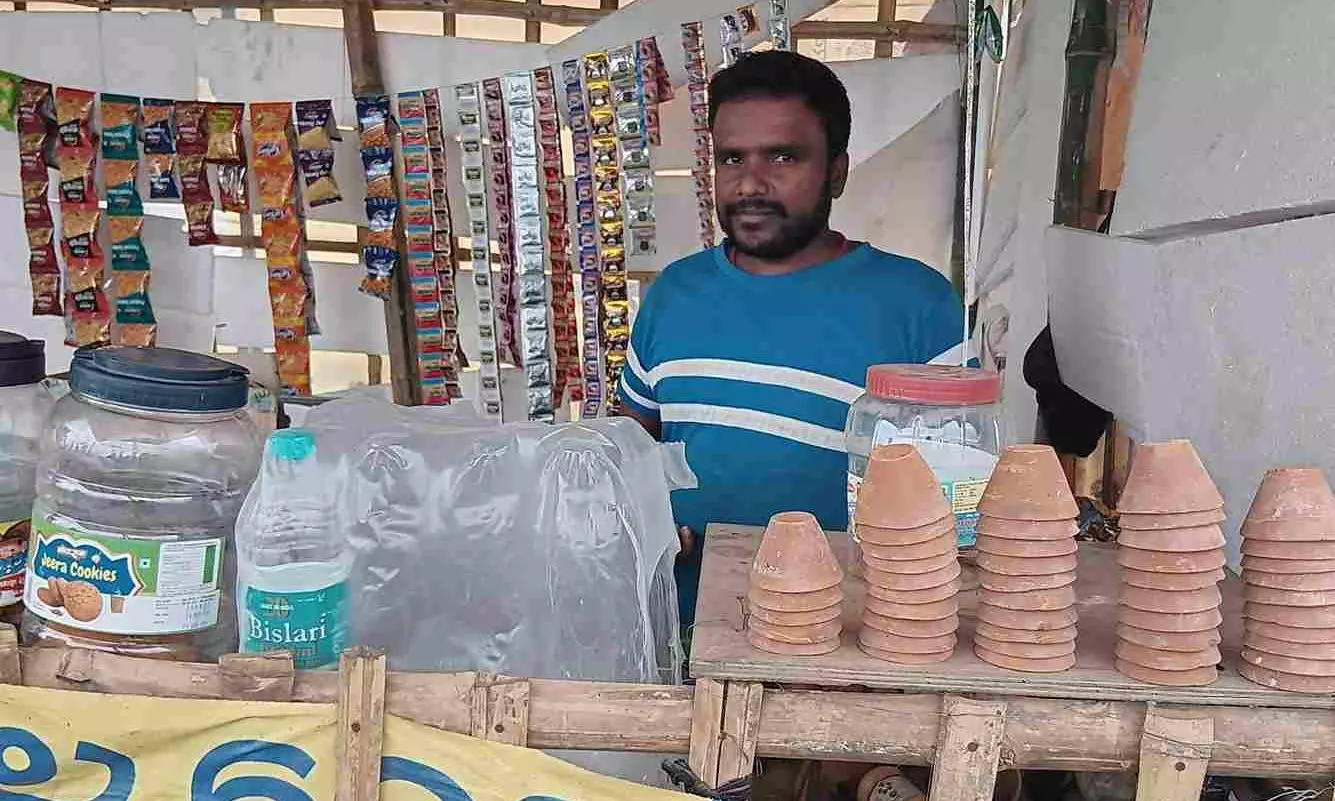
For the first time in nearly two decades, an undercurrent of ‘badlao’ (change) is palpable in Bihar, reflected even in the words of a young Rajput graduate who now runs a roadside tea stall along the four-lane Patna–Gaya highway.
“This time, change is essential. Nitish Kumar has done his share of development, but now the leadership should pass to a new face – young RJD leader Tejashwi Yadav,” said Gautam Singh, in his mid-20s. “We need to give young blood a chance instead of repeating the old guard. All of us are looking for change for the sake of our future.”
Also read | Not a ray of solar power in Dharnai, Bihar's first solar village | Ground report
“Because of unemployment, I am forced to sell tea by the roadside. I never thought I would have to do this. What can I do? Nitish has only increased joblessness. For graduates like me, there is no alternative to selling tea. But there is no future in this. Now all hope rests on what happens after change,” said Singh, a resident of Saidanpur village from Fatuha Assembly constituency, while preparing hot tea at his small makeshift shop.
Youth anger fuels anti-incumbency
This seems to be the result of strong anti-incumbency sentiments among voters in the state against Nitish Kumar, 74, the longest-serving chief minister of Bihar.
Despite ruling the state for two decades, official data indicate his failure to reduce poverty and joblessness, or to increase per-capita income. According to NITI Aayog’s multidimensional poverty estimate for 2024, Bihar accounts for the maximum number of poor – around 33.76 per cent. The Aayog’s 2022-23 data show Bihar’s per-capita income hovering around Rs 54,000, far below the national average of Rs 1.85 lakh.
Rampant unemployment remains a major issue for youths and thousands of first-time voters. Bihar’s overall unemployment rate stands at 3.4 per cent, slightly above the national average of 3.2 per cent, according to the Ministry of Labour and Employment’s 2022-23 survey.
Government data (July 2023 – June 2024) show the unemployment rate is the highest – 19 per cent – among youth with educational qualifications higher than graduation, while only 0.8 per cent of those who cannot read or write are unemployed.
Hope tied to Tejashwi Yadav
Singh added that he works long hours from morning to night. “I am the owner, cook, and waiter, serving tea and ready-to-eat snacks like potato chips, biscuits, namkeen, cigarettes, gutkha, and khaini to people passing along the highway,” he said.
Singh’s family owns a large plot of valuable land close to the highway and four bighas of farmland near his village. But unemployment has created problems for him, as for many other young men of his age in the area.
“I have been facing a hopeless situation due to Nitish Kumar’s apathy toward the issue of jobs. What can I do? I have to believe Tejashwi, who at least promises a turnaround on the employment front. What choice do I have but to take his promise seriously? If change happens, there will be some hope for the jobless like me,” said Singh, who voted for the NDA in both the 2024 Lok Sabha and 2020 Assembly polls.
When asked about the perception that Rajputs traditionally support the Nitish-Modi-led NDA, Singh said, “We have no choice but to support change for the sake of our future. I will vote for change this time.”
Traditional loyalties under strain
Singh is not an exception. A chunk of youths from upper-caste or “forward” communities (Savarns) are expressing support for change and praising Tejashwi Yadav for his focus on the issue of rozgar (employment). However, it remains uncertain whether these voices of change will translate into actual votes.
The call for change has been heard at various places, including the Mokama Assembly seat in Patna district, which hit headlines after the murder of Dularchand Yadav, who was campaigning for the Jan Suraj Party. JD(U) candidate Anant Singh, a dreaded bahubali (strongman), was arrested and sent to jail last week. Similar sentiments are reported from Nalanda, the home district and long-time stronghold of Nitish Kumar since the 1995 polls, as well as from Gaya, Lalganj, and Raghopur constituencies.
Also read | Those affected by annual Kosi floods lament unkept promises of Nitish govt for 20 years
“We want change this time. We had voted for Nitish (JD-U) in previous elections, hoping that something would be done for us. But during his two-decade rule, he failed to provide us with documents for the house plots we received after being displaced by the ordnance factory project in the late 1990s. Now we have lost faith in him and will not vote for Nitish’s party,” said Hare Ram, a Dalit (Ravidas) resident of the Visthapit (displaced) colony, located barely 50 metres from the boundary wall of the Rajgir Ordnance Factory under the Rajgir Assembly constituency in Nalanda.
Ram was echoed by Chote Rajvanshi, Naresh Rajvanshi, and Arjun Rajvanshi – all from the Extremely Backward Classes (EBC), traditionally considered loyal to Nitish. They were busy playing cards under a thick banyan tree by the roadside. “Nearly 1,199 families from 12 villages were displaced and given house plots years ago, but no ownership documents have been provided so far. Not a single displaced person has received a job in the factory despite promises. Nitish has neglected us; now it is our turn to neglect him,” said Arjun Rajvanshi, another resident of the Visthapit colony.
Voices for change grow louder
All of them expressed anger over unemployment and admitted that while they had voted for Nitish’s party in the past, they now want change in the hope that their long-pending demands, including jameen ka kagaz (land ownership documents), will be fulfilled.
Pappu Kumar, a labourer from Porai village under the Harnaut Assembly seat in Nalanda, said openly, “There must be a change. Earlier, we used to vote for Nitish’s party, but not this time.” His village, Porai, lies barely two to three kilometres from Nitish Kumar’s ancestral village Kalyanbigha, a well-developed area with all modern facilities and dominated by members of Nitish’s caste, the OBC Kurmis, who continue to support him. “We want Nitish to continue again,” said Chandradev Ramani, an elderly villager sitting near the temple.
Fed up with the lack of development in his village, Rajendar Manjhi, a resident of Turikala Bujurg in the Barachatti Assembly constituency of Gaya district, said a change of government is necessary. “We are poor and landless people belonging to the Musahar community, the most deprived Dalits, left to live without toilets, drainage, roads, and jobs. If a change of government happens, the new regime may bring more development for us than the present one,” said Manjhi, a labourer who had voted for Nitish’s ally HAM in the last polls.
Similarly, Mohit Sinha, a private school teacher and resident of a colony near Asha Singh Morh under Gaya Assembly seat, an urban constituency and a BJP stronghold since the 1990s, said, “Change is part of life. I have made up my mind to vote for change this time. Gaya is represented by Prem Kumar, a senior BJP leader and Bihar minister, time and again, but he has failed to focus on the town’s development. There is a lack of education, healthcare, and employment opportunities here.”
Caste calculus still crucial
At Himmatpur village in the Raghopur Assembly seat, Rajesh Kumar Rai, a labourer, said, “We will vote this time for a change of government because we support Tejashwi Yadav, the chief ministerial candidate of the Opposition Mahagathbandhan. Our vote is not merely to elect an MLA but to choose the next chief minister, who will replace old Nitish Kumar.”
Sanjeet Rai and Kamlesh Rai, both jobless youths from Raghopur, a strong bastion of RJD chief Lalu Prasad’s family since 1995, admitted there are numerous problems and a lack of infrastructure, education, and healthcare. “We have been struggling, but we want to elect Tejashwi to see him become the next chief minister. After coming to power, he will work to develop Raghopur,” they said.
Also read | What made RJD rope in Lalu to campaign in high-stakes Danapur battle
Across Bihar, traditional caste loyalty, consolidation, and equations remain key factors shaping the poll outcome. The four upper castes, constituting 10.57 per cent of the population, are expected to overwhelmingly support the BJP-led NDA, which includes Nitish’s JD(U), followed by non-Yadav OBCs such as Kurmis and Banias, and a major chunk of EBCs (36 per cent of the population).
Meanwhile, 14.26 per cent Yadavs, along with 17.7 per cent Muslims, 2.3 per cent Mallahs, a section of other EBCs, Koeris (OBCs), and Dalits, are expected to back the Opposition Mahagathbandhan as usual. The electoral battle is likely to be close and fiercely contested once again.