Cheap US imports will help dairy sector, but hit Indian soybean farmers
Former Shetkari Sanghatana leader says imported Dried Distillers Grains with Solubles will harm farmers, as de-oiled cake has been propping up soyabean price

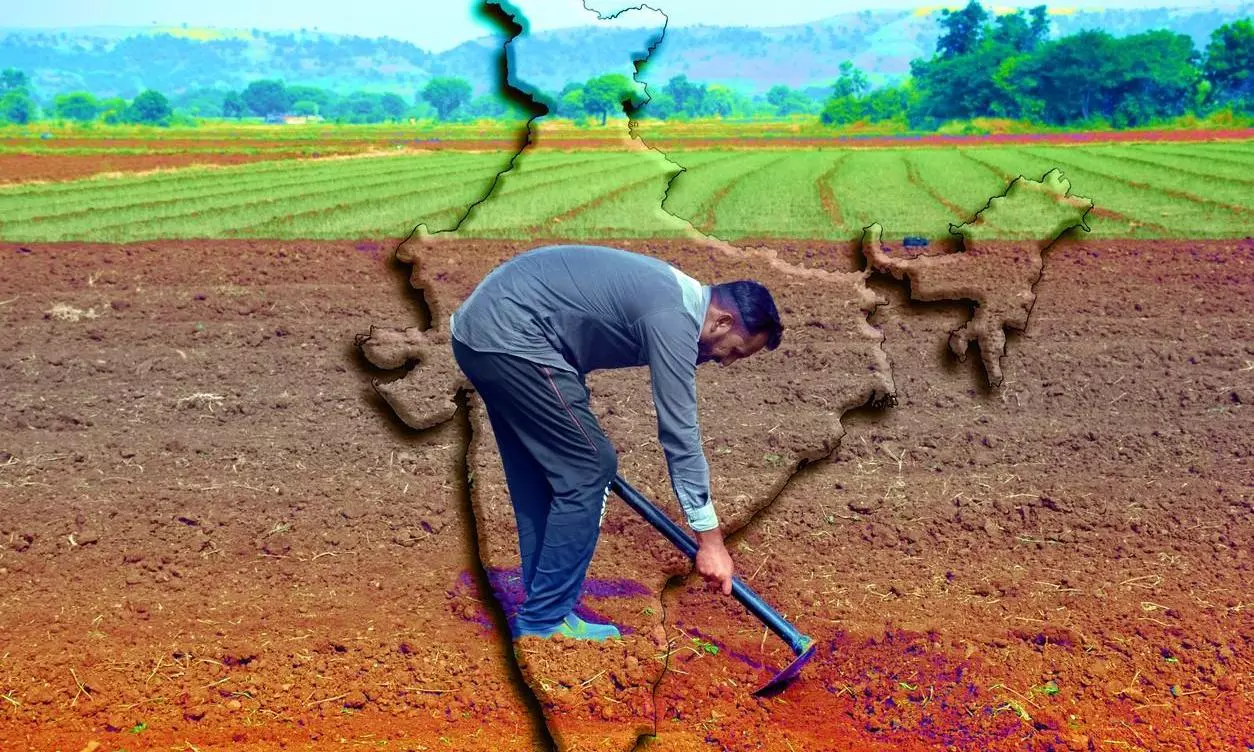
The import of dried distillers grains with solubles (DDGS) at no or low duty from the United States will lower the cost of production for India’s milk and meat industries but will hit soybean farmers hard, unless they are given time to adjust. According to news agency PTI, in the first phase, 0.5 million tonnes of DDGS will be allowed in. This is about a fifth of the DDGS produced domestically.
DDGS is a byproduct of alcohol production from maize, sorghum (jowar) and rice, using yeast strains or enzymes to convert starch into alcohol. It is rich in protein and energy and is a preferred feed for cattle, swine, poultry and fish.
High DDGS demand
Demand for DDGS is high, as evidenced by the number of applications for import of the feed and its domestic production, with the regulator for genetically modified (GM) products — Genetic Engineering Appraisal Committee (GEAC). This body is involved because imported DDGS are made from GM maize.
Allowing low or no duty grain-based animal feed from the US will be unfair to our farmers, because the US subsidises its agriculture under various guises. In India, inputs such as urea, electricity and water are also subsidised, but these are unlikely to match the US props for agriculture.
Domestic production of GM maize is not allowed in India, but the applications are for the use of GM yeast strains for more efficient production of alcohol from maize or rice (to spike petrol). India follows a restrictive policy on genetic modification. It has allowed the use of GM yeast strains, but for the import of DDGS, draft guidelines were prepared in 2017 and accepted by the GEAC in 2018.
At a meeting in July last year, it was decided to update the guidelines, which may soon be notified in view of the agreement on the framework for the India-US interim trade deal.
Indian expert likes US DDGS quality
KG Anand, general manager of Venkateshwara Hatcheries and CEO of the National Egg Coordination Committee, is impressed with the quality of the American DDGS.
According to him, samples shown by a US delegation were of high quality as their aflatoxin level was low, compared to Indian DDGS, which is produced from sun-dried maize, unlike the US maize, which is machine-dried.
Also read: US trade deal: 'India has accepted opposite of what it fought for at WTO'
The imported feed will be cheaper than the alternative — soyabean de-oiled cake, because US maize productivity is 11 tonnes per hectare compared to India’s average of 3.4 tonnes per hectare (and 6.7 tonnes per hectare in Tamil Nadu).
US maize is genetically modified. While maize as grain will not be allowed to be imported, feed made from it will be permitted as mentioned in the India-US joint statement. Preparatory to that, India will also lower its non-tariff barriers or prohibition on import of GM cereal products.
Weak meal prices consequent upon the import of DDGS are likely to make soyabean cultivation unremunerative for all but the most efficient farmers cultivating the crop on 13 million hectares, mainly in Madhya Pradesh and also in Maharashtra and Rajasthan.
Soyabean is mainly a feed crop, though it also yields oil. Soyabean has a protein content of 36-56 per cent compared to 18-22 per cent oil. De-oiled soyabean cake with 46 per cent protein sells for about Rs 43 per kilogram (kg).
Distilleries sell DDGS with 27 per cent protein made from domestic maize for Rs 24 a kg. It will be cheaper than soyabean cake even if more of it has to be used to deliver the same quantity of protein to animals. US DDGS will be cheaper still.
Also read: India-US interim trade pact: ‘Reciprocal’ deal or a surrender treaty?
Anil Ghanwat, former president of Maharashtra’s pro-trade Shetkari Sanghatana, says imported DDGS will deal a hard blow to farmers, as de-oiled cake has been propping up the soyabean's price. Soyabean yields oil and meal in the ratio of 20:80. Between 2020 and 2024, Indian soyabean prices were higher than world prices for most of the quarters.
In the fourth quarter of 2021, they fell steeply when India allowed the import of GM soyabean oil meal to tide over the domestic shortage.
How DDGS import will hurt Indian farmers
Weak meal prices consequent upon the import of DDGS are likely to make soyabean cultivation unremunerative for all but the most efficient farmers cultivating the crop on 13 million hectares, mainly in Madhya Pradesh and also in Maharashtra and Rajasthan.
Also read: US trade deal and its context strengthen sovereignty, even as internal strife weakens it
Soyabean prices will also be affected by the import of soyabean oil at no or very low duty from the US. Currently, soyabean oil has an import duty of 16.5 per cent.
In the last oil year (November to October), soyabean oil was 34 per cent of India’s total edible oil imports, compared to 22 per cent the previous year. More palm oil is imported as it is cheaper despite the higher import duty. Soya’s share in cooking oil imports will be sure to rise once the India-US trade deal kicks in.
An unfair deal
Allowing low or no-duty grain-based animal feed from the US will be unfair to our farmers, because the US subsidises its agriculture under various guises, which it says are not trade-distorting. India also supports its farmers with minimum support prices, but these are mainly availed by rice and wheat farmers. Inputs such as urea, electricity and water are also subsidised, but these are unlikely to match the US props for agriculture.
To ensure that farmers can compete with imports, the government will have to allow them to cultivate GM soyabean. US soyabean is genetically- modified to be both toxic to borers and tolerant to the herbicide glyphosate. By averting losses caused by pests, and enabling the crop to absorb all the applied nutrients rather than share them with weeds, productivity will improve, lowering production costs.
The private sector might not be interested in producing genetically-modified soyabean seeds because of patent issues. The public sector will have to step in.