How an artist-filmmaker’s desire to tell stories from Assam birthed an independent comic movement
From workshops with students of Government Art College, Guwahati, to anthologies of graphic narratives, Biswajit Das has been collaborating with local artists to tell stories about subjects ranging from kitchen tales to climate anxieties and urban change. The comics are relatable as they portray everyday Indian experiences, often unrepresented in mainstream comics culture.

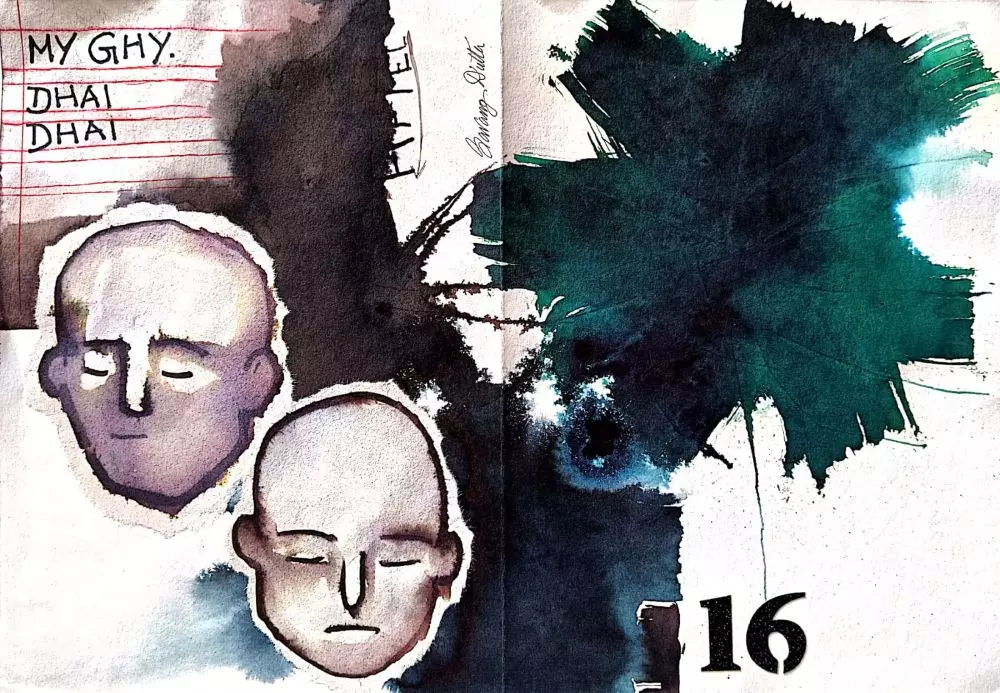
The six-comic anthology last year was self-published by Biswajit Das under his studio name, Studio Jajabor. Photo: By special arrangement
It all started when Assam-based documentary filmmaker and artist Biswajit Das, driven by the desire to tell the varied stories of his state, began efforts to build an independent comic movement in Assam.
The first step came in 2022, when Das got in touch with students of Government Art College, Guwahati, to hold workshops for them across venues, including at his own residence.
“I saw their artwork was very good and wondered if they could create comics. I conducted a workshop with 18 students over one-and-a-half months,” explains the artist-filmmaker, who will be part of a live online interaction, titled Love Is On A Plate And Other Stories: Making Of A Comic Journal, conducted by Bengaluru-based not-for-profit India Foundation for the Arts (IFA) on Thursday (May 28).
Biswajit Das. He collaborated with five local artists — Sarang Dutta, Bulbul Das, Dikshita Das, Arkadeep Sarma and Sibam Debnath — for last year's anthology of six narratives, capturing the essence of Assam’s culture. Photo: By special arrangement.
Last year, Das collaborated with five local artists — Sarang Dutta, Bulbul Das, Dikshita Das, Arkadeep Sarma and Sibam Debnath — to come out with an anthology of six graphic narratives covering environmental issues and personal stories, capturing the essence of Assam’s culture. The comics are relatable as they portray everyday Indian experiences that are often not represented in mainstream comics culture. From kitchen stories to climate anxieties and urban changes, the stories speak to a generation that is confronting ecological and social change.
Three of the five artists who worked on the anthology, Bulbul Das, Dikshita Das and Sibam Debnath, were those Das had identified during his Government Art College workshops.
For the love of stories
Looking back, he says, the workshops resulted in 14 students creating more than 70 comics. “A couple of them participated in the Indie Comix Fest in 2023. They sold almost all their comics there and made sales of about Rs. 25,000,” Das adds.
The independent comics movement continued with an open call for one-page graphic anthologies, held in collaboration with Gathan Art Collective in Guwahati. “We created the first issue with 26 comics,” says Biswajit.
Though initially they had wanted to create comics in Assamese, they decided to publish some comics in English for a wider reach. Photo: By special arrangement
For the second issue, in April 2024, Biswajit organised a comics walk at Deepor Beel, a freshwater wetland on the outskirts of Guwahati. “There were 15 to 20 participants, and the result was the creation of 13 comics totalling 26 pages, titled Changing Water,” he explains.
Then, Das applied for the Arts Practice Explorations programme by India Foundation for the Arts in 2024. “We created six anthologies in six months for this project,” he says.
The high point of the movement, however, came with the six-comic anthology last year, self-published by Das under his studio name, Studio Jajabor.
“We met every month either at my place or at one of the other artists’ homes. We discussed issues and the comics we wanted to create,” says Das. While in the initial works, Das had chosen the one-page graphic narrative format for ease, “this anthology has a mix of one-page and multiple-page comics”, he says.
If Wild City Blues depicts, through immersive illustrations, the feelings a man has about living in Guwahati for over a decade, ranging from appreciation to concern, Can We Go To The Zoo Today? takes readers on a journey through childhood memories of visiting the zoo, while offering insights into what has changed over the years. The titles of the other comics in the anthology are What’s On Your Plate, Saa, We Are Not Scared of Ghosts and Can I Have A Fried Fish Please?
Though initially they had wanted to create comics in Assamese, says Das, they decided to publish some comics in English for a wider reach.
Comics connect
“Everyone can connect with comics,” says Sarang Dutta, who will join Das for the conversation on May 28. “It is a clear, easy and direct medium.”
He adds: “We work with both digital and print formats. We also experiment quite a bit. For example, woodblock printing is time-consuming and usually not required for comics, but we are exploring that medium as well.”
The anthology is a mix of one-page and multiple-page comics. Photo: By special arrangement
Despite the financial risks involved in publishing and the usual challenges faced by an independent comics movement (such as financial backing), Das is convinced of long-term success. “We sell the comics in bookstores, at independent comics festivals, and through subscriptions. People are always interested in stories from the Northeast. We also have talent, and we showcase the work of young artists,” he says.
The interaction by India Foundation for the Arts is scheduled to be held from 6.30pm onwards, live on Facebook.