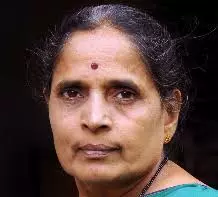
A look at how Madhav Gadgil combined science, ethics, and local knowledge, and why his reports and ideas remain vital as the Western Ghats face renewed threats from mining, infrastructure, and extractive development

Two years ago, when my elder brother — Nagesh Hegde, a well-known science and environmental writer and senior journalist — asked me, “Professor Gadgil’s biography has come out; shall we translate it into Kannada?”, my joy knew no bounds. I had not even seen the original English book, yet I agreed with my eyes closed. Soon the digital copy arrived, and I began the translation. A few days later, when the original book reached my hands bearing the professor’s signature, my delight deepened into quiet exhilaration.
There was a context behind the eagerness with which I had agreed to translate Madhav Gadgil’s book. Some years earlier, when I translated Ecology and Equity, written by him and Ramachandra Guha, into Kannada, I had discovered just how grounded the professor’s ideas were — how close they were to the soil and to people’s lived realities. I found myself thinking, time and again, that if all great scientists were as rooted in the earth and among ordinary people as he was, perhaps the very direction of our development would have been different.
Walking the Ghats
That same Professor Madhav Dhananjaya Gadgil — so deeply rooted in the ground — left the earth, relinquishing his body, at night on January 7, 2026. He had only recently lost his wife, Professor Sulochana. I had been meaning to meet him once, when the news of his death struck, leaving me stunned. The thought that I would never again have the chance to see the man who studied every inch of the Western Ghats and showed uncompromising commitment to their protection weighed heavily on my mind.
I had seen him once before. I had participated in a training programme at the Indian Institute of Science in Bengaluru, where he was training teachers and interested individuals to document the biodiversity around them. Every living being in a village ecosystem, he insisted, must be recorded. If a rare organism existed, it belonged to that village, that community, that ecosystem — outsiders had no right to swoop in, study it at will, and patent it as their own. It was with this vision that he designed such projects and conducted those training programmes. He viewed local ecology, local people, and local knowledge as inseparable, and he worked tirelessly to protect all three together.
Also read: Madhav Gadgil obit: An ecologist who refused easy binaries
By training thousands of teachers across the country, he succeeded in ensuring that biodiversity documentation became part of the Panchayati Raj Act, mandating biodiversity registers in every panchayat across India.
What followed, however, became a bitter footnote in history. Once the process fell into the hands of governments and bureaucracies, what was bound to happen did happen. The documentation that should have been done by local communities was carried out by others; registers prepared for one panchayat were copied and pasted across hundreds of others. Aware of all this, Madhav Gadgil was deeply pained, and he recorded this anguish in his book Walking the Ghats.
His studies as our guides
For a scientist who spoke the truth with integrity, disillusionment was almost inevitable. Yet this was a man who found peace and love in the very work he did. Though he rose to become a senior professor at a prestigious institution and earned global recognition, his studies taught him early on that development must include local communities. When local people are included, they naturally care for other living beings as well; this, he believed, was the true path to biodiversity conservation. That conviction led him to study Odisha’s Chilika Lake and to advise the government that Chilika could only be protected by involving local communities. Outsiders, he firmly believed, came only to extract and plunder, never to uplift the people who belonged there.
Also read: Madhav Gadgil’s death revives Kerala’s unfinished ecological debate
For this mathematical biologist, the environment was not merely forests, grasslands, water, and birds. Human beings who lived there were also part of the environment and deserved protection. He conducted deep studies of forest-dwelling communities such as the Kunabi and Gauli tribes. He wandered through forests in search of them, climbed mountains, and argued forcefully that forest-dwelling people were an integral part of the forest and must not be displaced. Based on his studies of the Western Ghats, he submitted reports to the government, but vested interests behind large-scale projects ensured that these reports never reached the public.
Despite facing countless disappointments, Professor Madhav Gadgil never compromised his integrity. He trusted science and continued to speak the truth. His research became a major source of strength for the Save the Western Ghats padayatra, and he himself participated in that march. Today, the Western Ghats face relentless threats: mining, road-widening, river diversion, pumped storage projects, and countless other assaults. At a time when the need for yet another Save the Western Ghats padayatra or vehicular campaign has become starkly evident, the guiding lamp seems to have gone out. Yet the many studies he left behind can still serve as our light. If we can move forward in that light and succeed in preventing further damage to the Western Ghats, that alone would be the truest tribute we could offer him.