Why for publishers, editing non-fiction is a challenge, more so in charged socio-political settings
The controversy over the publishing of Sonia Gandhi's memoir, Belonging: A Journey of Love, in India, has kicked up a political war of words. But beyond the pitched battle is the question of what actually goes into editing a non-fiction title and how challenging could the process be for publishers at a time when everything has to pass the social media trial of whether it is 'hurtful of the religious sentiments' of any particular group, or deemed to be 'anti-national'.

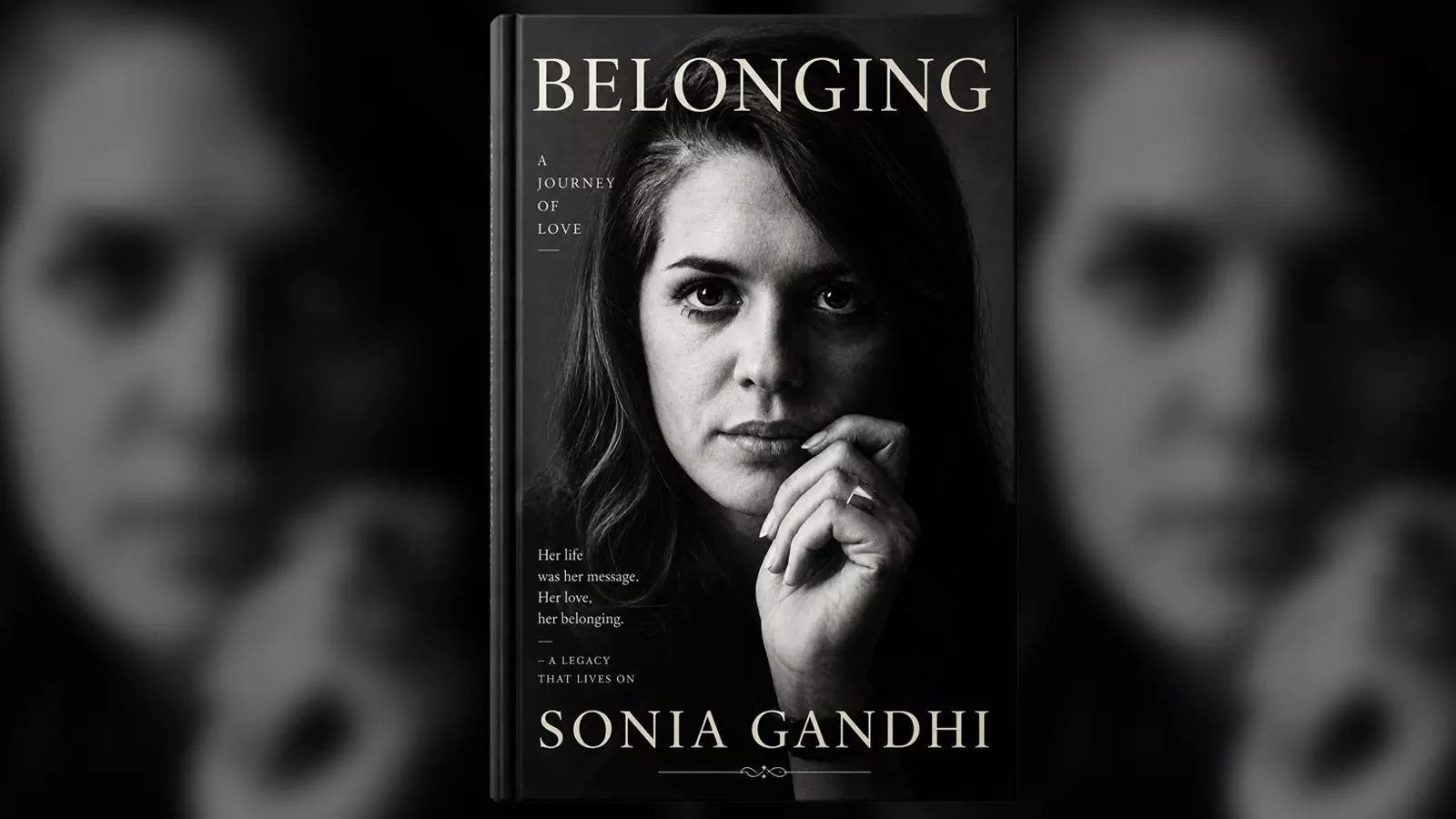
Belonging: A Journey of Love traces Sonia Gandhi’s life from her childhood in small-town Italy to her years in India as Rajiv Gandhi’s wife and Indira Gandhi’s daughter-in-law. And beyond.
“Theoretically, in publishing, there is no censorship, in the sense that you are free to publish anything as long as it is not pornographic or defamatory or libellous material,” says a Delhi-based publisher speaking on condition of anonymity. “But of course, there is a lot of caution being exercised now by publishers across the board, because everyone wants to survive and to continue to publish what they can publish,” she adds, responding to questions of whether fears of political and social backlash and alleged strong-arm tactics of those accused of pushing a Right-wing, Hindu majoritarian narrative in the country in recent years, have moved publishers to self-censorship.
It all started earlier this month, with the sharing of a beautiful black and white cover image of a book, which immediately had the attention of India’s academic, literary and political circles alike. A young Sonia Gandhi looked out of the cover, with the title Belonging: A Journey of Love printed across.
The upcoming release of the senior Congress leader and Rajya Sabha member of parliament’s memoir was announced by her son, Rahul, in an X post. “Only Priyanka [sister and fellow Congress leader Priyanka Gandhi Vadra] and I really know what you have been through, and how difficult your life after Papa [former Prime Minister, late Rajiv Gandhi] truly was,” wrote the Congress leader and leader of Opposition in the Lok Sabha. “I know how hard it was for someone as private as you to tell the world your beautiful story,” he added.
The publishing company Penguin Random House (PRH), in a post on its website, announced November 10 as the date of publication of the memoir, describing the book as a “surprising memoir that tells a riveting personal and political story of love, family, and an endlessly fascinating country: India”. (At the time of publication of this article, the post was still available on the PRH website).
But barely a week or so later came the surprising news that PRH’s India arm, Penguin Random House India (PRHI), would not be publishing the book in India as expected.
PRHI has since stated that it remained "willing and keen" to publish the book. Clarifying that "Penguin Random House India is not the publisher of 'Belonging' in India”, the publishing house stated, however, “Any suggestion that Penguin Random House India decided not to publish 'Belonging' because the author declined editorial changes does not accurately reflect the circumstances”.
The statement added: "As a publisher, it is both our prerogative and our responsibility to fact-check and provide authors with recommendations that are in the best interests of their books. This is a normal part of the publishing process. Throughout the relevant discussions, Penguin Random India's position was that we remained willing and keen to publish the book.”
Interestingly, the memoir’s distribution in global markets is expected to continue to be handled by PRH, or its US-based imprint Alfred A. Knopf, with copies likely to hit shelves on November 10 as initially scheduled.
The controversy over its India publication has meanwhile kicked up a political war of words in the country. According to reports, the alleged disagreement between Gandhi and PRHI happened over certain passages in the book which referred to Prime Minister Narendra Modi and the Rashtriya Swayamsevak Sangh, the ideological fountainhead of the ruling Bharatiya Janata Party (BJP) at the centre, as well as Chinese intrusions.
While some Congress members have since accused the publisher of “cowering under political pressure”, a section of BJP leaders have in turn questioned the contents of the book, asking if it was “memoir or fiction”.
Beyond the political storm, however, the question the controversy has thrown up is what actually goes into editing a non-fiction title and how challenging could the process be for publishers in a charged political, social or religious atmosphere.
Self-interest and social responsibility
“It depends on the title and writer”, as it does on the publisher involved, but for most non-fiction titles, “there will be two editorial processes”, explains Urvashi Butalia of the independent publishing house, Zubaan. “One will be in the beginning, which is the feedback on the manuscript and may relate to removing repetitions, restructuring chapters, asking for more information, a reference for something which has been claimed or a comment that has been made. So, there is a lot of back and forth at this stage,” she says.
This may partly involve a fact-check. For many publishers, however, it may also mean getting a lawyer to look at the work for what could be deemed as controversial content, potentially able to land the publishers in a legal mess. “People like us, independent publishers, can't afford to have a legal person on call. So, we will do that only if there is something that really screams out,” says Butalia. The concern can range from potentially defamatory content to how a political moment is being analysed, for example.
The process stems as much from the need to protect themselves against any potential legal action as from a sense of social responsibility, say publishers The Federal spoke to.
“The idea is to communicate well, rather than to censor anything and that is true for fiction and non-fiction alike,” says Trisha Niyogi of Niyogi Books. “Sometimes in a non-fiction, you will have ruminations or memories; you can't fact-check a personal memory, but we need to constantly see from secondary sources or archives, anything that is available in the public domain, if something like that happened.” And anything that can potentially “incite public unrest or religious disharmony would be checked repeatedly, may be requested to tone down”, or the publisher might question the writer “where the perspective is coming from”, before finally deciding whether to go ahead with it or not.
Also read: Why historian Romila Thapar’s memoir, Just Being, offers the possibility of a way of living life
Agrees Nandini Nair, a literary critic and associate director of the Bengaluru-based New India Foundation (NIF), which supports high-quality research and publishing on subjects around post-Independence India. “I think we won't choose something that's incendiary. We'll be very cautious about that. But I also would like to believe that we won't make cowardly choices.”
At the New India Foundation, she says, editorial intervention can go beyond line editing, with the editor and those on the governing board looking at the “big picture angle” and alerting writers to “what is missing” or suggesting what sources could be added.
A good editor would employ the same checks and balances that they would if they themselves were writing the book.
“My firm conviction over the years is that people often do not understand the implications of seeing what they have said orally appear in cold print. A book acquires a certain permanence. So you might then have to go back to people and check whether they are okay with it. And I have also taken the decision as a writer to silence people who I think are not fully aware or who will become more vulnerable from what I might say about them,” says Butalia.
Despite all care being taken, the book may still attract backlash; at times even years after publication. Butalia gives an example. “There was a book we did 10 years or more back, on the Kunan Poshpora case [1991 case of alleged mass rapes by security personnel in the twin Kashmir villages]. It dealt with fresh information related to the case which had come to light through Right to Information [RTI] applications. We did a detailed fact check and also sought legal advice, more so for the security of the writers, because we didn’t want them targeted. But recently [in 2025], after being in the market for 10 years, it was among 25 books to be banned in Kashmir.”
No editing based on fear
Writers The Federal spoke to say any author would welcome edits that contributed to improving the manuscript.
“There are two kinds of publishers,” says journalist-writer Akshaya Mukul, author of Gita Press and the Making of Hindu India and Writer Rebel Soldier Lover: The Many Lives of Agyeya. “The first are the academic publishers, with a very strict fact-checking regimen. And any author should be okay with that. The second are the trade publishers and they try to do not so much a fact-check as put the manuscript through the legal read. And that's where the problem starts. Because the legal read is generally done by some lawyer in a law firm who may have no understanding of the subject. They only look for keywords. But unless you read the whole manuscript, how will you understand the context?”
Writer Jerry Pinto, author of books such as Em and the Big Hoom and Murder in Mahim, too, makes a case for supporting the writer’s narrative, while conceding that they may “sometimes need help in the way they are saying what they are saying. In that case one welcomes the intervention of an editor”. “As a writer one believes in what one has written and one wants its integrity maintained as far as possible. I also believe that all writers will measure the consequences of what they are saying. Of course, there can be unforeseen consequences. But if tomorrow I were to write a polemical work, I would know that I am taking some risks and I would expect that my publisher and my editor would stand by me in those risks.”
Talking about the challenges of being a writer, editor or publisher, he adds, “If one simply agrees with the zeitgeist, if one simply says what everyone else is saying, one has not really added anything. Whether it is Jonathan Swift’s Tale of a Tub or Rabindranath Tagore’s Char Adhyay or Gora, books that have mattered, books that have stayed with us, are books that have challenged the status quo.”
Mukul talks of instances that he has come across when, despite the editor being on the side of the writer, publishing heads have chosen not to go ahead with the work “simply because they did not want to take any trouble with the government”. “If you are doing a proper fact-check, then only the facts matter. It can be the most uncomfortable fact, but if it's a fact, let it be. When an editor or a fact-checker suggests something, it should not be biased. It should not come from fear,” he adds.
The age of caution
Which brings us back to the present and whether the country’s charged social, political and religious atmosphere, where even a stray observation or comment could trigger intense social media trolling for either “hurting the sentiments” of a particular religious group, or being “anti-national”, is forcing publishers to be cautious and wary of what works they support.
“There's no censorship on books; you can ban it, but that's different,” says a second publisher who spoke on condition of anonymity. “But has informal government censorship come to matter, or from the publisher's point of view, just because of how, you know, the situation is and the majoritarian politics is, have publishers begun to self-censor more? Yes, it does have an impact”.
Often, say literary critics The Federal spoke to, the smaller, independent publishers are showing more grit.
One such publisher, speaking on condition of anonymity, explains, “It is [a] difficult [time], yes, but it's also more exciting. Newer voices are coming up and as the public space of information and discussion, which is the internet, becomes a no-holds-barred kind of space, publishers also in some ways have to respond.”
Elaborating, she adds: “Many more Dalit writers are writing today. There are feminist voices, queer voices; there are new developments in writing and a good publisher would respond to these. It is not that easy because they're all sensitive areas. Class is a sensitive area. Sexuality is a sensitive area. So it's something that publishers really have to think about and see how to go about it.”
In the end, as one literary critic points out, Gandhi’s book too will of course get published (according to reports, talks are already on with HarperCollins) and no doubt, “sell a million copies”. Every publisher must make their own choice of the path they want to take and the writers and works that they want to be associated with.