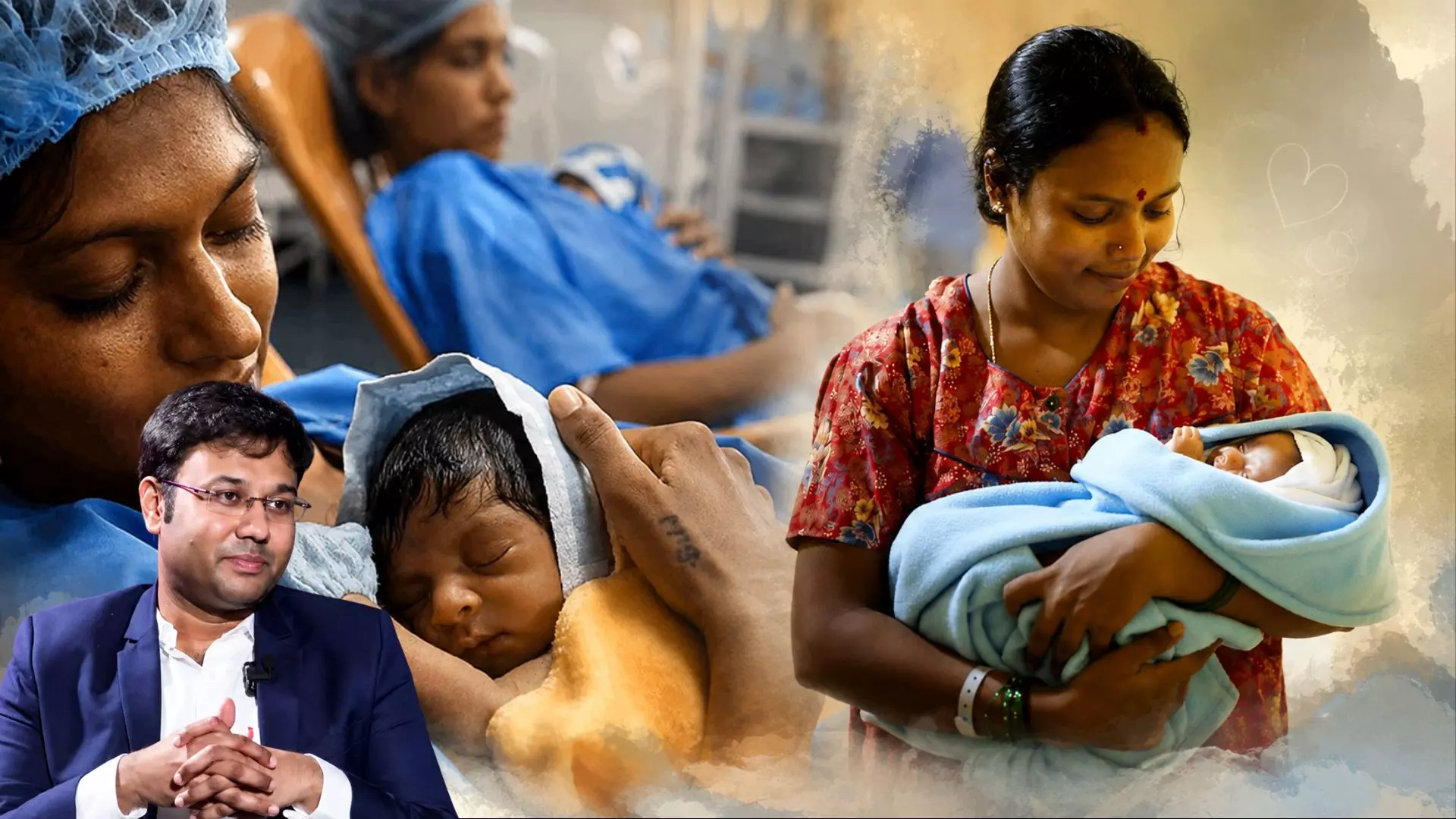
Why are fewer Indian mothers exclusively breastfeeding for 6 months? Expert explains
Exclusive breastfeeding has fallen sharply in India. Paediatrician D Sivaraman explains the reasons, risks, myths and what families can do

India's latest survey data shows a decline in exclusive breastfeeding among infants aged below six months.
A decline of nearly 8 percentage points in exclusive breastfeeding is a serious concern in a country the size of India, says paediatrician Dr D Sivaraman, who believes the issue cannot be solved by mothers alone but requires support from hospitals, families, employers and policymakers.
Speaking to The Federal, Dr D Sivaraman explains the reasons behind the trend, the role of hospitals and families, the importance of exclusive breastfeeding, and the growing pressures faced by mothers.
There has been a sharp decline in exclusive breastfeeding in India. What are the key reasons behind it?
Usually, it is female paediatricians or breastfeeding consultants who speak about breastfeeding. From a male paediatrician's point of view, an 8 per cent decline is significant. For a population like India, that is a huge number.
Exclusive breastfeeding means feeding only breast milk from birth till six months. Starting it at the right time and continuing it for six months is becoming difficult for many families in this generation because many mothers are working.
Also read: Uranium in breast milk: What new Bihar study means for mothers
Another aspect is the hospital system. From hospitals' and doctors' perspective, mothers need to be encouraged to start breastfeeding as early as possible. The World Health Organization's Baby-Friendly Hospital Initiative lays out guidelines on how breastfeeding should be started and sustained. These efforts must begin even before delivery.
Hospitals should ensure that nurses, doctors and all staff understand the importance of breastfeeding. There should be written protocols on when breastfeeding should begin, how to help mothers facing difficulties, and who should be consulted if problems arise.
How important is early breastfeeding after birth?
One of the key recommendations is that a baby should be put to the breast within an hour of birth.
In a normal delivery, this usually happens naturally. The baby is placed on the mother's chest for warmth, and nurses help the baby latch onto the breast.
What often gets missed is breastfeeding after a caesarean delivery. In large institutions and teaching hospitals, these protocols are followed strictly. But in some smaller hospitals, the paediatrician may attend the delivery and leave without checking whether breastfeeding was started within the first hour.
Most hospitals are trying to improve this. Even before delivery, during the final trimester, mothers should meet lactation consultants and receive counselling about breastfeeding.
What do you discuss during counselling sessions with expecting parents?
We explain how delivery happens, what happens immediately after birth, how milk secretion begins and what the natural breastfeeding process looks like. Parents are eager to understand these things.
The whole family should understand the process. Sometimes fathers and mothers understand, but mothers-in-law may have different beliefs and advice. That often increases stress for the mother.
Also read: World Breastfeeding Week: How breastfeeding benefits both baby, mother
As paediatricians, a large part of our work is not medicines but communication. We have to repeatedly explain and convince family members who may have held certain beliefs for decades. Even doctors sometimes struggle to convince their own parents or in-laws.
These pressures create additional stress for mothers. Breastfeeding can be stressful initially when the baby is not latching well, but once it is established, it becomes a very enjoyable and natural process. It removes the burden of preparing formula, maintaining bottles and ensuring cleanliness.
If breastfeeding starts properly, many mothers continue it for one-and-a-half to two years. It is one of the best things a mother can do for her child.
Why are many mothers unable to continue exclusive breastfeeding for six months?
Governments and hospitals are making efforts to initiate breastfeeding, but we still do not give enough importance to continuing it.
Many mothers begin asking about complementary foods when the baby is only three-and-a-half months old. They say their mothers or mothers-in-law are advising them to start early.
Another major concern is returning to work. Many mothers say they have only six months of maternity leave and may have already taken one month off before delivery. They feel they must start solids early so they can return to work.
There are also misconceptions. People compare babies and say another child looks chubbier and therefore must be healthier. Families then advise giving banana powder and other foods earlier than recommended.
Also read: Trichy mom donates 300 litres of breast milk, sets new national record
The strongest belief should come from the mother herself. She should feel confident that she will continue exclusive breastfeeding for six months based on scientific evidence and medical advice.
Although many workplaces provide six months of maternity leave, many others do not. The challenge is even greater for labourers and women from lower-income households. They often cannot afford to stop working and may struggle to balance breastfeeding with earning a livelihood.
Why is exclusive breastfeeding for six months so important?
The first reason is infection prevention.
Whenever you give anything other than breast milk, there is a risk of contamination. Formula, bottles and feeding equipment can introduce bacteria and viruses, even when handled carefully.
Breast milk is remarkably pure. Except in a few rare situations involving specific infections or medications, it remains safe and uncontaminated. Introducing other feeds increases the risk of infections.
The next issue is long-term health. Early infections can lead to diarrhoea and poor nutrition. If a child suffers repeated infections during the first six months, growth may be affected.
The first year is the most important period of growth. A newborn weighing around three kilograms usually doubles that weight by six months and triples it by one year. This rapid growth never occurs again during life.
That is why the first six months are so important. Breast milk alone is sufficient. There is no need for water or any other food. Breast milk already contains what the baby needs. The foremilk contains more water and satisfies thirst, while the hindmilk contains more protein and fat and satisfies hunger.
Breast milk is a living tissue. It contains not only nutrients but also bioactive components and antibodies. Mothers transfer antibodies developed through their own exposure to infections, helping protect their babies naturally.
Apart from helping babies, what are the benefits of breastfeeding for mothers?
Studies show that mothers who breastfeed continuously have a lower risk of developing breast cancer and ovarian cancer later in life.
Breastfeeding also helps with weight reduction.
Also read: Breastfeeding in infant's first three months linked with lower obesity risk in childhood
Even if a woman has only one child, she can still benefit from these protective effects. Breastfeeding is not only beneficial for the baby. It contributes to the mother's health in both the short and long terms.
Why do some states report a much steeper decline in breastfeeding than others?
I have worked in states such as Assam and West Bengal. One major difference I see is the strength of support systems.
In Tamil Nadu, support for mothers before and after delivery is generally stronger. ASHA workers regularly visit mothers after childbirth. Government programmes provide supplements and nutritional support.
Compared with many other states, monitoring systems are stronger and healthcare workers are supervised more closely.
Neonatal mortality has come down in many places, but support for continuing breastfeeding is not always as strong. Many people still underestimate the importance of breastfeeding. Once families move away from breastfeeding and begin formula feeding, infection risks rise and health outcomes worsen.
Returning to work, especially after a second or third child, is also a major factor. There is no single reason for the decline and no single solution.
Also read: TN Breastmilk Bank: Receivers turn donors, show thumbs down to age-old myths
Everyone must understand the importance of exclusive breastfeeding — policymakers, healthcare workers, mothers and families. It requires participation from the entire chain of support.
How important are maternity and paternity leave policies?
The issue goes beyond government programmes.
Private organisations also play a major role. Many women still do not receive adequate maternity leave. In many nuclear families, couples live alone and do not have support from relatives.
Even caregivers sometimes provide misinformation.
Fathers also need paternity leave because childcare responsibilities are shared.
Unfortunately, many mothers still ask paediatricians for advice on formula feeding because they have to return to work early.
One of the saddest realities is that many private hospitals in India do not provide paid maternity leave to female doctors. Government doctors generally receive it, but many private institutions do not.
This creates anxiety among women professionals. They worry about losing opportunities, being replaced or falling behind in their careers. These fears often push them to return to work early.
This is not a problem that can be solved through a single intervention. Society as a whole must recognise the importance of continuing breastfeeding.
What should parents know about formula feeding?
One positive development is that India has strict regulations on advertising formula feeds and baby food products. These advertisements are largely absent from television and digital platforms.
Formula feeding does have a role in specific situations, but those decisions should be made by a paediatrician. There are circumstances such as twin births, maternal illness or recovery from general anaesthesia where temporary formula feeding may be required.
However, from the beginning, parents should be told that formula feeding is temporary and that the goal is to return to breastfeeding whenever possible.
Healthcare workers must continue encouraging mothers and offering support through lactation consultants and nurses.
There is also a misconception that mothers who use formula are somehow failing. That is not true.
Also read: Formula milk industry undermines breastfeeding, jeopardises kids’ health: Report
Some mothers genuinely cannot breastfeed because of health conditions. In such cases, they should not feel guilty. They should consult a paediatrician and choose the appropriate formula.
Importantly, missing breastfeeding during the first month does not mean breastfeeding can never begin later. Many mothers successfully start breastfeeding after several weeks or even months with proper support.
Parents should continue trying and seek help from trained professionals whenever possible.
Parents should never start formula feeding on their own simply because a baby is crying.
Babies cry for many reasons. They may be cold, uncomfortable or have abdominal colic. Crying does not automatically mean hunger.
Formula can make babies sleep longer because it fills the stomach, but that can interfere with breastfeeding. Parents should always seek medical advice before starting formula feeding.
Are there myths about what breastfeeding mothers should or should not eat?
Many people ignore the mother's nutrition and focus only on the baby.
There are many myths. Some people say breastfeeding mothers should not drink much water or that wet hair can make a baby catch a cold. There is no evidence for such claims.
People also believe that certain foods eaten by mothers automatically cause gastric problems in babies. Again, there is little evidence for most of these claims.
One thing we do know is that excessive caffeine intake can make babies more alert because caffeine can pass through breast milk.
Another concern is poor maternal nutrition. Some communities place severe restrictions on protein intake. While choosing not to eat non-vegetarian food is perfectly acceptable, mothers still need adequate protein from other sources.
If a mother's own nutrition is poor, it becomes difficult to expect optimal nutritional support for the baby through breastfeeding.