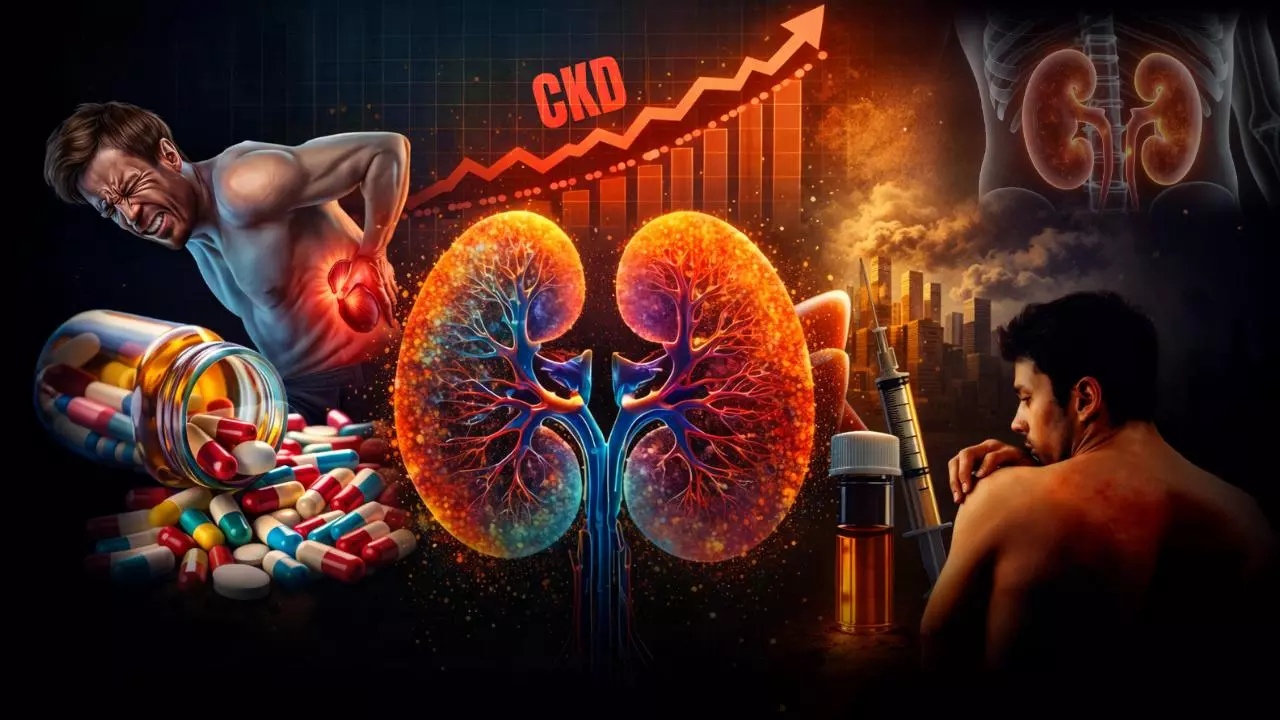
Chronic kidney disease affecting millions of Indians; doctors explain how to prevent
CKD affects 9.3 per cent of Indians. Annual kidney health checkups, especially for high-risk individuals with diabetes, hypertension, or family history, are vital

Chronic kidney disease (CKD) is silently affecting millions in India, and experts warn it could become one of the country’s top five causes of death. In 2021 alone, 128 million Indians were impacted, with 1,75,637 deaths and 6.49 million disability-adjusted life years (DALYs) lost.
Doctors are observing a surge in hospitalisations as CKD often progresses unnoticed from early stages to critical kidney failure, with many patients seeking help only when dialysis or transplantation becomes necessary.
Also read: Packaged drinking water safety in Tamil Nadu under scrutiny
A recent study in the International Journal of Urology and Nephrology highlights that much of this burden is preventable. Controlling diabetes and hypertension could potentially reduce CKD prevalence by 15 per cent, as lifestyle and urban environments play a significant role in the disease’s rise.
Rising prevalence
CKD affected nearly 9.3 per cent of the Indian population in 2021. “Most patients only seek help when dialysis or a kidney transplant becomes inevitable,” notes the study, stressing the silent nature of the disease. Early symptoms, such as fatigue, swelling in the legs, foamy urine, or frequent urination, are often ignored or mistaken for stress.
Also read: Waist-to-height ratio better indicator for obesity risk than BMI: Study
Urban lifestyles are a growing contributor. “Fast-paced life, processed and takeaway foods, and high sodium intake are damaging kidneys,” says Dr. M Navinath, Consultant Nephrologist, Asian Institute of Nephrology and Urology (AINU), Chennai. Poor dietary habits, coupled with stress, obesity, and delayed screenings, are fueling the rise in CKD cases.
Simple, inexpensive tests — serum creatinine and protein in urine — can detect early kidney damage, but most patients avoid routine checks until the disease reaches advanced stages.
Symptoms and risks
CKD is often called a silent disease because the kidneys lose function gradually. Early signs include fatigue, weakness, swelling in the legs or feet, foamy or bloody urine, frequent urination, itchy skin, poor appetite, and shortness of breath.
Also read: Are earphones driving irreversible hearing loss among India’s youth? | Second Opinion
“Patients present late with advanced CKD, requiring emergency dialysis or hospitalisation for complications like anemia, bone fractures, or cardiovascular issues,” explains Dr. Jayanivash J, Consultant, Renal Science, SIMS Hospital (SRM Institutes For Medical Science).
Without intervention, CKD can progress to end-stage kidney disease (ESKD), leaving only two survival options: dialysis or kidney transplant. While transplants offer a better quality of life and longer survival, organ shortages limit availability.
Prevention and management
CKD can be largely prevented and managed if detected early. Key lifestyle measures include:
Monitoring blood sugar and blood pressure regularly
Reducing salt intake to WHO-recommended levels (5-6 grams/day)
Eating fresh fruits and vegetables and staying hydrated
Exercising regularly and avoiding excessive use of painkillers
“Advanced CKD drastically reduces quality of life with constant fatigue, dietary restrictions, hospital visits, and financial burden,” says Dr. Jayanivash. Early screenings and lifestyle changes are crucial for preventing disease progression.
Call to action
Experts emphasise that early detection and intervention can save lives. Annual kidney health checkups, especially for high-risk individuals with diabetes, hypertension, or family history, are vital.
Could you be at risk without even knowing it? Early action could save your kidneys.
(The content above has been transcribed from video using a fine-tuned AI model. To ensure accuracy, quality, and editorial integrity, we employ a Human-In-The-Loop (HITL) process. While AI assists in creating the initial draft, our experienced editorial team carefully reviews, edits, and refines the content before publication. At The Federal, we combine the efficiency of AI with the expertise of human editors to deliver reliable and insightful journalism.)