








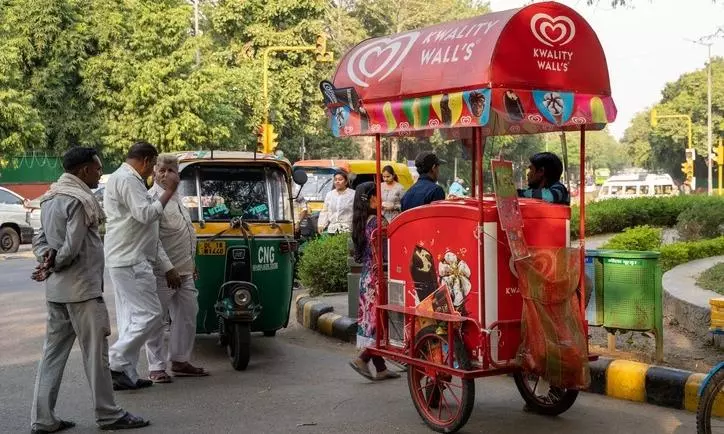
Kwality Wall’s pure milk pivot is a wake-up call for Indian consumers
Driven by viral social media exposés and calls for transparent labels, the frozen dessert giant drops palm oil for milk fat to protect its Indian market share

For generations, Indian families have treated ice cream as a wholesome indulgence. The logic seemed foolproof: ice cream is made of milk, milk is healthy, and therefore, sharing a tub of ice cream with your kids was fundamentally nutritious, if you could overlook the 'ice' part of it.
Kwality Wall’s last week shared a shocker. Recognising that a rising tide of health-conscious consumers feels misled, the brand announced a rapid transition to a 100 per cent milk-based dairy formulation. Nearly half of its portfolio is switching immediately, with a total transition set for completion by 2027.
The brand is majority-owned by The Magnum Ice Cream Company, which acquired it from FMCG firm Hindustan Unilever Ltd (HUL) last year.
What we actually eat
All these years, when we thought we were buying a dairy treat, we were often buying a concoction of water, sugar, milk solids, and cheap vegetable oils — predominantly palm oil. Legally, the Food Safety and Standards Authority of India (FSSAI) forces these products to be labeled as "Frozen Desserts" rather than "Ice Cream," but clever marketing kept consumers in the dark for a long time.
Also read | Food safety lapses spark concern in Tamil Nadu after outbreaks, deaths
From a health standpoint, the difference between real dairy fat and processed vegetable fat is huge.
“Palm oil is incredibly rich in saturated fat and highly energy-dense, but that energy comes purely from fat without providing any other supporting nutrients,” V Bhavani, Dietician at ESIC Medical College and Hospital in Chennai, told The Federal.
Warning about the long-term medical implications of the vegetable fat formulation, Bhavani added, “Over time, the saturated fat in palm oil can elevate cholesterol levels, directly affecting cardiovascular health. While milk also contains fat, it delivers that fat naturally balanced with other essential nutrients.”
For over 20 years, a regulatory loophole allowed corporations to use misleading ice cream branding and imagery to push non-milk ice cream on an unsuspecting public. The result? A dietary staple that people assumed was building strong bones was actually introducing highly processed lipids into their diets.
Geographic double standard
There is also a geographic double standard regarding consumer health. In Western markets, Unilever’s flagship ice cream brands (like Wall’s in the UK) have always used genuine milk solids to meet strict local regulations.
However, for the Indian market, premium dairy fat was substituted with cheap, heavily processed palm oil.
Watch/Read | Why FSSAI is cracking down on ‘100 pc’ claims of food products
This, say critics, was driven purely by corporate economics: palm oil maximised profit margins in a price-sensitive market. It also offered a higher melting point to survive India’s tropical heat and unreliable cold-chain logistics. Essentially, public health was traded for supply chain convenience.
Corporate and social media wars
For years, Amul is said to have weaponised this health distinction with national campaigns highlighting that its products were made from "real milk," while contrasting them against competitors utilising vegetable oil.
A bitter 2017 legal battle ensued when HUL took Amul to court for product disparagement, but the legal warfare permanently pushed the health distinction into the public spotlight.
Ultimately, it was a modern wave of social media advocacy that forced the final reset. Health influencers like Revant Himatsingka (known on social media as "Food Pharmer") began simply turning packages around and reading the ingredient labels aloud to millions of followers. The viral exposés — highlighting that Western countries enjoyed healthy, dairy-based Wall's products while Indian consumers were being sold artery-clogging palm oil alternatives — sparked widespread backlash across platforms like Instagram and Reddit.
“Everyone needs to check the labels. People assume that ice cream is made from milk, but that isn't always the case,” noted Bhavani. Lack of consumer awareness allowed brands to market cheaper substitutes for too long, she added. “While reading ingredient lists is a standard habit abroad, this shift towards checking labels is only just beginning in India.”
Changing the product's DNA
The urgency to fix this health narrative was so severe that Magnum Ice Cream Company bypassed traditional corporate procedures to prioritise the transition to milk.
In an interview with Economic Times, global CEO Peter ter Kulve was blunt about the identity correction: "We are not a frozen dessert company anywhere in the world; we are an ice cream company. In India, we changed everything, everything."
To support this massive dairy pivot, the company is overhauling its Indian supply chain, scaling up its manufacturing capabilities inside the country, introducing regional flavors like kulfi, and investing heavily in infrastructure to ensure its new milk-based products retain their freshness.
This article is written by V Sarvesh, who is interning with The Federal.