








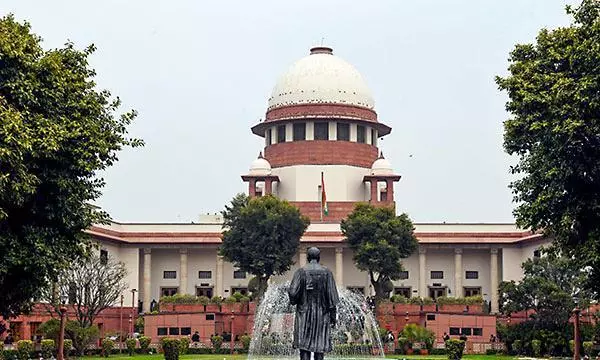
Why SC says stem cell therapy can't be used to treat autism
The apex court termed the usage unethical outside clinical trials and directed NMC and AIIMS to re-route current patients into approved research protocols

The Supreme Court has ruled that stem cell therapy cannot be used as a clinical treatment for Autism Spectrum Disorder (ASD), saying that using stem cell interventions for autism outside the framework of approved and monitored clinical trials is unethical and would also be medical malpractice.
This ruling by the apex court comes in the background of experimental therapies being sold to families that are desperate for solutions, given the fact that there is no curative treatment for ASD, a complex neurodevelopmental condition.
Scientists have often warned that there is no credible evidence that has proved that stem cell therapy is effective or safe for autistic patients. This ruling by the Supreme Court reinforces the principle that patients cannot demand experimental treatments as a matter of right, and that consent is valid only when it is based on proven treatments.
The SC ruling
Stem cell therapy for ASD does not meet the criteria of “adequate information” required for valid medical consent.
Every use of stem cells in patients outside an approved clinical trial is unethical and must be treated as malpractice. Justice Pardiwala ruled that stem cell interventions are permissible only when used within approved, regulated, and monitored clinical trials, with the only objective of advancing scientific knowledge, not as routine therapy offered to patients.
For patients already undergoing stem cell therapy, to ensure continuity of care, the court directed the National Medical Commission, AIIMS, and the Secretary of the Ministry of Health and Family Welfare to ensure that they are re-routed into properly-approved clinical trials until structured research protocols begin.
Also Read: Autism Awareness Day 2025: Advancing neurodiversity and sustainability goals
The court ruled that consent is invalid if it is not based on adequate and credible scientific information. This aligns with global ethical standards which warn against the clinical use of stem cells without rigorous evidence.
A doctor breaches the reasonable standard of care if a treatment is administered without credible scientific evidence or when authoritative medical bodies have clearly stated that the intervention is not recommended. Any deviation from available scientific knowledge, particularly involving experimental interventions presented as treatment, exposes practitioners to liability for negligence, said the court.
Clear message
The SC ruling sends a clear message that medical innovation cannot be achieved at the cost of evidence, ethics, or patient safety, thus drawing a line between scientific exploration and exploitative medical practice.
Also Read: No evidence links vaccines to autism, says top vaccinologist Jacob John
The judgment makes it clear to the medical community that unproven treatments offered as therapy do not qualify as ethical healthcare. It also emphasises the need for evidence-based care, long-term support, and behavioural interventions for families with autistic patients.