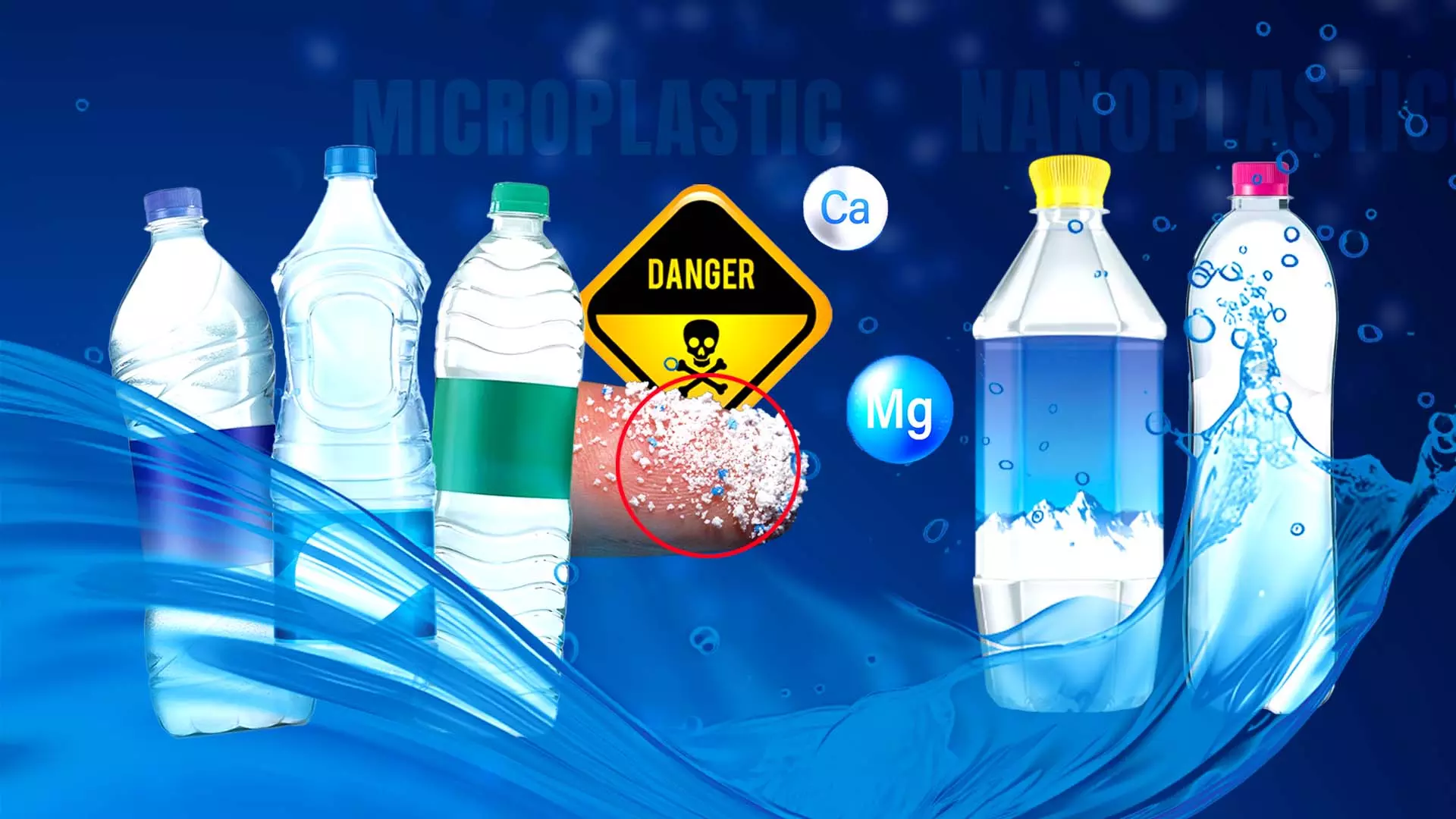
As India’s bottled water market continues to grow rapidly, experts recommend opting for natural mineral water where possible or ensuring a mineral-rich diet to compensate for deficiencies caused by purified water. Representative image
Unmasking bottled water: Mineral loss, hidden danger of microplastics
Packaged drinking water may be safe, but experts warn that RO treatment removes vital minerals. Does your water bottle nourish or just hydrate?

Concerns over water contamination, especially after recent deaths linked to polluted water in Indore, have renewed attention on what Indians drink daily. Bottled water is widely seen as a safer alternative, but experts say not all bottled water is equal.
Most popular brands in India are labelled as packaged drinking water, not natural mineral water. While considered safe for consumption, this water often undergoes heavy processing that may have long-term health implications.
Packaged drinking water is usually sourced from borewells, groundwater, or municipal supplies. It is treated using reverse osmosis (RO), ultraviolet (UV), or ozonisation methods to remove impurities. However, this process also strips away naturally-occurring minerals essential for the body.
Processing concerns
Although some minerals are artificially added back after treatment, experts point out that these have lower bio-availability. This means the body absorbs them less efficiently compared to minerals found naturally in water.
Also Read: One-litre bottled water could contain about 2.4 lakh plastic pieces: Columbia University study
In contrast, true natural mineral water is sourced from protected springs or aquifers. It contains naturally-occurring calcium and magnesium and does not undergo chemical processing, preserving its original mineral composition.
Health impact
Various studies and World Health Organisation (WHO) guidelines suggest that natural minerals in drinking water support bone health, heart function, and digestion. Demineralised RO water, when consumed over long periods, may contribute to mineral deficiencies.
Experts warn that regular consumption of demineralised water can lead to calcium and magnesium deficiencies. These deficiencies are linked to increased risks of cardiovascular issues, higher blood pressure, and osteoporosis, as observed in epidemiological studies.
Also Read: Indore water contamination: Guillain-Barré syndrome-like symptoms in woman?
A doctor explains, “Calcium and magnesium from natural sources in water are crucial for bone density. RO-treated packaged water often lacks these, potentially contributing to weaker bones and higher fracture risk over time, especially in populations with borderline dietary intake. Similar concerns have been found in patients relying solely on purified bottled water.”
Microplastic risk
Adding to the concerns, recent studies have found that bottled water may contain up to 2,40,000 microplastic particles per litre, most of them nanoplastics. These particles are suspected to cause inflammation, endocrine disruption, and chronic diseases.
A microbiologist highlights the importance of the water source and mineral bio-availability, noting that naturally-occurring minerals in spring-sourced water are more easily absorbed and play vital roles in metabolic processes. Artificially-added minerals in packaged water, the expert says, have lower efficacy.
Also Read: Indore-like water contamination scare hits Bengaluru’s Lingarajapuram
While both forms may be microbiologically safe, natural mineral water supports overall health without the risks associated with demineralisation.
What experts advise
As India’s bottled water market continues to grow rapidly, experts urge consumers to read labels carefully. They recommend opting for natural mineral water where possible or ensuring a mineral-rich diet to compensate for deficiencies caused by purified water.
Also Read: Chennai’s drinking water crisis mirrors deeper urban failures across India
With safety, nutrition, and long-term health at stake, the question remains: is the water you drink truly nourishing your body?
(The content above has been transcribed from video using a fine-tuned AI model. To ensure accuracy, quality, and editorial integrity, we employ a Human-In-The-Loop (HITL) process. While AI assists in creating the initial draft, our experienced editorial team carefully reviews, edits, and refines the content before publication. At The Federal, we combine the efficiency of AI with the expertise of human editors to deliver reliable and insightful journalism.)