








From La Cucaracha to CJP: The political story of the cockroach down the ages
The cockroach metaphor's history spans revolutionary songs, authoritarian rhetoric, protest movements and social media satire

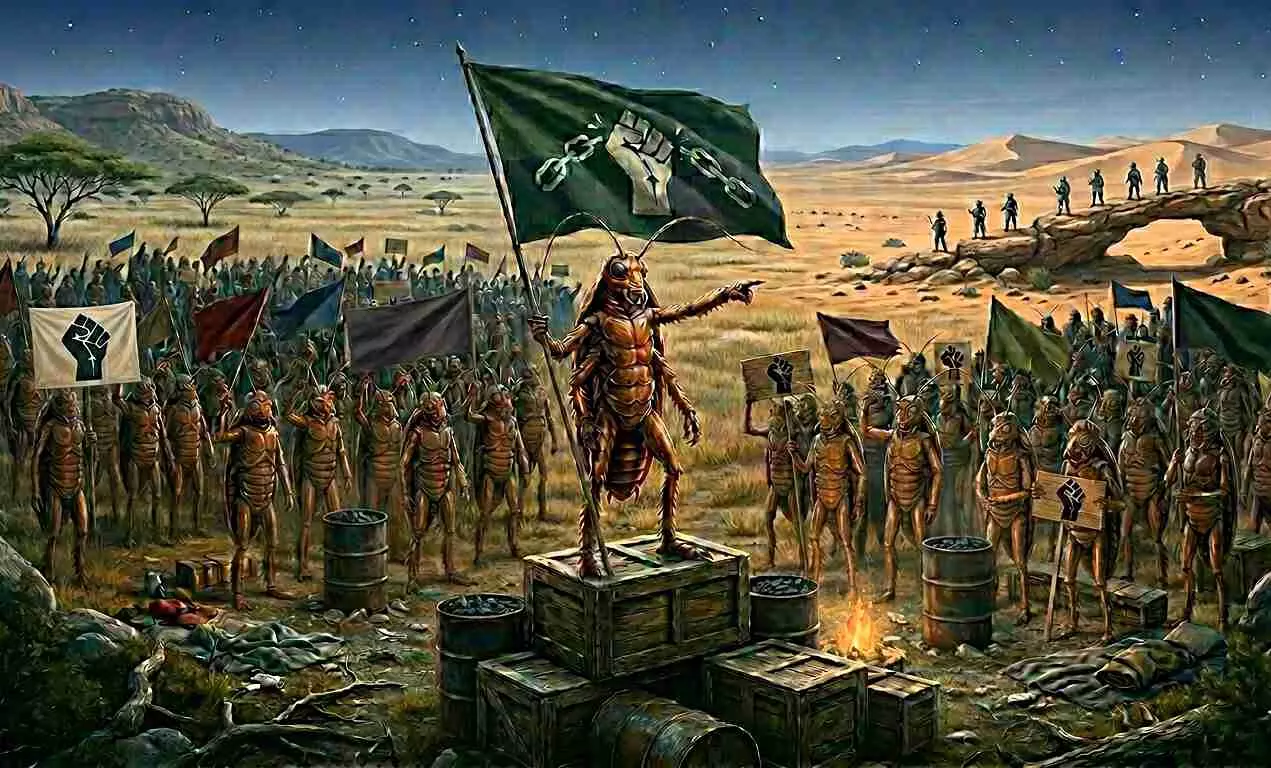
The Cockroach Janta Party (CJP) has been making headlines in India after the viral social media movement transformed the humble cockroach into a symbol of youth frustration, unemployment and political satire.
What began as an online response to controversial remarks allegedly comparing unemployed youth and agitators to "cockroaches" quickly turned into a meme-driven protest movement, with millions rallying behind the idea that if the system sees them as pests, they might as well wear the label proudly.
Also read: Who’s the ‘real’ Cockroach? Youth Congress jumps on the bandwagon
While the CJP episode may seem unusual, the cockroach has a surprisingly long and complex political history. Across continents and centuries, the insect has been used both as a weapon of political hatred and as a symbol of resilience and resistance.
"The Cockroach" song
One of the earliest and most famous political cockroaches appeared during the Mexican Revolution. The folk song La Cucaracha ("The Cockroach"), now recognised worldwide, became a vehicle for political satire in the early 20th century. Revolutionary groups constantly rewrote its lyrics to mock rival leaders and governments.
In some versions, the "cockroach" was widely understood to represent dictator Victoriano Huerta, with lyrics ridiculing his leadership and alleged addictions. The song turned the insect into a comic symbol of political incompetence and corruption, proving that humour could often become a powerful political weapon.
Also read: How right-wing groups are trying to crush Cockroach Janta Party
But the cockroach's history is not always humorous.
'Inyenzi' in Rwanda
Perhaps the darkest use of the metaphor came during the 1994 Rwandan genocide. Hutu extremist groups routinely referred to the Tutsi minority as inyenzi, meaning "cockroaches." The term was repeated relentlessly through newspapers, speeches and radio broadcasts, particularly on Radio Télévision Libre des Mille Collines (RTLM).
By portraying an entire community as insects rather than human beings, the propaganda helped create an atmosphere in which mass violence became easier to justify. Historians continue to cite Rwanda as one of the clearest examples of how dehumanising language can pave the way for atrocities.
Pest metaphor
Similar tactics have appeared elsewhere. Nazi propaganda often described Jews as vermin and parasites, while Libyan ruler Muammar Gaddafi referred to anti-government protesters as "rats" and "cockroaches" during the 2011 uprising.
Also read: Hirak Rajar Deshe vs Cockroach Janta Party: Gen Z satire echoes Satyajit Ray’s dystopia
Political analysts note that authoritarian leaders frequently rely on pest metaphors because they strip opponents of their humanity and present repression as a form of "clean-up" rather than persecution.
Symbol of common people
Yet the metaphor has also been reclaimed by ordinary people. In Egypt, playwright Tawfiq al-Hakim's 1966 work Fate of a Cockroach used the insect as a symbol of ordinary citizens trapped within an unresponsive bureaucracy.
Also read: CJP: Wangchuk calls himself 'honorary cockroach', urges govt to hear voices of youth
Activists in several countries have also adopted cockroach costumes and imagery during demonstrations to mock political elites and highlight the resilience of common people.
From revolutionary songs in Mexico to genocide-era propaganda in Rwanda and now India's viral CJP, the cockroach has often carried a hefty weight in global politics.