








Trump warns Venezuela’s vice president Rodríguez of ‘big price’ if she defies US
US President says Washington may escalate pressure if Rodríguez does not follow what he calls the right path for Venezuela, even as she demands Maduro’s return

US President Donald Trump told The Atlantic on Sunday (January 4) in a telephone interview that Delcy Rodríguez, Venezuela's vice president, could “pay a very big price” if she doesn't do what he thinks is right for the South American country.
That contrasted with the Republican president's comments about Rodríguez on Saturday when he said Secretary of State Marco Rubio had spoken with her and that she was willing to do what the US thinks is needed to improve the standard of living in Venezuela.
Also read | Maduro is out, but that doesn’t mean Venezuela is captured
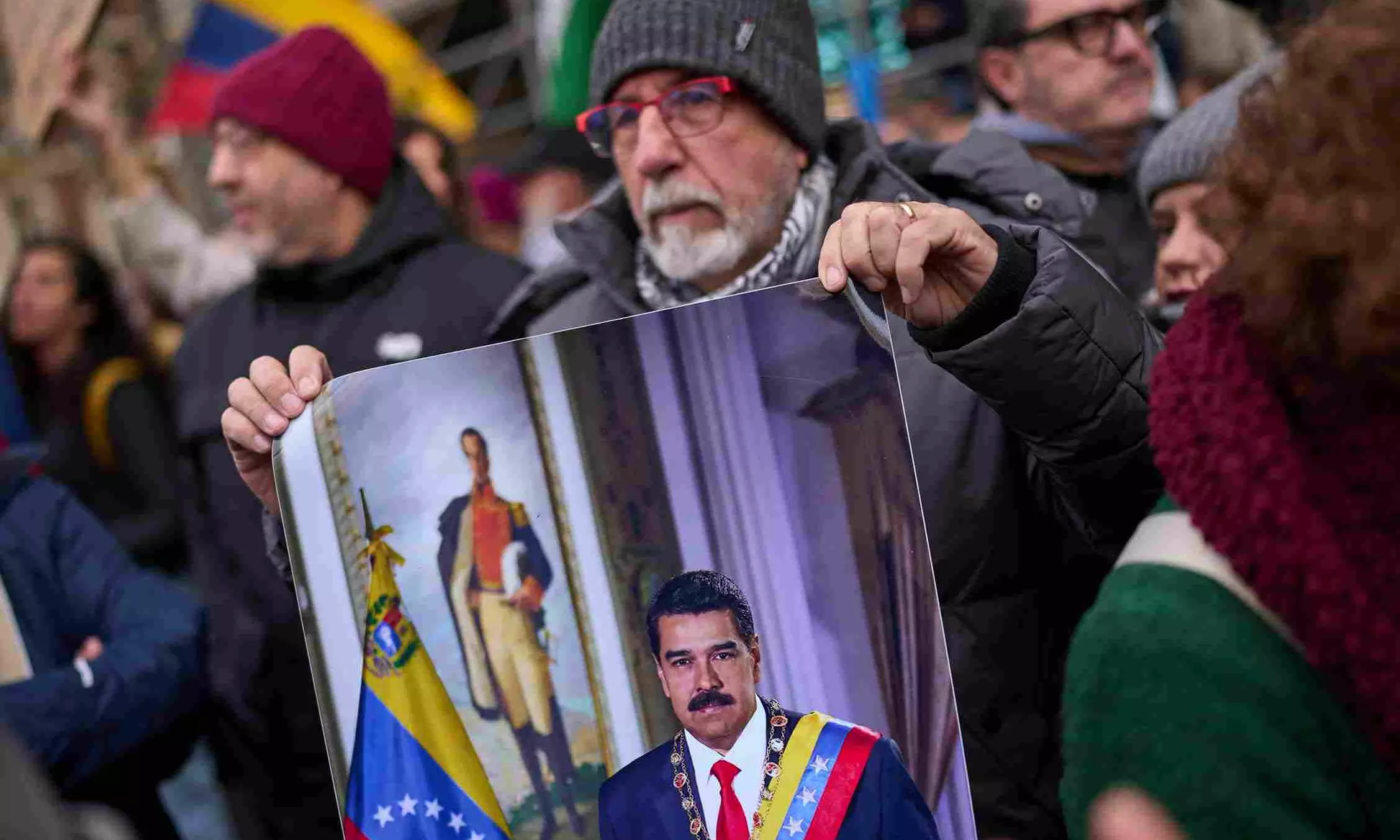
But Rodríguez has criticised Venezuelan leader Nicolas Maduro's removal from the country and has demanded that the US return him.
Trump told the magazine that “if she doesn't do what's right, she is going to pay a very big price, probably bigger than Maduro.” The president told the New York Post in an interview Saturday that the US wouldn't need to station troops in Venezuela if she “does what we want.”
Rubio clarifies US role in Venezuela
Meanwhile, US Secretary of State Marco Rubio on Sunday (January 4) suggested that the United States would not take a day-to-day role in governing Venezuela other than enforcing an existing “oil quarantine” on the country, a turnaround after President Donald Trump announced a day earlier that the US would be running Venezuela following its ouster of leader Nicolás Maduro. Rubio's statements on TV talk shows seemed designed to temper concerns about whether the assertive American action to achieve regime change might again produce a prolonged foreign intervention or failed attempt at nation-building.“And so that's the sort of control the president is pointing to when he says that,” Rubio said on CBS' “Face the Nation.” "We continue with that quarantine, and we expect to see that there will be changes, not just in the way the oil industry is run for the benefit of the people, but also so that they stop the drug trafficking.”
The blockade on sanctioned oil tankers — some of which have been seized by the US — “remains in place, and that's a tremendous amount of leverage that will continue to be in place until we see changes that not just further the national interest of the United States, which is number one, but also that lead to a better future for the people of Venezuela,” he added.
Downplays intervention fears
Trump's vow to “run” Venezuela, repeated more than half a dozen times at a news conference in Florida on Saturday, sparked concerns among some Democrats.
It also drew unease from parts of his own Republican coalition, including an “America First” base that is opposed to foreign interventions, and also from observers who recalled past nation-building efforts in Iraq and Afghanistan.
Also read | What we know about Venezuela’s oil, which Trump wants to ‘fix’ and sell
Rubio dismissed such criticism, saying that Trump's intent had been misunderstood by a “foreign policy establishment” that was fixated on the Middle East.
“The whole foreign policy apparatus thinks everything is Libya, everything is Iraq, everything is Afghanistan,” Rubio said. "This is not the Middle East. And our mission here is very different. This is the Western Hemisphere.”
Rubio also suggested that the US would give Maduro's subordinates who are now in charge time to govern, saying, “We're going to judge everything by what they do, and we're going to see what they do.” And though he did not rule out a US military presence in Venezuela, Rubio said the current US “force posture” was capable of stopping drug boats and sanctioned tankers.
A day earlier, Trump told reporters, “We're going to run the country until such time as we can do a safe, proper and judicious transition.” He later pointed to his national security team with him, including Rubio and Defence Secretary Pete Hegseth, and said it would be done for a period of time by “the people that are standing right behind me. We're gonna be running it we're gonna be bringing it back." The White House declined to comment beyond what Trump said on Saturday.
Maduro flown to Manhattan
Maduro landed late Saturday afternoon at a small airport in New York City's northern suburbs following the middle-of-the-night operation that extracted him and his wife, Cilia Flores, from their home in a military base in the capital, Caracas — an act that Maduro's government called “imperialist.” The couple faces US charges of participating in a narco-terrorism conspiracy.
Also read | From bus driver to president: Maduro's remarkable rise before the fall
The dramatic seizure of the Maduros capped an intensive Trump administration pressure campaign on Venezuela's autocratic leader and months of secret planning, resulting in the most assertive American action to achieve regime change since the 2003 invasion of Iraq. Legal experts raised questions about the lawfulness of the operation, which was done without congressional approval.
Venezuela's vice president, Delcy Rodriguez, meanwhile, demanded that the US free Maduro and called him the country's rightful leader as her nation's high court named her interim president.
After arriving at the airport, Maduro was flown by helicopter to Manhattan, where a convoy of law enforcement vehicles, including an armoured car, was waiting to whisk him to a nearby US Drug Enforcement Administration office. A video posted on social media by a White House account showed Maduro, smiling, as he was escorted through that office by two DEA agents grasping his arms.
He is due to make his first appearance Monday in Manhattan's federal court.
(With agency inputs)