








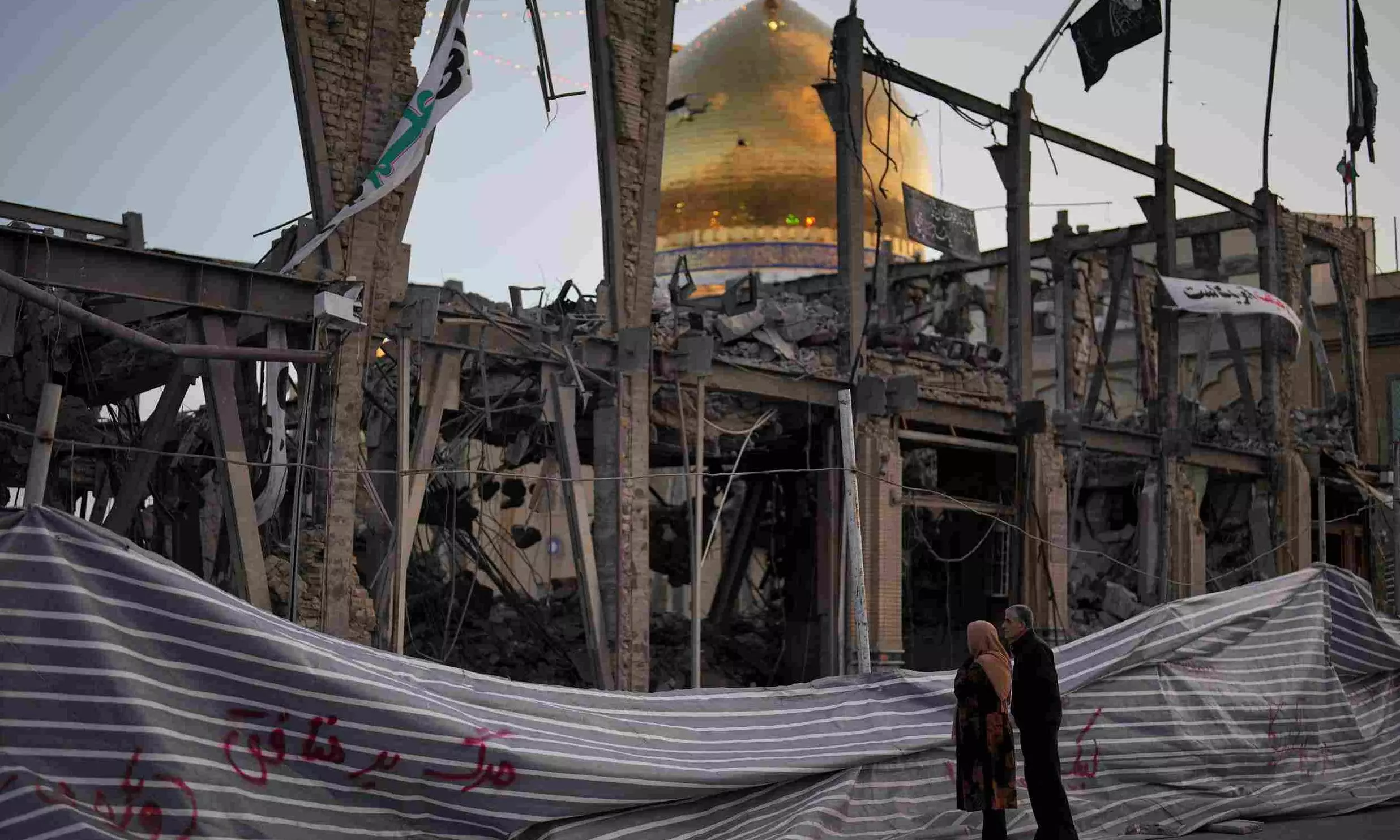
In Zanjan in Iran, pedestrians look at a destroyed building within the Grand Hosseiniyeh, with the mosque visible in the background, which officials at the site say was hit by U.S.-Israeli airstrikes last week. File PTI photo
10 ways Iran is mobilising civilians as strike fears grow under Trump shadow
From asking its citizens to avoid trains to forming human chains at key sites, Iran is blurring the lines between state defence and society-wide preparedness

As tensions with the US escalate amid the possible return of US President Donald Trump, Iran appears to be shifting beyond military readiness, actively preparing its citizens for potential attacks.
Public advisories, symbolic mobilisations, and civil defence messaging point to a strategy that appears to put civilians at the centre of deterrence.
Here are 10 ways Iran is going about this:
1. Advisories to avoid transport hubs
Warnings circulated — including from adversaries — have pushed civilians to avoid trains and railway lines, seen as potential strike targets.
2. Human chains around power plants
Authorities have urged citizens, especially youth, to form human chains around key power plants, turning civilians into symbolic shields.
3. Mass civilian mobilisation narrative
Officials claim millions have volunteered to defend the country, signalling a shift toward people-led deterrence.
4. Turning infrastructure into public causes
Critical sites like energy plants and bridges are being framed as “national assets” citizens must physically protect.
5. Psychological conditioning for strikes
Public messaging is increasingly preparing citizens for imminent attacks on civilian infrastructure, normalising disruption and risk.
6. Blurring civilian–military lines
Reports suggest military assets are embedded in schools, hospitals, and public spaces, making civilian zones part of the defence grid.
7. Timing coordinated civilian actions
Calls for gatherings — like the 2 pm human chain mobilisation — is showing Iran's organised, time-bound civilian participation.
8. Information control and blackout readiness
Past and ongoing internet restrictions indicate the state’s ability to control information flow during conflict.
9. Symbolism as deterrence
Civilian presence at key sites is meant to raise the political and moral cost of any US strike.
10. War footing at the societal level
From mobility warnings to public mobilisation, Iran appears to be shifting from state defence to society-wide preparedness.
Next Story