








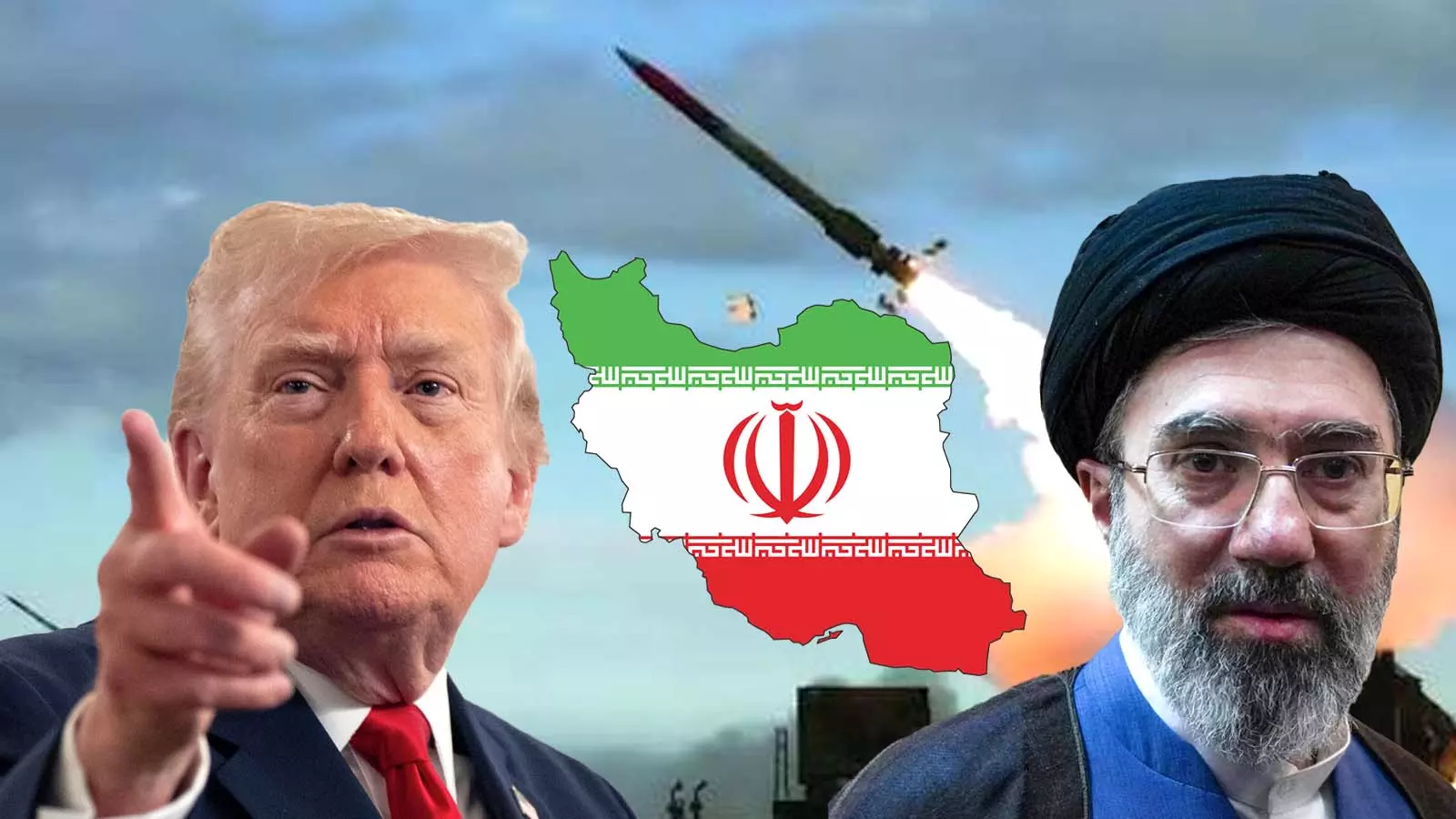
US-Iran conflict escalates as Gulf nations go on high alert after fresh strikes
Air defences were activated across Bahrain, Kuwait and Qatar after the US struck Iran and Tehran retaliated with missile and drone attacks

The Middle East is once again on edge after the United States launched a fresh wave of strikes on Iran early Sunday (July 12), hours after Tehran announced it was closing the Strait of Hormuz — the world's most critical energy shipping route — “until further notice.” Iran responded by launching missile attacks targeting Bahrain, Kuwait, Qatar and the United Arab Emirates.
Also read | Trump threatens harsher Iran strikes as Strait of Hormuz traffic grinds to near halt
Air defence systems were deployed across the region, airspace surveillance was tightened, and several governments issued emergency advisories as Iran expanded its response beyond direct attacks on US positions.
Gulf nations on alert
The swift escalation heightened concerns that the confrontation between the US and Iran could spread across the Gulf, putting regional security, critical energy infrastructure and one of the world's busiest maritime shipping routes at risk.
Kuwait's armed forces said they were actively intercepting hostile aerial targets within the country's airspace, though officials did not immediately reveal how many objects had entered Kuwaiti skies or where they had originated.
Separately, Iran said it had launched multiple waves of drone attacks targeting US military facilities in Kuwait, claiming explosive drones hit a Patriot air defence system, an ammunition depot and a radar installation. Those claims have not been independently verified.
The incidents represented one of the gravest security breaches involving Kuwaiti airspace in recent years.
Bahrain activated emergency warning sirens after the Interior Ministry issued a nationwide alert as regional tensions continued to mount. Iran later claimed it launched a second wave of drone attacks targeting US military communications systems and radar facilities in Bahrain. There was no immediate confirmation from Bahraini or US officials. The kingdom hosts the headquarters of the US Navy's Fifth Fleet, making it one of Washington's most important strategic bases in the Gulf.
Residents across Qatar reported hearing loud explosions as authorities sent emergency alerts to mobile phones, urging the public to remain vigilant. Iran's Islamic Revolutionary Guard Corps (IRGC) claimed it had launched missile strikes on Al Udeid Air Base, the largest US military installation in the Middle East. The IRGC said the attack destroyed a fighter aircraft maintenance centre and a command-and-control facility at the base. Neither US nor Qatari authorities immediately confirmed Iran's claims.
Strait of Hormuz shut again
Earlier, Iran said the Strait of Hormuz was closed once again after a warning shot fired by its military struck a vessel using an unauthorised route in the critical waterway, further jeopardising the already tenuous ceasefire agreement with the United States.
US Central Command said a short time later that its forces began a third round of strikes against Iran. There were explosions in Bandar Abbas and Sirik, two towns along the shores of the strait, Iran state media reported.
“The United States is imposing a heavy cost by continuing to degrade Iran's ability to attack civilian mariners and commercial ships freely transiting the strait,” the American military said.
Also read | Trump vs Mojtaba: Iran vows 'revenge' for Khamenei death as US readies '1,000 missiles'
A Cyprus-flagged container ship was hit by Iran and suffered "significant engine room damage" and a civilian crew member is missing, US Central Command said.
US-Iran tensions deepen
Senior US officials had previously said in Washington that negotiations to further cement last month's deal to end the war will be unable to progress without the strait being secure — and even said they wanted Iran to offer public statements to that effect.
Instead, the Revolutionary Guards Corps said multiple vessels "disregarded our warnings and instructions to correct their course and proceed along the approved route." One of them "was struck by a warning shot and brought to a stop." Iran said that the strait would remain closed "until further notice" and said it would consider targeting "additional enemy bases in the region" if it faced more attacks.
A little more than an hour later, the US announced its own new round of strikes. "Iran made a poor choice. Now they pay," Defence Secretary Pete Hegseth posted on social media.
Attacks follow diplomatic talks
The latest flurry of shots from both sides followed Iran and Oman's foreign ministers meeting on Saturday to discuss the strait that lies between them, after days of Iranian attacks on ships and US retaliation that dealt a blow to the interim deal to end the war.
Iran's new supreme leader, still unseen since the war began, also vowed in his first statement since the funeral of his father, Ayatollah Ali Khamenei, that Iranians would avenge his killing in the war's opening strikes on February 28.
Such revenge "is the will of our nation and must certainly be carried out," Supreme Leader Mojtaba Khamenei said in a statement carried on state television, hours after US President Donald Trump threatened more missile attacks.
Oman said it and Iran agreed to keep talking about the Strait of Hormuz "at the technical and political levels."
Iran accuses US of violating truce
Iranian Foreign Minister Abbas Araghchi said before the new round of strikes that he met with his counterpart in Oman to discuss "appropriate mechanisms for ensuring the safe passage of ships." The world for decades has considered the strait an international waterway. Iran has insisted that the strait now remain under its control and that it be allowed to charge ships moving through it, a stance it took after the war began. The US urges mariners to transit on a southern route through Oman's territorial waters.
About a fifth of all traded oil and natural gas passed through the strait before the war began. Iran's grip on it during the war led to a global energy crisis, though oil prices have sharply dropped since wartime highs of USD 120 a barrel.
Iran's top diplomat also accused the US of violating the interim deal by ending waivers allowing Iran to sell crude oil on the open market in US dollars. Washington ended them in response to the attacks on ships in the strait.
"Reality check: There can only be mutual compliance," Araghchi wrote on social media.
‘Responded to threats to kill me’: Trump
Trump said he's personally been the target of an Iranian plot, and he said the US military would automatically retaliate if he was killed.
Also read | Israel warns US of alleged Iranian plot to assassinate Donald Trump: Report
He wrote on social media early Saturday that “1000 Missiles are Locked and Loaded and aimed at the Islamic Republic of Iran, with thousands of more to immediately follow, should the Iranian Government act on its threat.” However, such retaliation would have to be ordered by Vice President JD Vance, who would become commander-in-chief if Trump were to be killed.
Trump said he was responding to threats "to assassinate, or attempt to assassinate" him. During Khamenei's funeral, mourners held posters or banners calling for Trump to be killed along with Israeli Prime Minister Benjamin Netanyahu.
The US president has declared the ceasefire over but said the US would continue negotiations.
US officials, speaking Friday on condition of anonymity about the current situation with Iran, said the resumption of strikes even before the latest round came as a result of what they described as a rogue faction of Iranian hard-liners who were trying to sabotage the ceasefire.
(With agency inputs)