








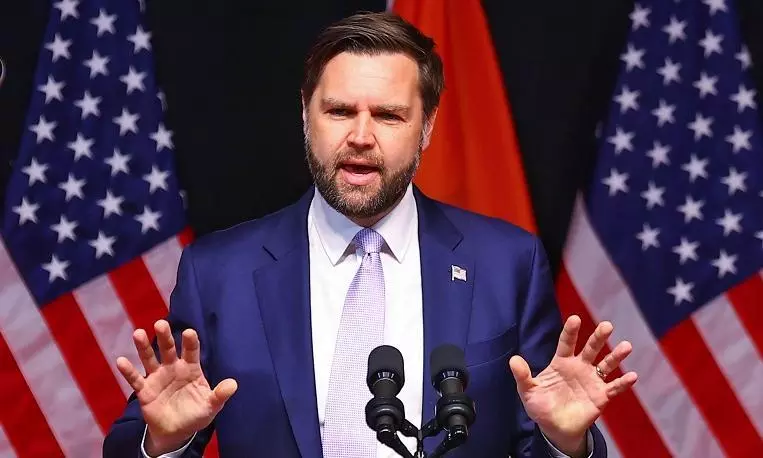
White House postpones sending Vance to Switzerland for talks with Iran negotiators
The White House cited logistical reasons for delaying Vance's trip even as the latter accused some members of Netanyahu's Cabinet of failing to appreciate American support

The White House has said that Vice President JD Vance isn’t leaving for Switzerland to lead a new round of talks with Iran about its nuclear program, citing difficult logistics for negotiations meant to add details to an agreement signed by President Donald Trump a day ago, according to news agency AP.
The White House said in a statement that plans for the technical talks have not been finalised, and said the US delegation has been prepared to depart at the first available opportunity.
The announcement followed a report from Al-Mayadeen, a pan-Arab satellite channel that is politically allied with the Iranian-backed Lebanese militant group Hezbollah, that Iran was delaying sending its delegation to Switzerland over Israel's ongoing military campaign in Lebanon.
Strait of Hormuz blockade lifted
The US on Thursday lifted its blockade of Iran, and oil tankers began freely moving through the Strait of Hormuz after months of being unable to use the critical channel, as the tentative agreement to end the war took effect.
Hours later, Iranian Supreme Leader Ayatollah Mojtab Khamenei endorsed direct negotiations with the US in a statement read by state media. It was Khamenei's first reaction to the deal recently reached between Iran and the US to end hostilities. “It is obvious that the face-to-face negotiations that will be held in the future will not mean accepting the enemy's opinion,” he said. The supreme leader has not been seen in public since he was wounded in a strike at the start of the war.
Vance slams Israeli ministers
Earlier, Vance publicly rebuked members of Israel's government for criticising the agreement and warned that Israel is increasingly isolated internationally.
Vance lashed out at members of Israel's government, saying that the country is deeply isolated and its leaders have failed to appreciate American diplomatic and military support. The comments deepened a rift that has emerged between the two allies over the interim deal reached by the United States and Iran to end their war.
“Donald J Trump is the only head of state in the entire world who is sympathetic to the nation of Israel at this moment in time,” Vance said during a news briefing at the White House on Thursday.
“The problem for Israel is not Donald J Trump, and anybody in Israel who thinks their biggest problem is the president of the United States needs to wake up and smell the reality of the situation that country is in.” Israel and the US jointly launched the war against Iran on Feb 28, closely coordinating the more than monthlong military operation.
But disagreements quickly emerged following a preliminary April 8 ceasefire agreement, with Israeli Prime Minister Benjamin Netanyahu pushing to continue the campaign and Trump moving to wind down a war that was deeply unpopular in the US and rattled the global economy.
While Netanyahu has been careful not to openly criticise this week's ceasefire deal, some members of his Cabinet have been more outspoken. National Security Minister Itamar Ben-Gvir, who leads a small ultranationalist party, this week declared that Israel is not “bound” by Trump's agreement and said it would not cave in to international pressure.
Netanyahu's office declines comment
Vance noted that Netanyahu has not publicly criticised Trump, but he accused unnamed members of Netanyahu's Cabinet of being ungrateful. He said Israel has few friends in the international community and protected itself with large quantities of weapons paid for by the United States.
Netanyahu's office declined to comment on Vance's statement.
In recent days, Trump has expressed frustration with Netanyahu, claimed credit for Israel's existence and has described the Israeli leader as “crazy”. He sidelined Israel throughout the negotiations, and criticised Israeli airstrikes in Beirut.
In his first comments on the newly signed memorandum of understanding, Netanyahu on Thursday said Israel's military will stay in a zone of territory it is occupying in southern Lebanon “as long as Israel's security needs require it”.
The comments threatened to undermine the deal, which calls for a halt in all fighting and respect for Lebanon's territorial integrity.
Netanyahu, however, noted it was important “to maintain the important relationship with our American friends who fought shoulder to shoulder with us, and we greatly appreciate that”.