








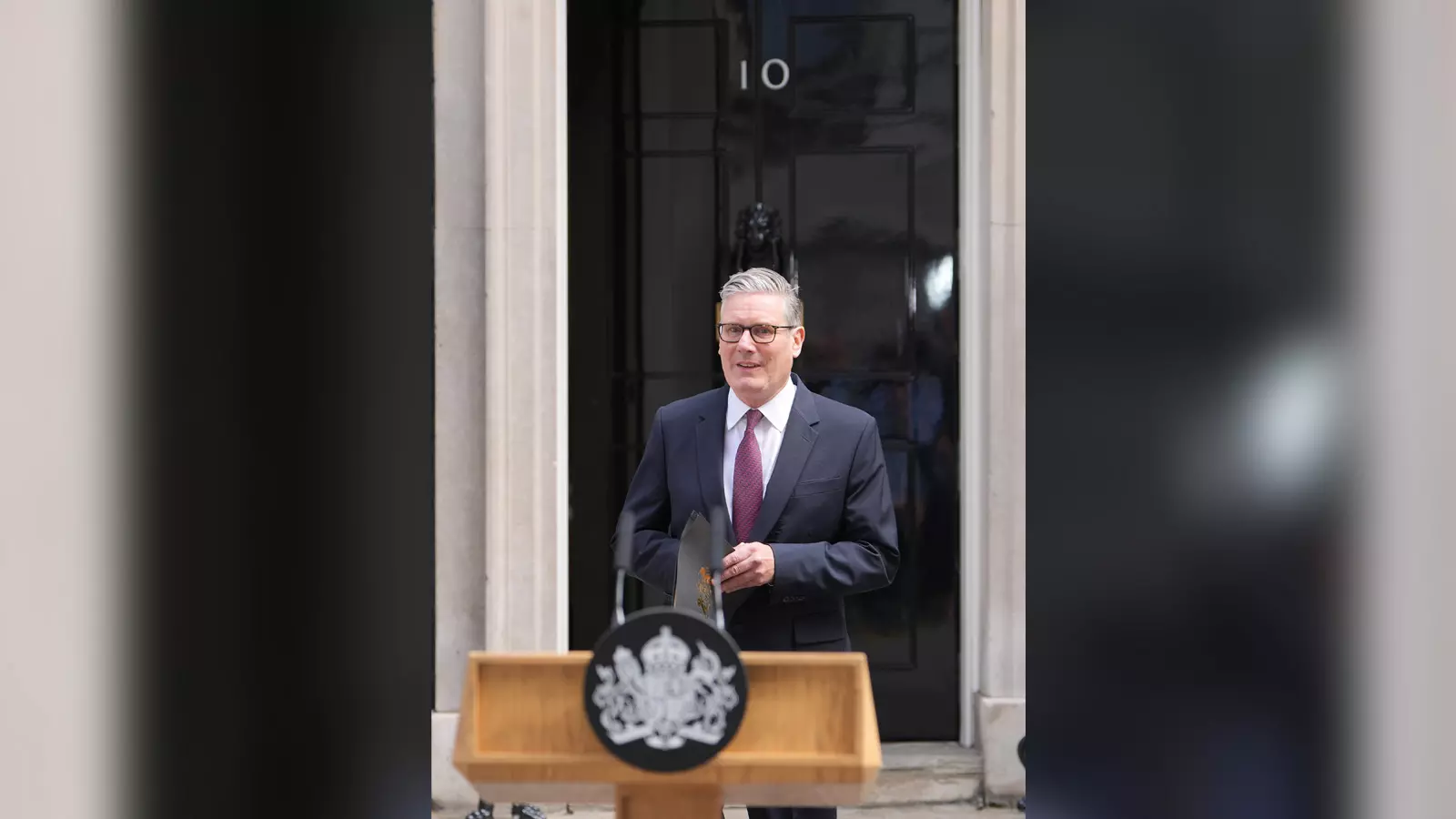
UK Prime Minister Keir Starmer, who quit on June 22, 2026, speaks outside 10 Downing Street in London. Photo: AP/PTI
Policy moves, U-turns that drove Keir Starmer's resignation as British PM
Two years after a landslide victory, the Labour leader steps down following local election disasters, policy changes, and mounting internal rebellion

Two years ago, when Keir Starmer became Britain’s first Labour prime minister in 14 years, he renewed hope over stability and pragmatism in British life after a long and fragile Conservative era. But that hope seemed to have a short life as the leader stepped down on Monday (June 22), following a spell of uncertainty. The Labour leader’s end came despite him vowing to fight off challenges.
Also read: UK PM Starmer announces ban on social media apps for children under 16
Calls were growing strong among the Labour MPs seeking a replacement for the 62-year-old leader who secured a landslide victory in 2024. He made several U-turns on policies that were unpopular and faced a growing number of scandals.
Several major government figures have quit during his time in governance, which showed a growing discontent. The Labour Party lost nearly 1,500 councillors in local elections across England recently.
UK to get 7th PM in 10 years
Starmer’s exit would mean 10 Downing Street will get its seventh PM inside a decade. Conservative Liz Truss served the shortest term among the six who have perished in this time – 50 days.
Did Starmer, who said he would remain as the PM until an orderly handover of power is staged, run out if options? After all, he had said amid the challenges that he would “get on with governing”.
Local poll debacle, Mandelson issue
While the leadership crisis around the Labour leader had been snowballing for some time, things came to a head following damaging local election results in May.
Starmer’s government had already reversed course on three major policies within a single month after internal party pressure, while the appointment of Lord Mandelson as British Ambassador to the US — despite failing security vetting — raised fresh questions about his judgement, compounded by Mandelson's known links to convicted sex offender Jeffrey Epstein.
He was sacked from the diplomat’s post later in 2025, but by then the damage had been done. Even Mandelson’s resignation from the Labour Party earlier this year earned Starmer brickbats as the Opposition said the former diplomat should have been kicked out instead of him quitting.
Labour's local election losses were deepened by surging support for Nigel Farage's Reform UK and the Green Party. The Liberal Democrats are also emerging as a major challenge to the Labour voter base. As pressure mounted, Labour MP Catherine West threatened a leadership challenge, and though she later withdrew, nearly 90 MPs have since called for Starmer's resignation.
Questionable leadership
One area where Starmer has clearly struggled is leadership. He failed to rise to the occasion in matters of administration and was unable to lead the UK towards economic growth and out of the cost-of-living challenge. Repeated missteps were also considered a major reason for his leadership failure.
Also read: Who is Andy Burnham, 'King in the North,' set to be next British PM?
It was not long after he took over the reins that Starmer was increasingly being seen by both voters and his own party as one who lacks conviction and direction. He found himself challenged by competing Labour factions, lobbied by those harbouring vested interests and disliked by anxious voters who did not take his indecisions lightly, a Reuters report said.
As policies unravelled and trusted aides struggled to define a clear vision for Britain, Starmer increasingly leaned on his wife Victoria for counsel, the report added. After disastrous local election results in May, a long lunch with her steeled his resolve to fight on. But a subsequent weekend retreat at Chequers proved to be the turning point as Starmer finally decided to resign.
What Trump said
Even US President Donald Trump predicted Starmer’s resignation, saying immigration and energy were two areas where the latter failed. On Sunday (June 21), he said on a post on his Truth Social platform that Keir Starmer will resign as Prime Minister of the. "He failed badly on two very important subjects- IMMIGRATION AND ENERGY (OPEN NORTH SEA OIL!). I wish him well!”
The UK government announced last November that it would provide no new oil and gas exploration licenses, resulting in widespread criticism. Trump has been critical of the Starmer government over the North Sea oil exploration ban and also London’s stance on the Iran war, differing with that of Washington.
Who next after Starmer?
As talks intensify over who would replace Starmer, the name of Andy Burnham is doing most rounds.
A senior British Labour MP who had served the mayor of Greater Manchester since 2017, Burnham said in a social media post after Starmer's resignation, “His (Starmer) decision marks the beginning of a transition and this process must be conducted in an orderly and responsible way. I will put myself forward as part of this process. The country expects stability, seriousness and a continued focus on the issues that matter most and that is what it will get. As we move forward, our priority must be to work together to get the country back to where we all want it to be.”
Also read: UK PM Starmer faces resignation calls over Mandelson vetting row linked to Epstein
Former UK health secretary Wes Streeting, who had stepped down previously criticising Starmer, was another possible name. However, in a post on X on Monday, he said he will back Andy Burnham to become the next Labour leader, making it highly likely that Burnham will become the next PM.