








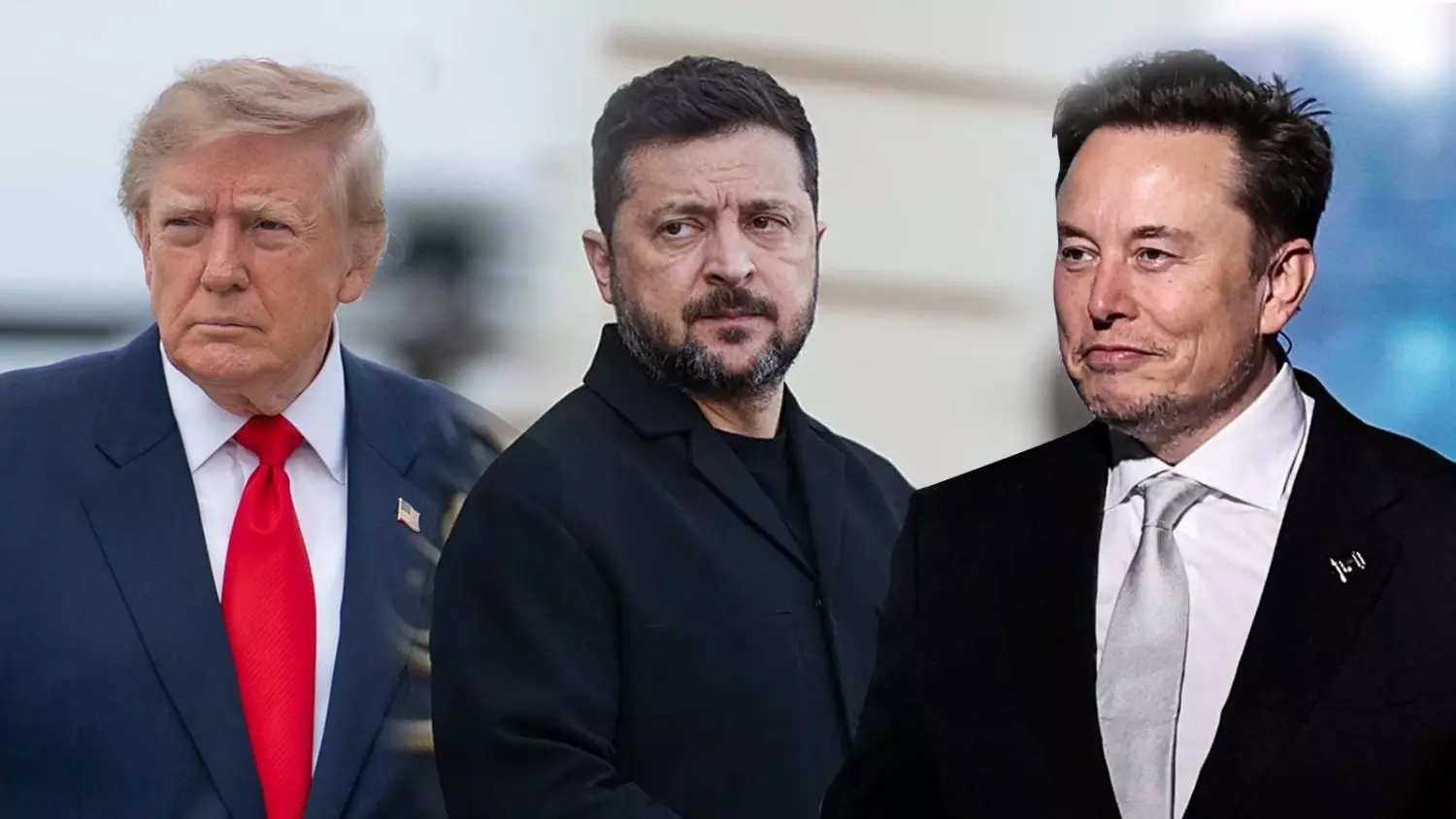
Ukraine has accused the US of indirectly helping Russia by failing to warn it of incoming missile strikes and limiting its military response through changes to the satellite system.
Musk calls for Zelenskyy to quit as Starlink row strains US-Ukraine ties
Ukraine’s reliance on US-controlled satellite communications has come under scrutiny after disruptions to Starlink and Starshield, intensifying calls for Kyiv and Europe to build independent defence capabilities

Amid a verbal war with Mukesh Ambani over the delay in India allowing his satellite-based internet service Starlink to operate in the country, tech billionaire Elon Musk on Wednesday (October 14) called for Ukrainian President Volodymyr Zelenskyy to step down, as tensions mounted between Kyiv and Washington over US support for Ukraine’s war against Russia.
“And so the slaughter continues,” Musk wrote on X. “Time for Zelenskyy to go.”
The remarks followed Ukraine’s call for Musk to restore Starlink, the satellite internet system developed by his SpaceX company, which Kyiv says has been slowed down. Ukraine has accused the United States of indirectly helping Russia by failing to warn it of incoming missile strikes and limiting its military response through changes to the satellite system.
This brings into focus India’s regulatory bodies dragging their feet in giving Starlink access to the Indian market and reports about Jio Platforms gaining approval from India’s space regulator to launch satellite internet in the country.
Growing friction
The dispute comes amid growing friction between Zelenskyy and US President Donald Trump. Zelenskyy recently answered in the affirmative when asked whether he felt “betrayed” after Trump announced a diesel-supply deal with heavily-sanctioned Russia.
Facing crucial midterm elections next month, Trump has blamed Ukrainian strikes on Russian oil refineries for tightening fuel supplies and driving up prices at the pump.
Also Read: Ukraine ready to consider India's ceasefire proposal: FM Sybiha
Musk blamed the US government for any disruption, distinguishing between Starshield, which Ukraine relies on for battlefield communications and which he said was controlled by Washington, and Starlink, the civilian satellite network that Ukraine also uses but is not permitted to deploy for offensive operations.
“Any limits on speed or usage are decided by the US military and ultimately POTUS,” Musk wrote on X.
What is Starshield?
SpaceX publicly announced Starshield in late 2022 as a secure satellite network designed for government customers and national security operations.
Unlike Starlink, which provides internet connectivity to households, businesses, and other users, Starshield is designed to support classified communications and US national defence requirements. Its customers include the US Department of Defense and other government agencies.
Also Read: Centre rejects Elon Musk’s Starlink ‘Oligarchs’ allegation, says rules are fair
The US government has invested billions of dollars in the technology, while the Pentagon has enabled Ukraine to use the service.
How does it work?
Starshield and Starlink rely on the same basic satellite technology. SpaceX has deployed thousands of satellites in low Earth orbit, creating a network capable of providing internet connectivity to terminals on the ground.
These terminals can be installed on vehicles and other platforms, including drones, allowing them to receive satellite internet and maintain communications during operations. However, Starshield incorporates additional security features intended for sensitive government and military applications.
Also Read: Musk takes fresh swipe at Ambani, says Starlink will benefit Indian consumers
Musk has described Starlink as a civilian service and Starshield as its military counterpart. In 2023, he said Starshield would be owned by the US government and controlled by the US Space Force.
Nevertheless, questions remain about how distinct the two services are, particularly because outages have affected both. Ukraine has also relied on Starlink for military communications despite its civilian designation.
No easy European alternative
The disruption has underscored Ukraine’s dependence on American technology for battlefield communications and missile detection, despite strong support for Kyiv from European countries.
The US Space-Based Infrared System (SBIRS) satellite constellation provides early warnings of missile launches by detecting the heat generated during launch.
Europe lacks a ready-made alternative to Starlink that Ukrainian soldiers can readily attach to drones. European governments and companies are exploring alternatives, but significant technological and operational hurdles remain.
Shares in European satellite operator Eutelsat surged on Wednesday as investors anticipated that growing tensions between Washington and Kyiv could boost demand for European satellite services.
Also Read: Five ways the Russia-Ukraine war has changed the world forever
However, independent satellite consultant Christian Freiherr von der Ropp told Reuters that Eutelsat’s OneWeb network was not well suited to frontline military operations. He cited limitations in capacity and performance, as well as the cost, weight, bulk, and power consumption of user terminals.
Eutelsat said it continued to provide connectivity services in Ukraine through its low Earth orbit and geostationary orbit networks with partners, but declined further comment because of the sensitive nature of the situation.
Von der Ropp added that switching networks would require replacing thousands of terminals because Starlink and Starshield equipment uses proprietary technology and cannot simply connect to OneWeb.
Push for strategic autonomy
The disruption has intensified calls for Ukraine and Europe to reduce their reliance on a single provider for critical defence communications.
Bohdan Sas, co-founder of Ukrainian defence technology startup Buntar Aerospace, told Reuters that the incident demonstrated the risks of depending exclusively on one system.
Also Read: Russia snubs Ukraine's unilateral ceasefire, firing dozens of drones
“You can’t rely solely on one solution that can be switched off,” he said, adding that countries needed sovereign capabilities to avoid being “subject to somebody’s mood today”.
European concerns about dependence on American defence technology have grown as Trump has threatened to withdraw from NATO, while European leaders regard Russia as the continent’s biggest security threat in decades.