








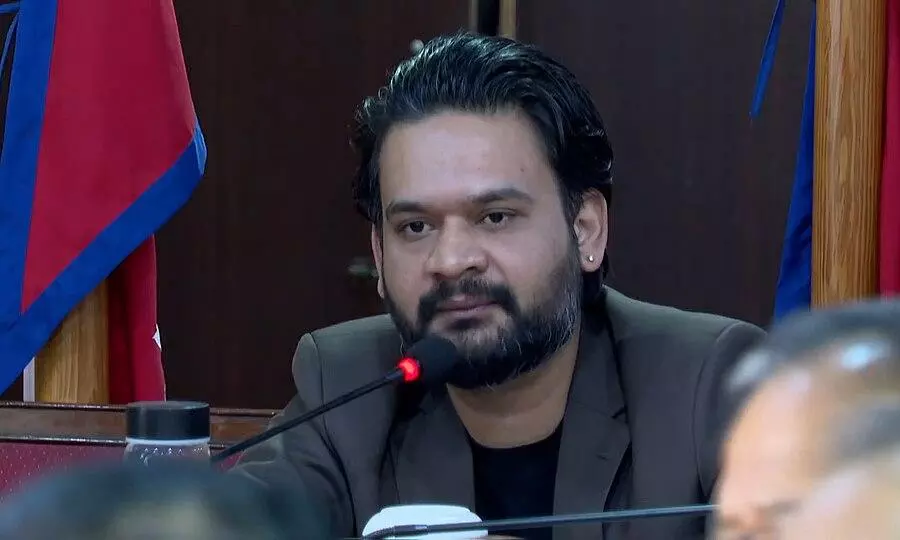
The unrest has intensified political pressure on Nepal's Prime Minister Balendra 'Balen' Shah, who now faces criticism from across the political spectrum. File photo: Wikimedia commons
PM Balen Shah under pressure as Gen Z is back protesting in Nepal
The demonstrations mark a dramatic turn for the youth movement that had played a key role in the 2025 uprising, which dismantled Nepal's old political establishment and paved the way for Balen Shah

Fresh protests have erupted across Nepal, with Gen Z activists returning to the streets of Kathmandu in a major challenge to Prime Minister Balendra "Balen" Shah's government. The demonstrations mark a dramatic turn for the youth movement that had played a key role in the 2025 uprising, which dismantled Nepal's old political establishment and paved the way for Shah, making him the country's youngest prime minister to take office in March 2026.
The latest wave of unrest was triggered by the death of ride-sharing driver Ganesh Nepali, who set himself on fire outside Kathmandu's Department of Passports in Tripureshwar after a prolonged confrontation with Kathmandu Metropolitan Police over a parking fine. Municipal traffic police had reportedly immobilised his motorcycle by locking its wheel, leading to the altercation.
Also read: Squatters protest evictions in Kathmandu as Gen Z activists face police crackdown
Nepali died on Friday at Kathmandu's Bir Hospital from severe burn injuries before he could be transferred to AIIMS in New Delhi for specialised treatment, according to Nepali media reports.
Growing public anger
His death sparked widespread anger, with hundreds, predominantly young protesters, marching through Kathmandu demanding justice. Demonstrators accused the authorities of "administrative apathy" and called for an independent investigation into the incident, strict action against those responsible, and Prime Minister Shah's resignation.
The protests have also drawn strength from growing public anger over Kathmandu's eviction campaign targeting informal settlements. Since April, authorities have demolished riverside settlements housing more than 2,600 families, affecting an estimated 15,000 landless residents, without providing permanent rehabilitation, activists say.
Also read: India’s Nepal challenge: From ‘neighbourhood first’ to strategic uncertainty
Tensions escalated after the government directed displaced families living in temporary shelters to vacate the facilities by July 6. Human rights groups and activists condemned the order as "inhuman," particularly after flooding affected one of the temporary camps.
Government crackdown
Violence flared when Gen Z activists visited a flood-hit shelter in Kirtipur to assist displaced families. Municipal police allegedly baton-charged the gathering, leaving several protesters seriously injured and requiring hospitalisation.
The crackdown has widened in recent days, with dozens of activists, students and journalists reportedly arrested in Kathmandu and Koshi Province for staging sit-ins and protesting against the eviction drive.
The unrest has intensified political pressure on Shah, who now faces criticism from across the political spectrum. Nepali Congress President Gagan Kumar Thapa has demanded the immediate release of detained protesters and criticised the government's handling of the protests and its urban development policies.
Mounting political pressure
As demonstrations spread over the weekend, opposition leaders stepped up calls for the former Kathmandu mayor and rapper-turned-prime minister to step down.
Also read: India-Nepal border row: Why Kalapani, Limpiyadhura, Lipulekh are key for both nations
The political pressure comes just weeks after Shah drew criticism in Parliament for remarks suggesting that "Nepal too has encroached upon Indian territories in many places." The comments prompted protests by student organisations and criticism from opposition lawmakers, who accused the government of making irresponsible statements on a sensitive foreign policy issue.
With public anger mounting over both Ganesh Nepali's death and the eviction drive, the latest protests represent the most significant challenge yet to Shah's government since it came to power earlier this year.