Why are protests spreading across PoK after the Rawalakot crackdown?
The ban on JAAC, deadly clashes in Rawalakot and an internet blackout have sparked widespread unrest and renewed calls for international scrutiny and accountability

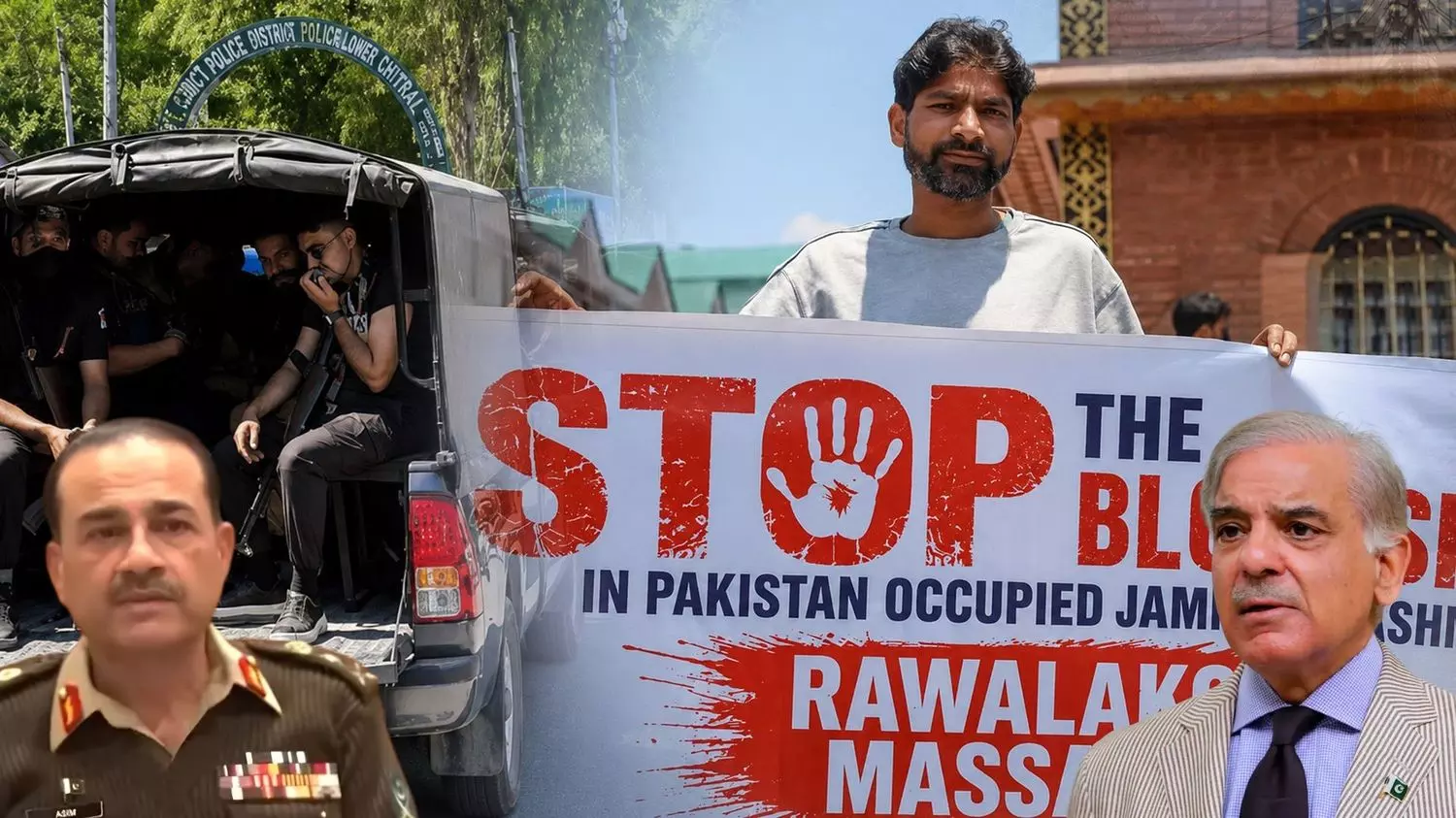
Massive protests have erupted across Pakistan-occupied Kashmir (PoK) after Pakistani security forces opened fire on civilians in Rawalakot on the night of June 7, killing at least 11 people and injuring over 70. The crackdown has triggered a region-wide shutdown, drawn international condemnation, and prompted India's political leaders and human rights groups to demand UN intervention.
Thousands of people from across PoK have poured onto the streets of Rawalakot, raising slogans against what they describe as Pakistan's military brutality. While official figures put the death toll at 11 and injuries at over 70, local sources and several media reports suggest as many as 27 people may have been killed and nearly 200 injured. These figures have not been independently verified, as internet services remain suspended across the region.
The JAAC ban
At the centre of the crisis is the ban on the Joint Awami Action Committee (JAAC), a civil society alliance that has spent the last two years leading grassroots protests over subsidised flour and electricity, unemployment, and greater political representation.
On June 5 — the same day Pakistan announced regional elections for July 27 — authorities suspended internet and mobile services across PoK and declared JAAC a banned organisation under anti-terrorism laws. On June 9, JAAC called for a complete shutdown across the region.
The shutdown received widespread support across PoK. Banks, shops, and transport services remained closed. A planned 300-km march from Bhimber to Muzaffarabad was stopped by paramilitary forces. Protesters also reportedly blocked the Karakoram Highway, the strategic route connecting Pakistan and China.
Pakistan's response
Pakistan's security establishment has pushed back against the narrative of a crackdown. The PoK Inspector General confirmed that four law enforcement personnel were killed and over 20 security officials injured in the clashes. Authorities have accused JAAC of launching a guerrilla-style attack using modern weapons and petrol bombs — a claim the organisation has denied.
On June 11, thousands gathered in Rawalakot for a fresh demonstration. JAAC representatives called for an independent investigation into the killings and urged the international community to act.
India reacts
The crackdown has drawn sharp reactions in India. In Srinagar, members of the Association of Terror Victims in Kashmir staged a protest outside the United Nations office, demanding international accountability.
Tasleema Akhter, Chairperson of the Association of Terror Victims in Kashmir, said: "Today we are here for the cause of people in Pakistan occupied Kashmir, and how innocent civilians have been fired upon non-stop by Pakistan's army... Today we are demanding justice for them."
National Conference president and former chief minister Farooq Abdullah also urged the United Nations Human Rights Council (UNHRC) to intervene. He said: "The state is in a difficult situation. An atrocity is being committed... Many people have been martyred there. Full details are not known. I appeal to the UNHRC to go there and see what troubles those people are facing."
Global pressure mounts
The international community is also taking notice. Amnesty International has strongly criticised Pakistan's crackdown, describing the ban on JAAC as unlawful and disproportionate, and accusing the authorities of using excessive force, suppressing dissent, and violating fundamental human rights just weeks before the elections.
More than 50 British parliamentarians have written to UK authorities over the situation, prompted by British Kashmiris unable to contact relatives due to the ongoing internet blackout.
What next for PoK?
Back on the ground in PoK, the protests show no signs of slowing down. With internet blackouts limiting independent verification and security forces heavily deployed across the region, the world's ability to see what is happening in Rawalakot remains severely restricted.
What is clear, however, is that the people of Pakistan-occupied Kashmir are demanding to be heard.
The content above has been transcribed from video using a fine-tuned AI model. To ensure accuracy, quality, and editorial integrity, we employ a Human-In-The-Loop (HITL) process. While AI assists in creating the initial draft, our experienced editorial team carefully reviews, edits, and refines the content before publication. At The Federal, we combine the efficiency of AI with the expertise of human editors to deliver reliable and insightful journalism.