Prison, probes and exile: Dramatic fall of Sri Lanka’s once-powerful Rajapaksa family
Corruption probes, criminal investigations, and political ambitions of a Marxist government have pushed Sri Lanka’s former first family into a crisis

For over a decade, the Rajapaksas were the virtual emperors of Sri Lanka who could do anything, no questions asked. Now, two years after a Marxist party swept to power in Colombo, the Rajapaksa family is in deep trouble, chased by allegations of corruption, nepotism and, worse, extra judicial killings.
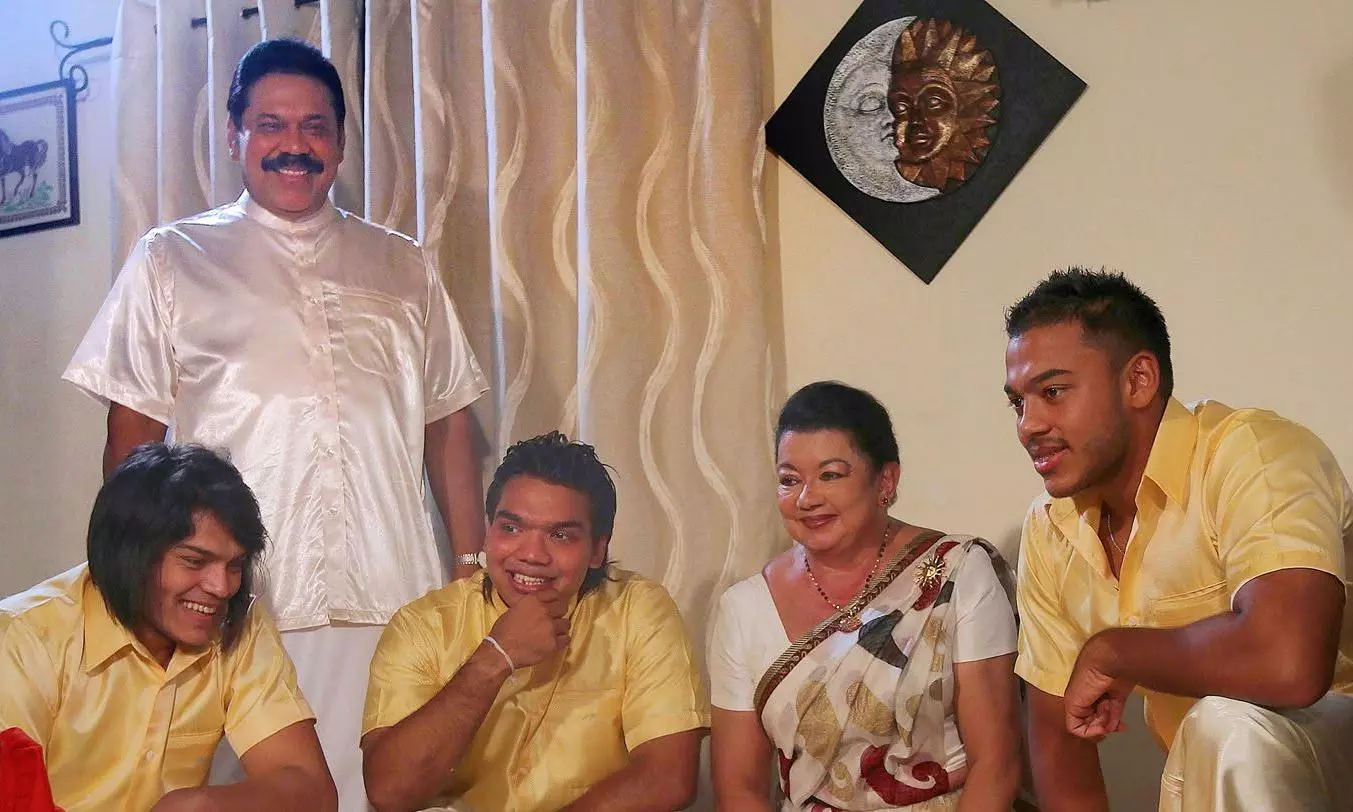
Barring the now-ailing 80-year-old two-time president Mahinda Rajapaksa, almost all prominent members of the very large family are facing serious legal charges or are behind the bars or are on the run—outside Sri Lanka.
Sons in the dock
Namal Rajapaksa, elder son of Mahinda and the family’s political scion, has been in judicial custody since September 4 over a case of Airbus corruption and bribery investigations dating back to 2013 when his father was the president.
Although a court ordered his release on September 30 if he provided a cash bail of Rs 500,000 and two sureties of Rs 100 million each, the 41-year-old MP remains in prison in another criminal case.
Also read: Sri Lanka Tamils fight to regain land army seized long ago: 'This govt too playing tricks'
Namal’s detention—the grapevine has it that he will be in prison for the foreseeable future—is a huge blow for the Sri Lanka Podujana Party (SLPP), a Rajapaksa family show of which he is the national organiser.
Namal’s younger brother, Yoshitha Rajapaksa, spent nearly two months in custody after being arrested in January due to alleged money-laundering and financial irregularities involving a private business venture.
Wife, brothers in trouble
Their mother, Shiranthi, flew away to Singapore—where she has remained admitted to a hospital—on September 16, eight days before she was to record a statement to the Financial Crimes Investigation Division regarding bank accounts linked to a foundation connected to her.
Gotabaya Rajapaksa, a brother of Mahinda and in whose presidency Sri Lanka’s economy collapsed, has been barred from leaving the country and could face arrest over an alleged conspiracy behind the 2019 Easter terror attack, which killed over 260 people and injured hundreds.
Another brother of Mahinda, Basil, the famed political strategist dubbed “Ten Per Cent” when he held Cabinet posts, faces an Interpol Blue Notice to know his whereabouts. He is said to be avoiding returning to Sri Lanka to reply to charges of corruption and misuse of public funds.
Other family members facing legal heat
Former minister Shasheendra Rajapaksa, a nephew of Mahinda and Gotabaya, was the first in the family to be arrested last year for allegedly misusing state land and claiming official compensation unfairly.
A Colombo court has ordered the arrest of his brother, Shamindra, for his links with a controversial Airbus purchase. He, too, is in a foreign country.
Also read: Families of forcibly disappeared Sri Lankan Tamils seek justice; grieving mothers meet on August 30
Their father, Champa Rajapaksa, a former policeman, was the Speaker of Sri Lanka’s parliament. He has also been questioned.
Nishantha Wickramasingha, a brother-in-law of Mahinda Rajapaksa, was also taken into custody in 2025 for alleged irregularities in airline purchases when he was chairman of the Srilankan Airlines.
“The (Rajapaksa) family is in serious trouble, legally and politically,” said a retired bureaucrat in Colombo. “While the government certainly has its reasons to go after them, this is not a family of innocents.”
Wife and sons to blame?
A former Cabinet minister, who insisted on anonymity, blamed Mahinda’s wife and sons besides others in the family for the mess the former president now finds himself in.
The present situation is a dramatic U-turn from 2009 when President Mahinda rejected advice from the West to sue for peace with the Tamil Tigers and instead routed the formidable insurgents, stunning the world.
That singular military victory, against conventional military wisdom, catapulted Mahinda to the status of a demi-god, worshipped by millions of Sri Lankans.
Amid this infinite gratitude, things began to go wrong.
“His family members took more and more liberties,” the former minister told The Federal. “They took undue advantage of Mahinda’s popularity. People were bending over backwards to please them. There was no forethought. The family didn’t even cover its trails. So, there is evidence of wrongdoing.
“The government is determined to denigrate the Rajapaksas in the public mind. This is having an impact. Public opinion is influenced when you read day after day about corruption the Rajapaksas are said to have been embroiled in.”
Rise of the Rajapaksas
It was in November 2005 that the street-savvy Mahinda was elected Sri Lanka’s president, narrowly beating Ranil Wickremesinghe, the man who made peace with the Tamil Tigers.
In just four years, Mahinda, with his younger brother Gotabaya who was the defence secretary, crushed the Liberation Tigers of Tamil Eelam (LTTE) and killed its leadership, including LTTE founder Velupillai Prabhakaran.
Also read: Sri Lanka assures New Delhi it won’t allow anti-India activity on its territory
The war ended amid savagery, leaving thousands of civilians dead too. The Rajapaksa brothers faced charges of war crimes and massive rights abuses.
Critics say it is after the war that the Rajapaksas became more authoritarian, more intolerant of criticism, and more brazen in pursuing reckless loans-funded development in Sri Lanka. Critics, including the war-winning army chief, had no place in their scheme of things.
Some of their mammoth infrastructure projects turned out to be white elephants. These bled Sri Lanka and caused an unprecedented fiscal crisis in 2022.
When Mahinda was the president from 2005 to 2015, some 30 members of the extended family reportedly held influential posts in the government and in official corporations, turning Sri Lanka into a virtual family property.
Between them, they were accused of controlling almost two-thirds of the national budget.
Family fiefdom
When Mahinda tried to win a presidential battle a third time in 2015 and lost, The New York Times alleged that a Chinese state-owned firm dispensed over USD 7 million to his affiliates and campaign aides. Mahinda and China denied this. But Mahinda did not carry out his threat to sue the daily.
After four years in the Opposition, Gotabaya was elected the president in 2019, capitalising on mass anger that followed the Easter terror earlier in the year.
Gotabaya immediately made his brother Mahinda the prime minister while others in the family got plum government posts.
Gotabaya fled Sri Lanka as mobs overran the presidential palace amid widespread street protests fuelled by economic crisis. The fury against the Rajapaksas reduced the SLPP to three seats in the 225-member parliament in 2025.
Rise of the Marxists
It was the election that pushed the Marxist Janatha Vimukthi Peramuna (JVP) to power, heralding, for the first time, nasty times for the once-mighty Rajapaksas which show no sign of ending soon.
A former associate said Mahinda was still immensely popular but the same could not be said about other family members, including son Namal, although the latter is now widely viewed as a mature leader.
Also read: Once wary, Sri Lankans warm up to India; New Delhi must take serious note
The source added, “Whatever his other drawback, Basil (Rajapaksa) was a political strategist par excellence. He founded the SLPP and gave it a winning strategy. He is now in the US. Minus him, the SLPP cannot go very far.”
Not everyone agrees that the Rajapaksas have no political future.
Can the Rajapaksas return?
Former diplomat and scholar Dayan Jayatilleka feels President Anura Dissanayake’s government was confident of taking on the Rajapaksas, and its supporters depicted the drive against them as a non-elite’s battle against an old elite.
“My sense is that the pronouncements of the president and (his colleagues) and the rapid and furious legal onslaught on a majority of the Rajapaksas gives the impression of not so much of a steady process but of a campaign hardly devoid of political content.”
A former MP who is no supporter of either the government or the Rajapaksas explained that the ruling coalition was determined to go against the former first family because the Marxists had nothing else to claim credit for.
“This government has no major achievements except this anti-corruption crusade. The way the Rajapaksas behaved in power, it makes them an easy target,” said the politician who, too, did not want to be named.
“Also, the more the government targets the Rajapaksas, the more they earn the support of Tamil and Muslim votes, the two (minority) communities that suffered the most under the Rajapaksas,” he added.