








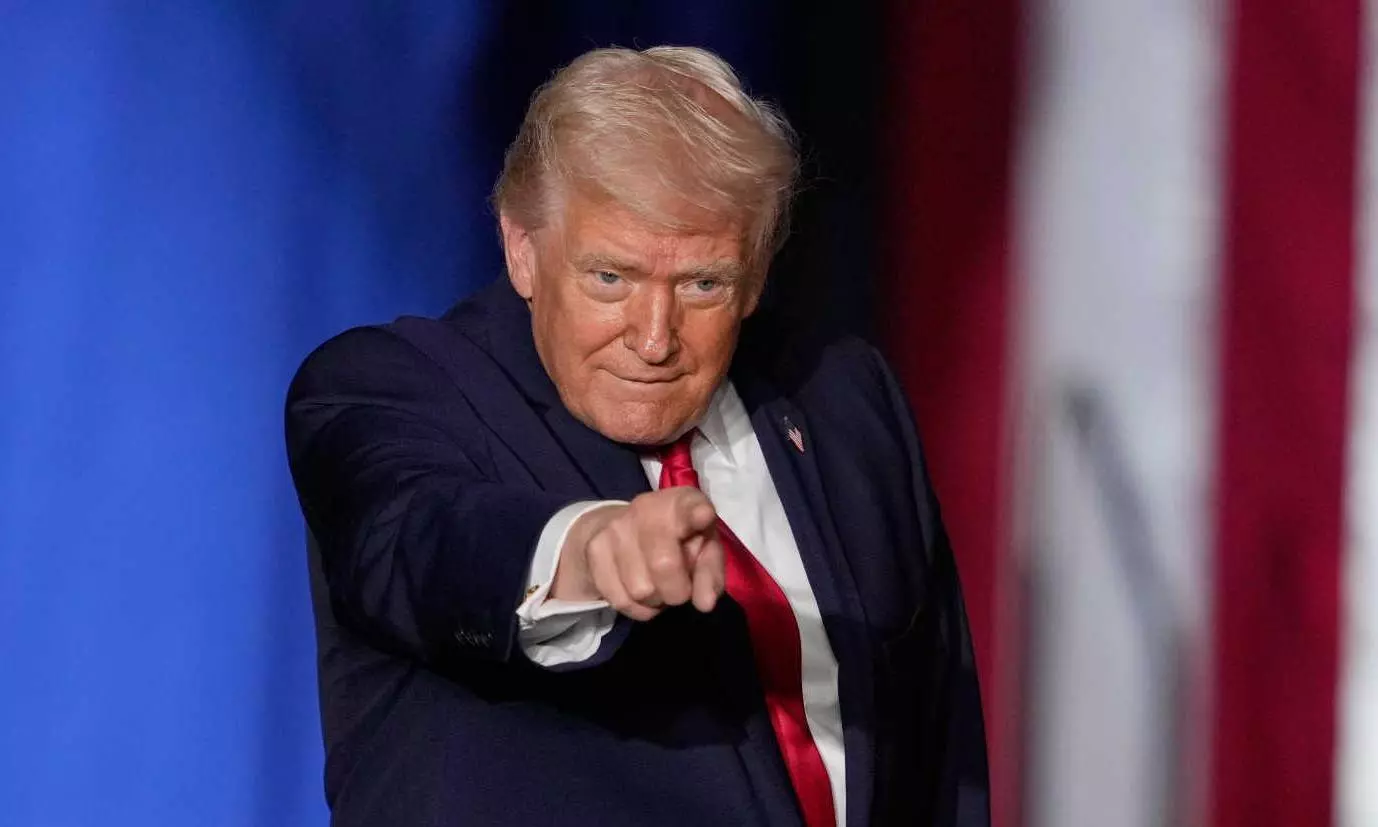
Trump authorises tariffs on countries engaging in trade with Iran
Trump authorises up to 25% tariffs on imports from countries that trade with Iran under a new executive order

Amid escalating tensions with Iran, US President Donald Trump has signed an executive order setting up a mechanism to impose additional tariffs on countries engaging in trade with the Islamic Republic. The announcement was made by the White House on Friday (February 6).
The White House stated that, as per the order, the Trump administration can impose an additional ad valorem duty, for example, up to 25 per cent, on goods which are imported to the US from countries that are involved in direct or indirect purchases, imports, or otherwise acquires goods or services from Iran.
“The Order imposes a system that allows the United States to impose additional tariffs on imports from any country that directly or indirectly purchases, imports, or otherwise acquires any goods or services from Iran,” stated the White House.
Room for adjustment
“The President may modify the Order if circumstances change, in response to retaliation, or if Iran or an affected country takes significant steps to address the national emergency and align with the United States on national security, foreign policy, and economic matters,” it added.
Also Read: US tells citizens to leave Iran 'now' amid rising military tensions
Elaborating further, the White House release stated that the order authorises the Secretary of State, Secretary of Commerce, and US Trade Representative to take all necessary actions, including issuing rules and guidance, to implement the tariff system and related measures.
‘Malign influence’ justification
The move, the White House said, forms part of a wider effort to confront Iran’s “malign influence.” It cited Tehran’s nuclear ambitions, support for terrorist groups, development of ballistic missiles and activities it said contribute to instability across the region.
Also Read: Trump, Xi discuss Iran in wide-ranging call
The Trump administration accused Iran of backing proxy militias throughout the Middle East, suppressing dissent at home and diverting resources toward nuclear and missile programmes rather than domestic priorities.
According to the White House, these activities amount to an “unusual and extraordinary threat” to the US, its allies and its interests, warranting an intensified and sustained response.
Regional pressure and diplomacy
The White House also pointed to recent US military and diplomatic steps, including operations directed at Iran’s nuclear infrastructure and the deployment of additional American forces to the region, which it said were intended to push Tehran toward negotiations that would permanently curb its nuclear ambitions.
Also Read: Budget 2026-27: No funds for Chabahar Port amid fresh US sanctions
The US has no diplomatic or consular relations with Iran. Switzerland, through its embassy in Tehran, serves as the protecting power for US interests there, the advisory said.
No budget allocation for Chabahar port
Meanwhile, the Centre has not made any allocation for the Chabahar port project in the Union Budget 2026–27, marking a shift from previous years amid renewed US sanctions on Iran.
Also Read: Trump briefed on wider military options as US-Iran tensions escalate
India had been setting aside around Rs 100 crore annually for the project on Iran’s southern coast, where it is a key development partner. The move comes as a temporary US sanctions waiver for Chabahar, granted last year, is set to expire on April 26.
New Delhi has said it remains engaged with Washington on extending the arrangement, even as it monitors fresh tariff measures announced by President Donald Trump affecting countries trading with Iran.
Trump’s ‘maximum pressure’ strategy
The order is consistent with President Donald Trump’s long-standing hardline posture on Iran. During his first term, Trump pulled the United States out of the Iran nuclear agreement, reimposed what his administration described as “maximum pressure” sanctions and designated Iran’s Islamic Revolutionary Guard Corps as a Foreign Terrorist Organisation.
After returning to office, he moved to reinstate those pressure policies with the stated aim of denying Iran any route to a nuclear weapon.