








Trump says no Hormuz tolls during ceasefire as US-Iran talks resume in Switzerland
Trump warns the US could impose charges if negotiations fail, even as Iran's claim of closing the Strait of Hormuz is disputed and JD Vance heads to Switzerland for fresh talks

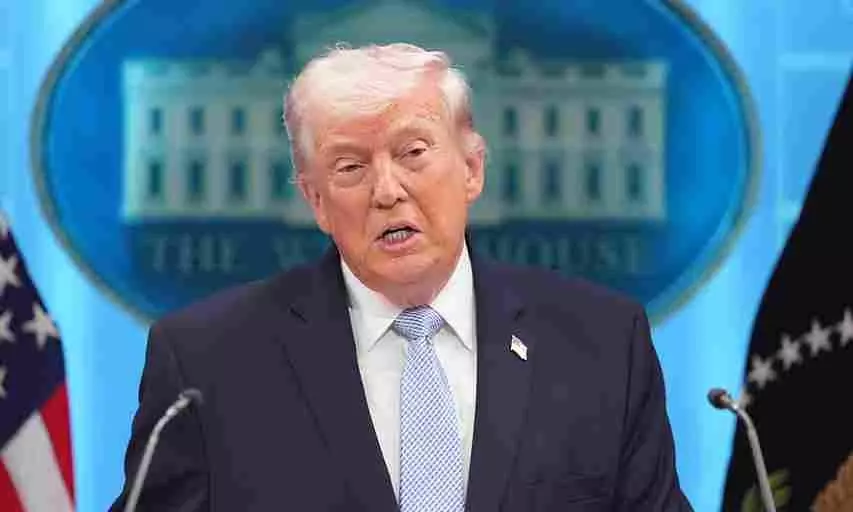
US President Donald Trump said on Saturday (June 20) that ships passing through the Strait of Hormuz would not face any tolls during or after the 60-day interim ceasefire with Iran, but warned that the US could impose charges if the ongoing peace talks fail.
In a post on Truth Social, Trump said Washington could levy its own toll on traffic through the strategically important waterway if negotiations with Iran, scheduled to begin in Switzerland on Sunday, do not produce results within the 60-day window. The interim arrangement gives both sides two months to reach a nuclear agreement, although the deadline can be extended.
Also read | Iran shuts Strait of Hormuz again as Israel-Hezbollah fighting threatens peace deal
“There will be NO TOLLS in the Hormuz Strait for 60 days during the Cease Fire Period, and there will be NO TOLLS after the 60 day period has expired, unless they are imposed by and for the United States of America, should the deal not be completed, for services rendered as the Guardian Angel to the countries of the Middle East for purposes of both past, present, and future reimbursement of costs,” Trump wrote in the post.
The announcements indicated a rough start to technical-level US-Iran talks that key mediator Pakistan said will begin on Sunday (June 21), with Qatari mediators also participating.
Hormuz closure sparks dispute
Iran’s joint military command on Saturday said the Strait of Hormuz was closed because of the “clear breach of its commitments” from the US by failing to end the war while referring to Israel’s continued attacks in Lebanon. The interim deal is meant to stop fighting on all fronts.
The US disputed Iran's announcement on the strait. “Iran does not control the Strait of Hormuz. Traffic continues to flow, and U.S. forces are monitoring the situation to ensure this remains the case,” said Captain Tim Hawkins, a spokesperson for US Central Command. The military said that 55 merchant ships transited on Saturday, carrying more than 17 million barrels of oil.
Shortly after announcing the closure, Iran’s state broadcaster said that the negotiating team was leaving for Switzerland, a trip delayed from Friday. State media said that the team includes parliamentary speaker Mohammad Bagher Ghalibaf, foreign minister Abbas Araghchi and central bank and oil officials, among others. The deal calls for the unfreezing of Iran’s assets.
Vance heads to Switzerland
Meanwhile, US Vice President JD Vance also left for Switzerland on Saturday as the White House looks to get negotiations with Iran back on track.
Vance is expected to meet on Sunday with Ghalibaf, Araghchi and central bank and oil officials, as well as mediators from Pakistan and Qatar dispatched to Switzerland for the talks.
Also read | Iran waives Hormuz transit fees, US lifts blockade, but conditions apply
The technical talks are aimed at adding key details to the preliminary accord to halt the nearly four-month war between the US and Iran signed earlier this week by US President Donald Trump and Iranian President Masoud Pezeshkian.
Vance was initially supposed to hold a first round of talks with senior Iranian officials on Friday at a mountainside resort in the tiny Swiss village of Obburgen, but his Iranian counterparts initially cancelled their plans to attend because of escalating fighting between Israel and Iranian-backed Hezbollah in Lebanon.
However, negotiators for the US and Qatar, with help from Iran, worked out an agreement between Israel and Hezbollah to tamp down the active hostilities, according to US and regional officials who were not authorised to comment publicly and spoke on the condition of anonymity.
(With agency inputs)