








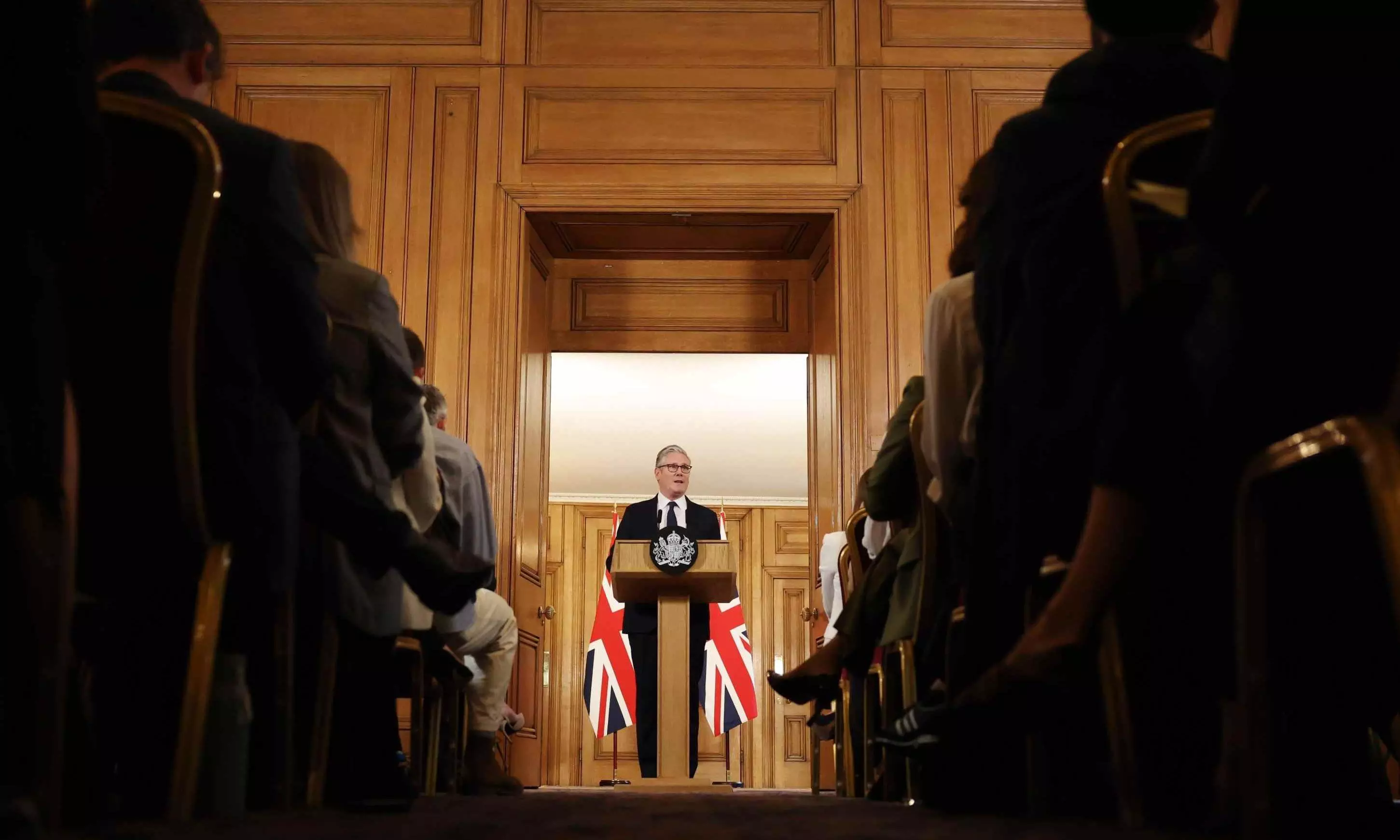
Keir Starmer resignation buzz: Is UK set for 7th PM in 10 years?
If Keir Starmer quits, Britain faces its sixth PM exit in a decade, extending Brexit‑era turmoil as Labour revolt and economic discontent deepen instability

Britain could soon be heading towards another leadership change, with Prime Minister Keir Starmer reportedly facing pressure to step down as Labour leader. If Starmer exits, he would become the sixth British Prime Minister to leave office in just 10 years, a period marked by political instability, economic uncertainty and deep divisions over Brexit.
Reports suggest that Andy Burnham, the Mayor of Greater Manchester, has strengthened his position as a possible successor after defeating the growing challenge from Nigel Farage’s Reform UK in the Makerfield by-election. While the Observer newspaper reported that Starmer was expected to resign on Monday (June 22), news agency Reuters reported citing an unnamed source in the government that Starmer remained focused on his job.
Also read: UK PM Keir Starmer faces Labour revolt, promises closer EU ties
If Starmer indeed resigns, it would trigger yet another leadership transition, extending one of the most turbulent periods in modern British politics.
Brexit and political instability
The UK’s political instability began with David Cameron’s decision to call the 2016 Brexit referendum. What was approached as a way to settle divisions within the Conservative Party instead triggered a chain reaction that reshaped British politics, weakened party discipline and created a cycle of leadership crises.
Brexit became the central fault line of British politics. Successive governments struggled to deliver the economic benefits promised during the referendum campaign, while voters grew increasingly frustrated over stagnant growth, rising living costs, strained public services and unmet political expectations.
Also read: UK PM Starmer announces ban on social media apps for children under 16
Let’s see how Britain moved from one Prime Minister to another.
Keir Starmer (2024–present)
Starmer came to power after Labour’s sweeping victory in the 2024 general election, promising stability after years of Conservative turmoil. However, his government soon faced public backlash over difficult policy decisions.
One of the biggest controversies came when his government announced cuts to winter fuel payments for millions of pensioners. The move was not included in Labour’s election manifesto. The decision triggered anger among voters and intensified criticism that Labour was moving away from its campaign promises.
His government was also hit by controversies, including criticism over the appointment of former Labour figure Peter Mandelson as UK ambassador to the US despite his past links to convicted sex offender Jeffrey Epstein.
Also read: UK-led coalition of over 35 nations to explore reopening of Strait of Hormuz
The growing dissatisfaction was echoed in local elections, where Labour suffered major losses, losing more than 1,400 council seats.
Rishi Sunak (2022–2024)
Rishi Sunak became Prime Minister after Liz Truss’s dramatic collapse in 2022. His tenure was dominated by attempts to stabilise the economy and manage the consequences of Brexit.
However, years of economic stagnation, labour shortages, inflation pressures and trade challenges left voters frustrated. The anger eventually translated into a historic defeat for the Conservative Party in the July 2024 general election.
Sunak resigned after the Conservatives suffered one of their worst electoral performances, handing power to Labour.
Liz Truss (2022)
Liz Truss holds the record for the shortest-serving British Prime Minister, lasting only 49 days.
The Conservative leader's downfall came after her government announced a controversial “mini-budget” featuring major unfunded tax cuts. The plan triggered panic in financial markets, caused the British pound to fall sharply and forced intervention from the Bank of England.
Also read: India-UK FTA set for April rollout after ratification
The crisis destroyed confidence in her economic policies and made her position impossible to sustain.
Her premiership reflected a post-Brexit Conservative vision focused on rapid deregulation and aggressive growth policies.
Boris Johnson (2019–2022)
Boris Johnson rose to power by successfully campaigning on the promise to “Get Brexit Done.” After purging many pro-EU Conservative MPs, he secured a historic 80-seat majority in the 2019 election.
However, his government was later overwhelmed by a series of controversies, especially the ‘Partygate’ scandal, involving gatherings at Downing Street during COVID-19 restrictions.
The scandal triggered a wave of resignations from ministers and senior officials, eventually forcing Johnson to step down.
Theresa May (2016–2019)
Theresa May inherited the Brexit challenge after her predecessor David Cameron’s resignation.
Her entire premiership was dominated by attempts to negotiate Britain’s exit from the European Union. However, her withdrawal agreement repeatedly failed to pass through Parliament because of divisions within her own party.
Facing rebellion from Conservative MPs and unable to break the deadlock, May resigned.
David Cameron (2010–2016)
David Cameron triggered the Brexit crisis when he called the 2016 referendum, hoping to settle internal Conservative divisions over Europe.
He campaigned for Britain to remain in the EU but lost when voters chose to leave.
Accepting responsibility for the result, Cameron resigned, saying the country needed new leadership to handle the Brexit process.
Over the past decade, Britain’s political instability has been driven by a combination of Brexit fallout, economic challenges, internal party conflicts and growing voter dissatisfaction.
What began as a referendum to resolve a political disagreement instead created a decade of leadership changes.