








Iran, US agree on 60-day roadmap to reach final peace deal
Talks briefly halted due to a walkout by Iranian side over Trump’s threats; low-level parleys to continue through the week

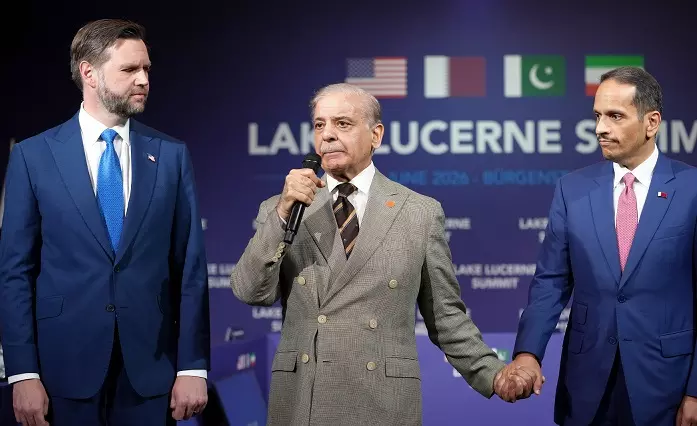
The US and Iran agreed on a 60-day roadmap, among other key understandings, to finalise a peace agreement during high-level talks in Burgenstock, Switzerland, early on Monday (June 22).
While Iran and mediators Pakistan and Qatar have acknowledged the end of the first round of high-level talks, the US has yet to confirm the same.
Qatar and Pakistan, in a joint statement, said the talks under the framework of the Islamabad Memorandum of Understanding were conducted in a “positive and constructive atmosphere” and “encouraging progress has been made, including the creation of a mechanism for further technical talks.”
Also read: Mixed signals from Washington after first round of US-Iran peace talks in Switzerland
Pakistan and Qatar, after the meeting, said lower-level technical talks would continue in Switzerland for the rest of the week. Such talks aim at producing the breakthroughs needed for high-level officials to return and sign agreements.
Iranian walkout over Trump’s threats
The talks on Sunday (June 21), however, were briefly marred by an angry walkout by the Iranian side in protest against threats made by US President Donald Trump on his social media platform Truth Social.
Trump had warned of bombing Iran and allegedly kidnapping the mediators from Iran if the Strait of Hormuz was not opened.
In a briefing to Fox News, the US president also said that the US will take over the strait if it needs to.
“Iran must immediately stop their highly paid PROXIES in Lebanon from causing trouble,” Trump said on social media. “If they don't, we'll hit Iran very hard again, just like we did last week, only harder!!!”
The comments from afar – on social media and to news outlets – complicated efforts by Vice President J D Vance and mediators Pakistan and Qatar to keep Iran engaged in discussions.
Also read: Collapsed US-Iran talks expose a broken global order
“They would do better to be careful about their statements," Iran's lead negotiator, Mohammad Bagher Qalibaf, said on X after Trump's comments.
"Our armed forces are prepared to respond to them in a different manner. They may keep talking, it is we who act.”
But later, Iranian Foreign Minister Seyed Abbas Araghchi wrote on X, “Tireless Pakistani and Qatari mediation has delivered major progress to end the Lebanon War.” He said the first “real test” of negotiations would be whether the deconfliction cell succeeded in halting the fighting in Lebanon.
What are the key decisions?
A high-level committee has been formed to provide political oversight on the mediation, with chief negotiators asked to directly report to this panel. These negotiators will also lead working groups focused on nuclear sanctions, and a monitoring and dispute resolution group to ensure the effective implementation of the MoU, and on other matters.
A major decision of the high-level committee has been to create a roadmap towards reaching a final deal between the two warring nations within 60 days, after which talks will be furthered.
A communication line has also been established between the US and Iran, “to avoid incidents and miscommunication with the aim of safe passage for commercial vessels through the Strait of Hormuz.”
Also read: Iran shuts Strait of Hormuz again as Israel-Hezbollah fighting threatens peace deal
Both parties have also agreed on the creation of a de-confliction cell between them and Lebanon, which will be facilitated by the mediators. The cell will ensure the adherence of the termination of military operations in Lebanon as per the MoU.
Talks on Lebanon soon
The statement from Pakistan and Qatar said the cell would include the Lebanese government and would “ensure the adherence to the termination of military operations in Lebanon”.
It, however, remains unclear whether that will be enough to stop fighting between the Iranian-backed militia Hezbollah and Israel, which occupies Lebanon and insists it must maintain a free hand to attack militants who are launching attacks into northern Israel.
Iran praises talks
After the first session of the talks, Iranian Foreign Minister Araghchi said key progress has been made to end the war in Lebanon while dubbing it as the “first real test.” Araghchi also praised Pakistan and Qatar for their mediation, saying that they “delivered major progress”.
In his message, Araghchi said the first real test of the understandings reached would be a deconfliction method created over the fighting between Israel and the Iranian-backed militia Hezbollah in Lebanon.
Also read: US-Iran MoU brings relief to Lebanon, but many are skeptical of Israeli compliance, says expert
Iran has tied success in the talks to the end of the fighting there. Israel insists it will continue to occupy Lebanese territory and that it must have a free hand to fight Hezbollah, which has launched attacks into northern Israel.
The talks marked the start of a 60-day diplomatic process that seeks to reach a permanent deal to end the Iran war. But the fighting in Lebanon remains one of the key sticking points.
Meanwhile, Iran insisted it had again shut the Strait of Hormuz over the weekend, the narrow mouth of the Persian Gulf crucial to energy shipments, while the US said traffic continued.
Also read: US, Iran agree over peace. What changed? Which pain points still remain?
Vance and US negotiators, including Steve Witkoff and Jared Kushner, Trump's son-in-law, had met with Qalibaf and Araghchi for what Iranian state media said was about 80 minutes.