








US-Iran deal mentions $300 bn to rebuild Iran; who will foot the bill?
MoU unclear on who will pay for the fund; experts say rich Gulf nations may ask Rubio for clarity on issue during 3-day visit

As US Secretary of State Marco Rubio heads to the Gulf, among others, he will be posed with an important question: Who will foot the $300 billion bill for the reconstruction of Iran, mentioned in the Memorandum of Understanding (MoU) recently signed between Washington and Tehran for a longstanding peace deal.
What does MoU say?
The MoU says Washington “undertakes with regional partners to develop a definitive mutually agreed plan with at least $300 billion for the reconstruction and economic development” of Iran.
“The mechanism for the implementation of this plan will be finalised as part of a final deal within 60 days. All required licences, waivers, and permissions needed for the relevant financial transactions will be granted by the United States of America,” it added.
Also read: Iran, US agree on 60-day roadmap to reach final peace deal
The document says “all types of sanctions” upon Iran will be lifted after the final deal is signed, while the US will issue waivers allowing Tehran to sell oil.
The statement, however, does not mention who will contribute to the fund.
Gulf countries sceptical, worried
During his three-day visit to the Middle East, Rubio is expected to soothe the nerves of the US’s Gulf allies like the UAE, Kuwait, and Bahrain, who bore the brunt of the US-Iran war.
There is also a looming fear in the Middle East that the fund could help Iran not just rebuild the country but also bolster its military capabilities and regain its influence in the region.
The fact that the MoU also skips mentioning Iran’s ballistic missile programme has left countries like Saudi Arabia, UAE, Kuwait, Bahrain, and Qatar, which host America’s military bases and were attacked during the war, worried.
Some experts say the US has mentioned the fund only as a way to show Iran all the possibilities that are available if it sticks to the 60-day truce.
“I think the idea of mentioning this fund in the MoU is to show Iran all the carrots that are available if they abide by the MoU and show goodwill in negotiations moving forward,” NDTV quoted Anna Jacobs, a non-resident fellow at the Arab Gulf States Institute, as saying.
Who will pay $300 billion?
Reports say regional leaders will expect Rubio to offer clarity on the $300 billion fund and what Iran will offer in return.
While these wealthy Gulf nations haven’t confirmed about pumping money into rebuilding Iran, some commentators said that it is possible they are the “regional partners” mentioned in the MoU’s text.
Also read: Trump may claim victory but MoU shows Iran had the last laugh
Declining to comment on the funds, Saudi Foreign Minister Prince Faisal bin Farhan recently said that after Tehran attacks on its soil, it needs to rebuild trust before talking about economic cooperation.
“We’re going to have to have a conversation on how we rebuild that trust, how we rebuild that relationship before any concept of economic cooperation, mutual investment, or anything like that can rationally be addressed,” he said.
The UAE, one of Iran’s main trading partners before the war, in turn, has demanded that Tehran pay reparations for the damage its attacks have caused. It, however, softened its approach before the MoU was signed.
Experts say that investing in Iran’s economy may give leverage to Gulf nations, but they also expect guarantees that the funds wouldn’t be used to rearm Tehran and its allies.
Frozen funds
US Vice President JD Vance has also spoken about a proposal that would decide how frozen Iranian assets will be used if sanctions relief moves forward.
“We wanted to make sure that we set up a process where if we ever unfreeze Iranian assets, we can ensure that money, that Iranian money, goes to help the people of Iran and not to fund terrorism,” Vance had said after the signing of the MoU in Switzerland.
Also read: Mixed signals from Washington after first round of US-Iran peace talks in ASwitzerland
Under the proposal, the US and Qatar will have authority over the frozen assets and any of the assets that are unfrozen will be used to allow Iran to spend on humanitarian and agricultural purchases, Vance had said.
Iran, however, wants to decide how its assets are used. It is said the country has between $6 billion-$25 billion frozen in overseas accounts. Other estimates, however, say that Iran may have between $100 billion-$120 billion assets frozen overseas due to sanctions.
Trump flayed at home
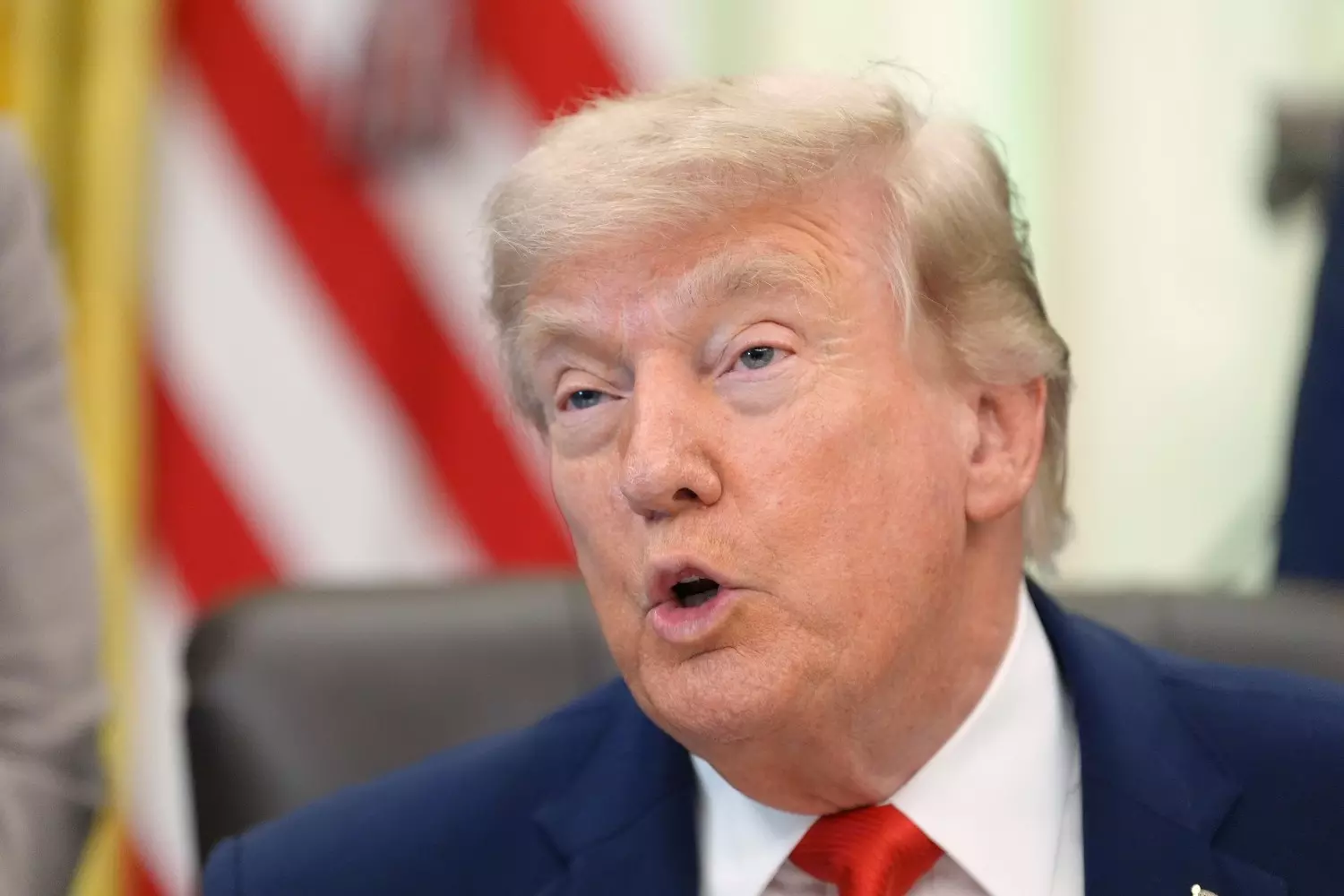
At home, the Trump administration is facing criticism for being too lenient with Iran and offering it a fund that may further strengthen its theocratic government.
Vice President Vance, however, has assured that Iran will “never get a dime” from US taxpayers under the deal
Pentagon has told senators it needs roughly USD 80 billion, mostly to cover the cost of the US war against Iran, adding to what is already a sizable military spending boost being sought by President Trump.
Also read: Iran football team leaves heartfelt note in US locker room after WC game: ‘May peace prevail'
Lawmakers are sceptical of the deal Trump struck with Iran to bring an end to the war, and wary of the next steps.
That apart, the White House has requested a remarkable USD 1.5 trillion for the Pentagon – a nearly 50 per cent increase over the current fiscal year's funding levels.
The funding package is expected to run into trouble from lawmakers who refuse to support Trump's decision to go to war and are reluctant to give the Pentagon more money at a time of high costs of living for Americans at home.
“You're spending families' hard-earned tax dollars on a war that many strongly oppose,” Democratic Senator Patty Murray told US Secretary of Defence Pete Hegseth in a hearing last month.