








LIVE: US, Iran confirm reaching peace deal; Hormuz to open on June 19
Trump announces deal on Truth Social; Iran says truce will stop conflicts on all fronts, including Lebanon

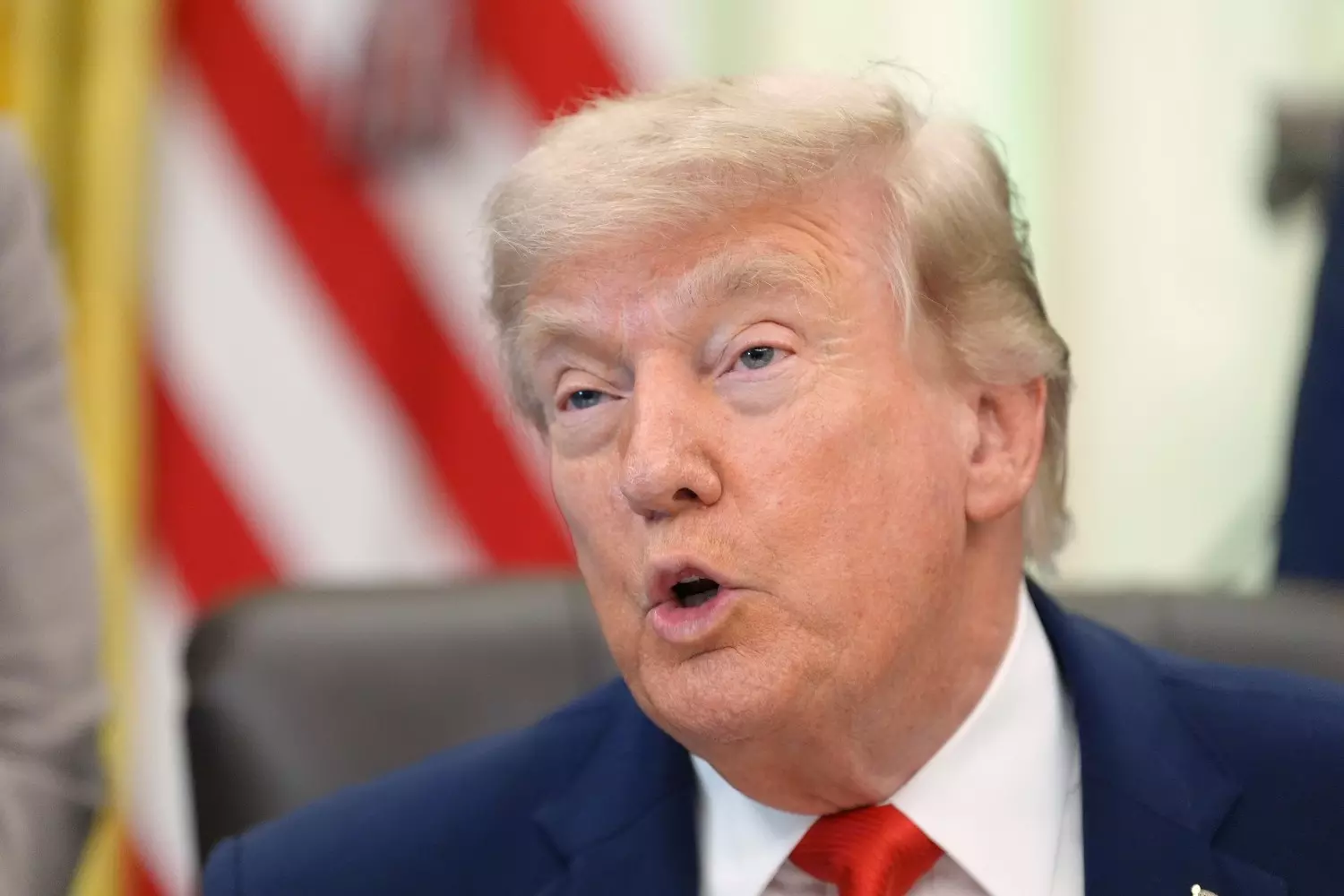
In a development that promises to bring normalcy after months of unrest in the Middle East and ease trade bottlenecks, US President Donald Trump has announced that America and Iran have finalised a deal to end their 107-day war. The deal is set to open the Strait of Hormuz and end the US naval blockade on Iranian ports.
Iran too has confirmed that it has reached a deal with the US to stop the conflict on all fronts including in Lebanon.
Final print being readied
The peace deal, as per Pakistan Prime Minister Shehbaz Sharif, is set to be signed on June 19 in Switzerland.
Broader negotiations on issues like Iran's nuclear program are expected to continue over the next 60 days.
According to Al Jazeera, Qatari mediators have said they are holding separate meetings with US and Iranian officials in Doha this week to iron out any differences between the two parties.
Trump's post
“The Deal with the Islamic Republic of Iran is now complete. Congratulations to all,” Trump said in a post on Truth Social on Sunday (June 14) evening, easing pressure on the global energy markets.
“I hereby fully authorise the toll-free opening of the Strait of Hormuz and, simultaneously, authorise the immediate removal of the United States Naval blockade. Ships of the World, start your engines. Let the oil flow!” Trump said. He, however, clarified later that Hormuz will be opened only after the deal is inked on Friday.
Global markets upbeat
Several world leaders, including Prime Minister Narendra Modi and UN chief Antonio Guterres have welcomed the truce.
Although the truce will ensure the opening of the Strait of Hormuz, closing which had caused a global energy crisis, experts say it will not translate into the immediate restoration of supplies.
It is, however, expected to take benchmark Brent crude, which is $83 a barrel, to $72, providing immediate succour to the cost of living in nations affected by the crisis. Share prices soared on Monday in Asia after the deal was announced. Benchmarks in Tokyo and Seoul gained more than 5 per cent early Monday. Oil prices fell more than $3 a barrel.
It may take months for oil prices to stabilise after the disruptions from the war caused them to surge, pushing up the costs of petrol and many other products. Energy experts said shipping and insurance companies will want to be confident the pact will hold, ensuring that oil and gas supplies will flow freely enough for the world's needs to be met.
Read The Federal’s stories on the US-Iran war:
Will Iran and the US sign an MoU? Hope persists despite hurdles
Netanyahu's Lebanon gambit risks derailing Trump's Iran peace deal
US retreat, Israel’s isolation, India’s dilemma: Gulf crisis exposed more than limits of force
The duplicity behind Trump's push to disarm Iran
US-Iran interim deal may be hailed, but imponderables loom
Now, Trump looks at rival Xi to bail him out of Iran messLive Updates
- 15 Jun 2026 8:52 PM IST
Trump arrives at G7 summit after announcing US-Iran peace deal
US President Donald Trump arrived in the French Alps on Monday to meet with fellow world leaders at the Group of Seven summit after announcing an agreement he says will bring an end to the US war with Iran.
Trump and Iranian officials had been saying for days they were making progress toward reaching a deal, but even on Sunday, things appeared to be on shaky ground after a new round of strikes between Israel and Iran-backed Hezbollah militants in Lebanon.
With the agreement, the Republican US president arrived in Evian-les-Bains on Monday with the wind at his back for talks with G7 leaders, including some who've been sharply critical of his managing of the 15-week-old conflict, which has led to a surge in global energy prices.
Polls show American voters largely disapprove of the conflict, which has made some Republicans nervous about the political impacts it could have on November's midterm election.
“Ships of the World, start your engines," Trump said in a social media post celebrating the deal that he said would lead to the US ending its blockade of the Strait of Hormuz, through which about 20 per cent of the world's crude had flowed before the conflict. “Let the oil flow!” Iranian Deputy Foreign Minister Kazem Gharibabadi, however, said the Iranian closure of the strait would continue until the agreement is signed.
- 15 Jun 2026 6:53 PM IST
Lebanon to push for Israeli withdrawal after ceasefire
Lebanese Prime Minister Nawaf Salam has welcomed the ceasefire agreement between the United States and Iran, expressing hope that it will help bring an end to the conflict and ease the suffering endured by people across Lebanon.
In a statement issued after the announcement, Salam said his government would intensify efforts “to secure the complete Israeli withdrawal from our lands and the release of our prisoners”. He indicated that the agreement could create an opportunity to advance long-standing Lebanese demands related to security and sovereignty.
The prime minister also voiced optimism that the breakthrough would reduce violence in the region. He said Lebanon hopes the deal “will succeed in putting an end to this war and halting the killing, destruction, displacement, and all the tragedies and pains inflicted upon the Lebanese”.
Salam thanked “all those who contributed to achieving this outcome”, acknowledging the diplomatic efforts that helped secure the agreement.
Looking ahead, he stressed the importance of facilitating the return of displaced residents and rebuilding damaged communities. “We look forward to our people being able to return safely and with dignity as quickly as possible to their cities and villages and will intensify efforts with partners to secure the requirements for reconstruction,” he said.
- 15 Jun 2026 6:32 PM IST
Iran signals fees for ships using Strait of Hormuz
Iran has indicated that commercial vessels using the Strait of Hormuz may be required to pay fees as authorities work on plans to manage traffic through the strategic waterway following months of disruption.
Speaking at a press conference, Foreign Ministry spokesperson Esmaeil Baghaei stressed the importance of the strait to Iran's national interests. He said, “The Strait of Hormuz is very important for us, and we have adopted certain procedures according to international law in order to protect Iran’s national security and the Islamic Republic of Iran," reported Al Jazeera.
Baghaei said Tehran's priority is to ensure safe navigation through the corridor, which handles a significant share of global energy shipments. “Our goal is to pave the way for a secure passage in this waterway,” he said, adding that further discussions with other parties would be needed before final arrangements are implemented.
The spokesperson confirmed that “fees” would be introduced for certain services provided along the route. Explaining the proposal, he said: “It’s full services that will be offered in order to keep and maintain the environment. So many other services will be offered by Iran and Oman, and this will cost money. Accordingly, the fees will be there and this is clear.”
The remarks are likely to attract attention from shipping companies and energy markets as navigation through the Strait of Hormuz gradually resumes.
- 15 Jun 2026 6:27 PM IST
Over 230 tankers atill waiting West of Hormuz
Hundreds of commercial vessels remain gathered in the Gulf west of the Strait of Hormuz, highlighting the continued disruption to maritime traffic despite growing optimism over efforts to reopen the strategic waterway.
According to ship-tracking data from MarineTraffic, more than 230 oil tankers and around 250 cargo vessels were located in the area on Monday. The figures also include numerous smaller craft such as tugboats and fishing vessels operating in Gulf waters, reported the BBC.
The data indicates that only a relatively small number of tankers are fully loaded with cargo, while most are either empty or carrying partial loads. Vessel movements also remain limited, with roughly 70% of tracked tankers reported as stationary rather than actively sailing.
Many of the ships are clustered near major energy export hubs in Saudi Arabia, Iraq and the United Arab Emirates, where they have largely remained for weeks amid uncertainty surrounding navigation through the Strait of Hormuz.
The actual number of vessels in the region could be considerably higher, as not all ships transmit location data. Some vessels operate without broadcasting their positions and therefore do not appear in publicly available tracking systems.
- 15 Jun 2026 6:22 PM IST
Macron vows to block Iran tolls in Strait of Hormuz
French President Emmanuel Macron has pledged to safeguard freedom of navigation through the Strait of Hormuz, stressing that France and its allies are prepared to act if necessary following the announcement of the agreement between the United States and Iran.
Speaking to TF1 television ahead of the G7 summit in France, Macron said “we will do everything” to ensure that Iran does not impose tolls or restrictions on vessels using the strategically important waterway, a vital route for global energy shipments and international trade.
The French leader also revealed that a joint mission involving France and the United Kingdom is ready to move swiftly to support the reopening of the strait. According to Macron, the operation could deploy “very quickly” if circumstances require.
He added that France has already prepared military assets for a rapid response. The aircraft carrier Charles de Gaulle, the flagship of the French Navy, is ready to head to the region “on a timescale of two to three days”.
Macron's remarks underscore European concerns about ensuring uninterrupted maritime traffic through one of the world's most important shipping corridors.
- 15 Jun 2026 6:18 PM IST
Iran says peace deal won't end push for accountability
Iran has signalled that its pursuit of accountability for those killed during the conflict will continue despite ongoing diplomatic efforts to reduce tensions and end hostilities.
Speaking at a news conference, Foreign Ministry spokesperson Esmaeil Baghaei said seeking redress and justice for all “martyrs” remains a permanent priority for Tehran. He stressed that the issue is a “continuous and unforgivable step” that will not be abandoned as negotiations move forward.
Baghaei said Iran would continue to highlight what it views as wrongdoing committed during the conflict, arguing that “Nobody can forget the massive crimes committed against the Iranian people under any circumstances.”
According to the spokesperson, the Foreign Ministry plans to use every available diplomatic and legal avenue to document and preserve evidence. He said the government would utilise international institutions and forums to record and publicise what he described as “heinous” crimes.
While welcoming efforts aimed at reducing tensions, Baghaei emphasised that diplomacy should not be interpreted as a willingness to overlook past actions. He stated that any agreement designed to end the conflict would never mean “ignoring, forgetting or forgiving” crimes that Iran believes were committed against its people.
- 15 Jun 2026 5:46 PM IST
Iran cites 1953 coup as source of distrust in US
Iran has pointed to historical grievances as a key reason for its continuing distrust of the US, despite recent diplomatic progress between the two countries.
Speaking to reporters, Foreign Ministry spokesperson Esmaeil Baghaei said Tehran's scepticism is rooted in decades of strained relations and past interventions. He specifically referenced the events of 1953, when a Western-backed operation led to the overthrow of Iran's democratically elected government.
“We doubt the Americans because we had previous experiences with them that go back to 1953,” Baghaei said, citing the episode as a defining moment in relations between Tehran and Washington.
According to the spokesperson, the consequences of those events continue to shape Iranian perceptions of the US. He argued that the legacy of the 1953 coup has left a lasting impact on trust between the two nations.
“Since that moment trust has gone between America and Iran, and it is deep rooted,” Baghaei said.
While acknowledging ongoing diplomatic engagement, he stressed that rebuilding confidence would require sustained efforts from Washington. “There is a long road for the United States to go in order to gain our trust,” he added, highlighting the challenges that remain despite the recent agreement.
- 15 Jun 2026 5:43 PM IST
Iran says Lebanon central to US-Iran agreement
Iran has underscored the importance of Lebanon within the framework of its newly announced understanding with the US, indicating that developments in the country will remain a key focus during the implementation of the agreement.
Speaking to reporters, Iranian Foreign Ministry spokesperson Esmaeil Baghaei said Lebanon was an integral component of the memorandum of understanding and stressed that Tehran would closely monitor the situation there. He noted that “Respecting the sovereignty and territorial integrity of Lebanon is part of interim agreement with the US," reported Al Jazeera.
Baghaei also expressed sympathy for the Lebanese people amid the ongoing conflict and its humanitarian consequences. “I’d like to express my condolences to the entire Lebanese people,” he said, referring to the impact of recent hostilities.
The spokesperson added that Iran's decisions regarding regional developments are shaped by security considerations and recent events. Explaining Tehran's position, he stated: “We adopt our decision according to certain measurements because of these terrorist attacks from the Zionist entity against Lebanon.”
His remarks highlight Iran's continued emphasis on Lebanon's role in regional diplomacy and security discussions linked to the agreement with Washington.
- 15 Jun 2026 5:08 PM IST
Sensex jumps 736 points as US-Iran deal lifts markets
Equity markets extended their gains for a second consecutive session on Monday, buoyed by a sharp drop in global oil prices and improved investor sentiment following the agreement between the United States and Iran to end their 107-day conflict and reopen the Strait of Hormuz.
The benchmark BSE Sensex advanced 736.38 points, or 0.97%, to close at 76,264.33, after surging more than 1,290 points during intraday trade. The NSE Nifty also ended firmly higher, rising 231 points, or 0.98%, to settle at 23,853.90. The gains followed a strong rally on Friday, when both indices posted significant advances amid growing optimism over easing geopolitical tensions.
The market rally was driven by a decline in crude oil prices after US President Donald Trump announced that Washington and Tehran had finalised an agreement, with a formal signing expected in Switzerland later this week. Brent crude fell about 5%, easing concerns over energy costs and inflation.
Among Sensex constituents, Trent, InterGlobe Aviation, Bajaj Finserv, UltraTech Cement and Maruti were among the top gainers, while NTPC, ICICI Bank and Asian Paints ended lower.
Market breadth remained positive, with more than 3,000 stocks advancing on the BSE. Realty, auto and consumer-focused sectors led the gains, reflecting renewed risk appetite among investors.
Vinod Nair, Head of Research at Geojit Investments Limited, said, “The interim US–Iran peace agreement has significantly improved investor sentiment, triggering a broad-based recovery across equity markets.” He added that lower oil prices had reduced inflation concerns and improved earnings visibility.
Rajesh Palviya, Head of Research at Axis Direct, also welcomed the development, stating that “The easing of geopolitical tensions following the USA-Iran peace agreement is a significant positive for global risk assets.” He noted that softer crude prices are particularly beneficial for India, helping ease inflationary pressures and supporting economic stability.
Asian and European markets also traded higher, reflecting broader global optimism following the diplomatic breakthrough.
- 15 Jun 2026 4:37 PM IST
Lebanese leaders welcome US-Iran deal brokered by Pakistan
Lebanese leaders have welcomed the Pakistan-mediated framework agreement between the United States and Iran, which Islamabad says includes a commitment to end "military operations on all fronts, including in Lebanon".
President Joseph Aoun expressed hope that the diplomatic breakthrough would translate into tangible improvements on the ground. In a statement, he said the Lebanese people "look forward to these understandings being transformed into practical steps that put a definitive end to the cycle of violence".
Aoun also acknowledged the efforts of the countries involved in securing the agreement, extending his gratitude to "all" those who contributed to the negotiations. He added that he hopes the accord will "mark the beginning of a broader path that enhances stability in the region".
Meanwhile, Lebanese Parliament Speaker Nabih Berri, who leads the Amal Movement and is considered a close ally of Hezbollah, also welcomed the development.
Berri praised both Tehran and Washington for ensuring that the memorandum included what he described as a "blinding" provision requiring Israel to halt its military actions in Lebanon. The reactions reflect growing hopes among Lebanese political leaders that the agreement could help reduce tensions and bring greater stability to the country.


