








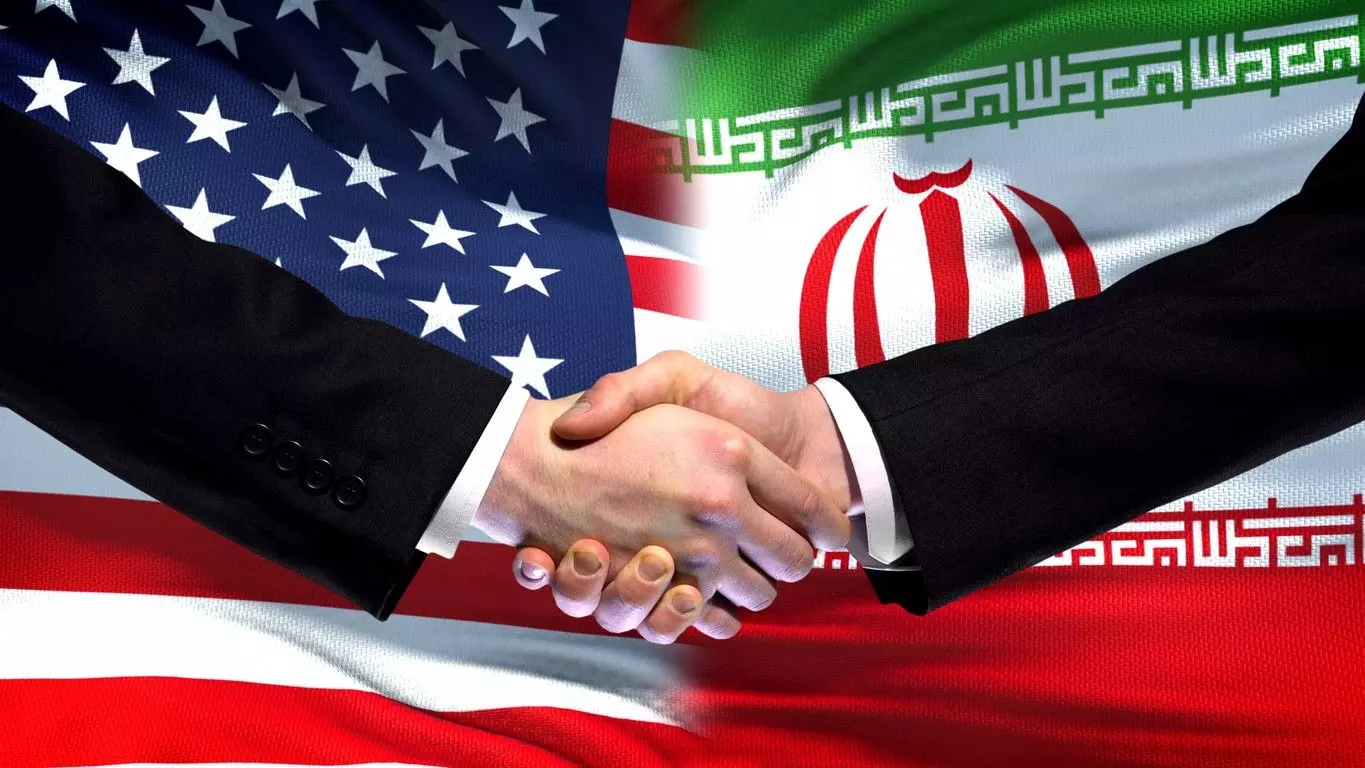
The US and Iran have agreed to enter a peace deal to end their hostilities that began on February 28, 2026. Photo: iStock
US, Iran agree over peace. What changed? Which pain points still remain?
Here are all the things you need to know about the peace deal, including who said what, and what's different with the latest peace plan

Donald Trump took to Truth Social, his social media platform, to announce a peace deal with Iran, and it appears that this time they mean it. The war, which began on February 28, with joint Israel-US strikes on the West Asian nation, is coming to an end.
Trump, who took an aggressive stance on Tehran throughout, said the Strait of Hormuz, a key oil-shipping channel which has faced disruptions over the last few months, would reopen.
Also read: Will Iran and the US sign an MoU? Hope persists despite hurdles
What changed? How did the warring nations bring out the white flag? Here's all we know.
US-Iran peace trajectory since 2018
♦ The JCPOA (2015–2018): Under the Joint Comprehensive Plan of Action, signed in July 2015 under the then US administration led by Barack Obama, between Iran and the P5+1 (US, UK, France, Russia, China, Germany), Tehran agreed to dramatically curtail its nuclear enrichment. But its ballistic missile programme was untouched.
♦ Trump 1.0 — "Maximum Pressure" (2018–2021): In May 2018, President Trump withdrew the US from the JCPOA, calling it the "worst deal ever negotiated". He re-imposed sweeping sanctions in a policy called maximum pressure, collapsing Iran's economy and sending its currency into freefall. Iran started breaching JCPOA limits.
♦ Biden's Failed Revival (2021–2025): The Joe Biden administration tried to re-enter the JCPOA through indirect talks in Vienna, but negotiations collapsed in 2022 over side demands — including Iran wanting the IRGC removed from the US terror list.
♦ Trump 2.0 Opens Diplomacy — Then Strikes (Early 2025): When Trump returned to office in January 2025, he immediately made Iran a top foreign policy priority. In April 2025, Iran and the US began a series of negotiations aimed at reaching a nuclear peace agreement. The core US demand was "zero enrichment" — Iran must stop all uranium enrichment. Iran rejected this. Soon, there was an exchange of missiles, followed by diplomatic outreach.
♦ Ceasefire Collapses — All-Out War (February 2026): The ceasefire held until February 2026. A second round of negotiations in Geneva in February 2026 also failed over the enrichment dispute. The devastating war followed.
♦ Islamabad Talks Fail (April 2026): On April 8, the US and Iran agreed to a two-week ceasefire in the war, mediated by Pakistan. A US delegation led by Vice President JD Vance met with Iranian counterparts in Islamabad on April 11–12, but the talks collapsed.
♦ The Blockade, More Strikes, and Escalation (May 2026): Perhaps in response to US pressure operations, Iran conducted what appeared to be its first attacks since the ceasefire on May 4, striking targets in the UAE, with additional attacks in subsequent days. Negotiations through May produced an emerging framework: a 60-day ceasefire extension during which the Strait of Hormuz would be reopened,
♦ Deal Reached (June 14-15, 2026): The crisis saw a dramatic turn this weekend. Markets reacted immediately — Japan's Nikkei rose 5.4% to a record high, while oil prices fell sharply.
What did US say about the deal?
Trump announced the agreement, saying it will bring peace and security in the region. In a post on his Truth Social platform, he said, “The Deal with the Islamic Republic of Iran is now complete. Congratulations to all! I hereby fully authorize the toll free opening of the Strait of Hormuz, and, simultaneously herewith, authorize the immediate removal of the United States Naval blockade. Ships of the World, start your engines. Let the oil flow!”
US Vice President JD Vance opined the newly announced ceasefire could see the beginning of a “new era” for the Middle East and credited Trump’s diplomacy for the realisation of the deal. He also said that Iran will never possess a nuclear weapon, reiterating Trump’s words.
What did Iran say?
Kazem Gharibabadi, Deputy Foreign Minister for Legal and International Affairs of Iran, said “immediate and permanent end to the war and military operations on various fronts, including Lebanon” would be unveiled starting Monday, according to remarks carried by the Tasnim news agency.
According to him, talks on a final agreement would happen in 60 days, contingent on Tehran examining that the US had met its promises. They include, besides ending hostilities, withdrawing the naval blockade and unfreezing Iranian assets.
Also read: Trump asks Netanyahu not to strike Iran; says 'very close' to peace deal
On Monday, the secretariat of Iran's Supreme National Security Council announced that the agreement with the US entails an immediate halt to hostilities across all fronts, including Lebanon. The council also thanked Pakistan and Qatar for their peace-building efforts.
When the deal will be signed?
The memorandum of understanding’s official signing ceremony will take place in Geneva in Switzerland on June 19, confirmed the Pakistani PM, the Iranian council and also Trump in another Truth Social post. Technical talks will take place throughout this week.
“Negotiations for a final agreement will be postponed until after the other party has fulfilled its obligations under the Memorandum of Understanding,” said the Iranian council.
What we know about the deal?
The Atlantic Council said that, as per public reporting, the deal is a 14-point plan that codifies fragile ceasefires in Iran and Lebanon and maps out areas for future negotiations. It will likely reduce violence temporarily, ease maritime traffic, and buy time for both sides to work out the details.
But it resolves none of the core issues — the mechanics of Strait of Hormuz access, Iranian nuclear concessions, or sanctions relief and unfreezing of Iranian assets. Those could be taken up in a second phase of talks.
And even before that phase begins, the yet-to-be-confirmed contents are already drawing criticism at home in the US, in Israel, and inside Iran — suggesting the harder negotiations ahead will face resistance from all directions.
What are the major issues that still remain?
Trump declared the deal “complete” on Sunday, ending the war and lifting the US naval blockade. The Strait of Hormuz will reopen — but the timing is fuzzy. Trump first said “immediately”, then tied it to Friday's signing. Iran says it'll happen within 30 days under “Iranian arrangements”, clashing with US insistence on unrestricted navigation.
Lebanon is another grey area. Iran and Pakistan's mediator said the ceasefire covers all fronts, including Lebanon. Trump didn't mention it — problematic, since Israel (excluded from talks) is still striking Beirut.
The nuclear question and sanctions relief remain entirely unresolved. Iran's frozen assets — estimated at over $100 billion held across global financial systems — won't be released until a final nuclear agreement is verifiably implemented. The US has offered to negotiate sanctions relief during the 60-day window, but nothing is guaranteed. We have already seen a fragile ceasefire and the collapse of a round of talks in Islamabad, Pakistan.
What Israel has said on the deal?
Israel’s criticism remains another area of concern.
Israeli political analysts and politicians across the spectrum have condemned the agreement as a “political victory” for Tehran. Commentator Ben-Dror Yemini argued in an Israeli daily column that the deal effectively grants international recognition to “a stronger and more radical Iranian regime” without addressing Iran's ballistic missile programme or its support for regional proxies.
Also read: Modi in France: What’s on agenda? G7 Summit, meeting with Trump
The country’s far-right National Security Minister Itamar Ben Gvir was blunt, saying, “Trump's agreement does not bind us” and that Israel is not subordinate to the US. He insisted Israel “must not settle for anything less than the dismantling of Hezbollah.”
Even left-wing opposition leader Yair Golan agreed the deal was “made over Israel's head”, calling it a lifeline for Tehran. He also slammed Prime Minister Benjamin Netanyahu as “weak, ill, isolated, and without influence”. Israel has also refused to vacate areas in southern Lebanon.
What did global leaders say?
A spokesperson for UN Secretary-General Antonio Guterres said, “The Secretary-General welcomes the announcement that the United States and Iran have agreed on a peace deal that provides for an immediate and permanent ceasefire, the reopening of the Strait of Hormuz, as well as a framework for further negotiations. This represents a critical step towards the peaceful settlement of the conflict.”
Prime Minister Narendra Modi said, “I welcome the understanding reached between the United States and Iran on ending the conflict in West Asia, which has caused serious economic disruption across the world and led to loss of life in many countries. India hopes that the implementation of this understanding will help restore peace and stability in the region and ensure the freedom of navigation and commerce. We look forward to deliberations on the remaining issues reaching a sustainable final agreement.”
British Prime Minister Keir Starmer said, “We are clear that toll-free freedom of navigation must now be restored in the Strait of Hormuz ... Iran must never have a nuclear weapon.”
French President Emmanuel Macron said, “I welcome the agreement reached between the United States and Iran, the result of a diplomatic effort to which several partners contributed. I call for its swift and full implementation by all belligerents. This agreement must allow for the urgent and unconditional reopening of the Strait of Hormuz, which the international mission established with the United Kingdom is ready to support.”
Also read: Netanyahu's Lebanon gambit risks derailing Trump's Iran peace deal
German Chancellor Friedrich Merz said, “I welcome the agreement between the U.S. and Iran and congratulate President Trump and the Iranian side on this diplomatic breakthrough. This can pave the way towards a reinvigorated global economy and a more secure Middle East. It is crucial to implement it with determination.”
Australian PM Anthony Albanese said, “The Australian Government welcomes the agreement by the United States and Iran. Australia has long called for de-escalation and an end to the conflict, including in Lebanon. As we have said, the longer this war goes on, the greater the impact will be. Continued restraint and constructive engagement will be essential to prevent further escalation and secure a lasting agreement.”
Japanese Prime Minister Sanae Takaichi said Japan “strongly hopes” that “free and safe navigation through the Strait of Hormuz will be ensured in practice, and that a final agreement on Iran's nuclear issue and other matters will be reached as soon as possible.”