


Midterms make Trump admin ‘lame duck’: How it impacts India-US trade, immigration
Veteran trade journalist D Ravi Kanth predicts Democrats-powered Congress to scrutinise Trump’s trade tariffs, slow India-US talks and ease harsh H-1B rules

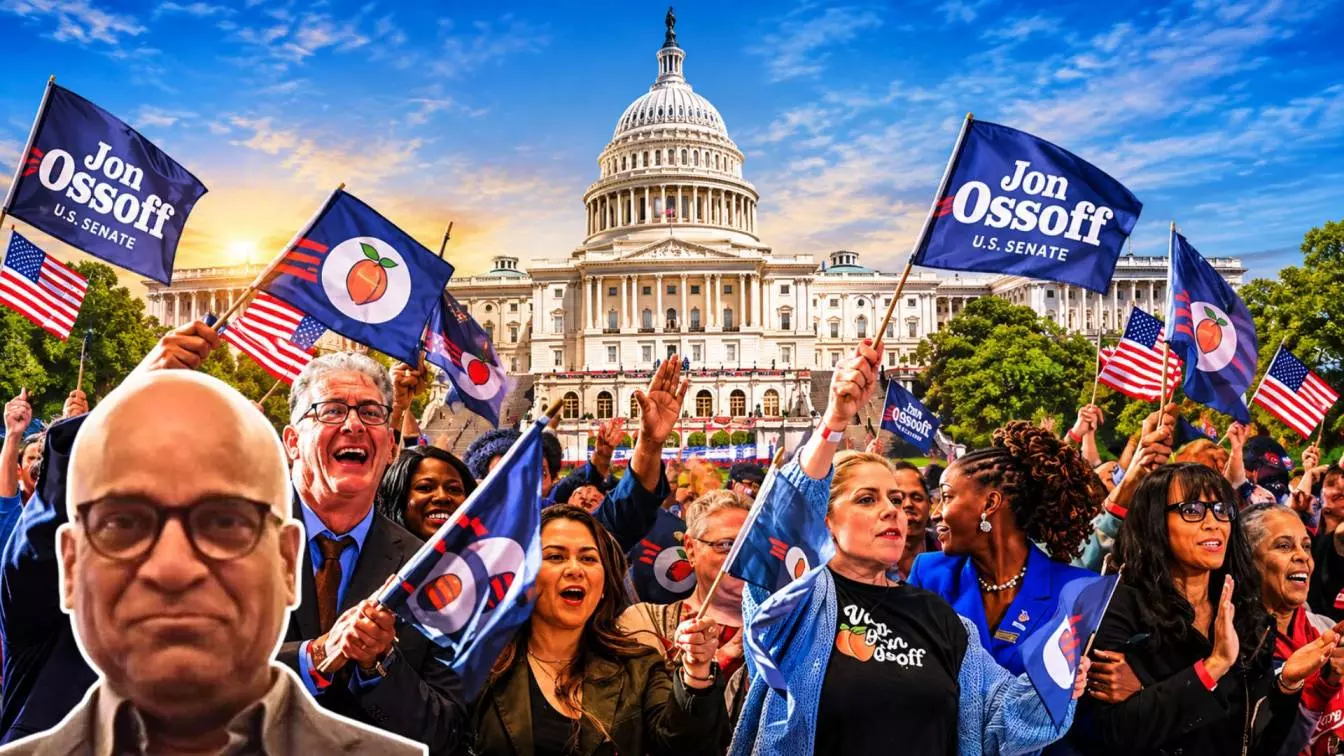
The sweeping victory of the Democrats in the US midterm elections not only promises to reshape Washington’s political landscape, but also puts US President Donald Trump’s trade and tariff policies under increased scrutiny. The bigger question for India is how the power shift in America will shape New Delhi’s ties with Washington – and what would a Democratic-controlled Congress mean for India-US trade negotiations, tariffs, H-1B visas and technology partnerships?
In an interview with The Federal, Geneva-based veteran trade journalist D Ravi Kanth says that, with the latest elections rendering the Donald Trump administration a “lame-duck” government, a Democrat-led Congress will have more say on Trump’s trade policies, tariffs and immigration rules and will aggressively question any policy he introduces. Here’s a full discussion with the trade expert on the implications of the election results for India, including their possible impact on labour mobility, H-1B visas, and Indian tech professionals.
How significant is a Democratic Senate for Washington’s handling of trade, and can it change the Trump-imposed tariffs?
The victory of Democrats is a kind of sweep that has not been seen for more than a decade, with some commentators saying it has not been witnessed for several decades. With control of both the House and the Senate, where they now have a significant majority, it is a different ballgame altogether.
Come January 2027, it will be a new ballgame. If the US wants to impose tariffs or take trade-related measures, it will first have to seek approval from Congress. That approval will establish the mandate, including what is to be negotiated and with which countries.
For all practical purposes, the Donald Trump administration has now become a lame-duck government. That will begin in January, when the new members of the Senate and Congress take charge. Since his re-election, Trump has had enormous authority and support within Congress and the Senate because the Republican Party controlled both chambers. Now, this will dramatically change the equation and bring new tussles and friction between the presidency, on one side, and the Democratic-controlled Congress, on the other.
Also read: Blue wave, red flags: How Iran War, rising prices cost Trump the midterms
If you notice, Trump introduced these liberation tariffs in March 2025, which dramatically altered global trading patterns and the relationships of various countries with the United States. These tariffs have dealt a significant blow to Trump and the Republican Party in the latest elections.
From the beginning, opposition to the so-called reciprocal and fair tariffs from various industry sectors has been strong and sustained. According to a Wall Street Journal editorial, Trump's tariffs were a major factor behind the election results. Much of these tariffs had not even come fully into play because the Supreme Court subsequently intervened and ruled them illegal.
Trump and his US Trade Representative have since been dealing with what are called the IPAR tariffs. They now have a 10 per cent tariff on India under Section 301 of the US Trade Act, on the grounds that India continues to have forced labour.
Traditionally, the US Congress controls and wields considerable power over trade policy. It has the ability to challenge executive actions. The executive initiates trade measures, but it does not have a negotiating mandate at this point. The US needs congressional approval to negotiate bilateral or multilateral trade agreements with other countries.
Come January 2027, it will be a new ballgame. If the US wants to impose tariffs or take trade-related measures, it will first have to seek approval from Congress. That approval will establish the mandate, including what is to be negotiated and with which countries.
This changes the entire dynamics of tariff imposition and other trade measures.
Another important factor is that there has been a consensus between Republican and Democratic members of Congress in targeting China. China could therefore be an important issue to watch, because Democrats have opposed several Chinese initiatives and have also placed China under various sanctions. Those sanctions have not yet come into effect because Trump has not given his approval.
Watch: What do US midterm poll results mean for India and the world? | The Federal
Overall, the situation changes dramatically because of the sweeping Democratic victory. Tariffs, inflation and the Iran war were among the issues behind the result. On all these issues, Democrats and even some Republicans have opposed Trump. His actions, which have been somewhat authoritarian, will now come under scrutiny.
Trump has been calling himself ‘Mr Veto’ and says he will block everything the Democrats pass. How much of their agenda can he really stop, and is there anything he cannot block?
It is a very bizarre picture right now. Until yesterday, Trump was talking about MAGA, or Make America Great Again. Today, he has moved from MAGA to Veto. The cap he was wearing, or the one shown on Truth Social, said ‘Veto Everything’.
There is going to be tremendous tension and friction.
Generally, he can veto congressional action once, but the second time will be very difficult. Even if he vetoes something, Congress has the ability to press ahead with what it decides, depending on the legal requirements and the kind of support it can muster.
In 2018, when Trump lost control of Congress, he said he was willing to work with the Democrats. But now, he is so insulted or humiliated by the results that he is likely to adopt a policy of confrontation on a scale that has not been seen before.
This is a grey zone right now, even though he says he is going to veto many of the actions the Democrats take.
The Democrats also have an agenda. They want to sharply question the actions and the pro-corporate giveaways that the Trump administration has indulged in over the last two years. All these issues will become battlegrounds. Any initiative by Trump will face severe questioning and, at times, outright rejection by Congress.
There will be numerous tensions too, as Trump may refuse to bow down. In 2018, when he lost control of Congress, particularly the House, he said he was willing to work with the Democrats. But now, he is so insulted or humiliated by the results that he is likely to adopt a policy of confrontation on a scale that has not been seen before.
The Democrats have a long list of issues, and they are going to challenge him almost daily, including through investigations into the wealth accumulated through what is being described as crony capitalism. This election is considered historic in terms of the money spent by the Republican Party and its various lobbies. Elon Musk himself spent around $400 million. There is considerable anger at this point, in places such as Texas and elsewhere. This is not going to be a harmonious period.
Also read: Why should India worry about US midterm polls? This and other queries answered
Given the historic victory the Democrats have secured, they now, unlike in the past, have solid Senate backing for whatever actions the House takes.
Can a Senate with a different agenda slow down or block trade agreements the Trump administration signs with India?
It can certainly slow things down. The Democrats can ask the US Trade Representative to present all the details of the agreement the administration is seeking with India.
India also has an opportunity to slow down its negotiations, given the turmoil that is likely to emerge in the broader economic and trade spheres.
So, it is a two-way effect.
Many of the initiatives taken by the Trump administration, including the controversial Section 301 actions, can also be brought before the Senate and Congress.
With the kind of majority the Democratic Party now has in both chambers, there will be severe questioning of these initiatives.
Things will definitely slow down, but it remains to be seen how this plays out. It is rather too early to say.
Several other actions will also come under scrutiny. These include ICE actions against immigrants, the difficult conditions being created for H-1B visas and measures affecting different services sectors. All these will have to go through thorough congressional scrutiny. It is not an easy ballgame at all at this point.
Democrats have historically pushed labour, environmental and data-related conditions in trade deals. Could these become a hurdle for India?
That is another question we need to wait on. Democrats could raise these issues in the India trade agreement, but ultimately, it will be the executive that navigates the negotiations.
Democrats have traditionally and historically pushed these ideas, beginning with the 1999 Seattle Ministerial Conference of the World Trade Organisation, where the US President Bill Clinton had brought these issues forward. But they did not fly. Later, the Democratic Party and its members changed course on some of these issues, although they remain on the agenda.
The point to watch is how vigorously they pursue them. My gut feeling is that they may not go into these issues aggressively right now. They might, for example, ask the Trump administration to present all the details of different trade agreements that have not been made public. What we currently have are statements from the White House, but not the details, the nitty-gritty, or the granular information about these trade agreements.
Also read: Blue wave, Red face: Social media roasts Trump after Democrats sweep midterms
Even in the India trade agreement, both sides have not presented all the details clearly. India has maintained an opaque stance. The opacity surrounding India's trade negotiations with the US is mind-boggling. The Modi government has not yet put on the table what India is going to give in terms of tariff concessions or the removal of non-tariff barriers.
The Democratic Party has to be much friendlier in terms of its immigration policies and the way it treats foreign nationals, particularly in relation to some of the coercive measures adopted by the Trump administration. In these areas, we will certainly see some change.
We keep hearing planted stories about how India is trying to secure the best deal in this sector or that sector. But what tariff rates are being agreed to? Is India going to remove all tariffs on industrial goods? What is it essentially allowing in the agriculture sector? None of this has been made transparent so far. There are many questions about what exactly the Modi government is negotiating with the Trump administration.
If Congress wants to know these details, it could certainly ask the US Trade Representative to share them, if not in an open session, at least with key committees such as the Senate Finance Committee and the House Ways and Means Committee. That would bring a certain degree of transparency to the granular details of the India-US trade agreement.
Which Indian sectors stand to gain or lose the most from this changed Senate — textiles, pharmaceuticals, IT, steel or agriculture?
Essentially, there is a lot of confusion here. Things are not very clear as to what exactly India has secured on these items in the bilateral free trade agreement. Much will depend on what the Trump administration has agreed to in terms of lowering tariffs on these items. We still do not have a clear picture.
The last time we heard about this, India was trying to negotiate an average tariff rate similar to what the US had agreed with Pakistan and Bangladesh, because we are competing intensively with them.
Also read: US midterm polls: Meet Indian-Americans who won
Whatever tariff advantage Bangladesh gets from the US trade agreement has still not been completely implemented. But if Bangladesh gets the figures being quoted, around 17 per cent or 18 per cent, that would put India at a significant disadvantage if it does not secure the same tariff treatment, particularly on textile items.
Much remains to be seen about the outcome of the India-US trade agreement and the overall tariff level India agrees to.
In terms of access to the American market, what tariffs will the US ultimately fix on Indian products? That is the key question.
Immigration and H-1B visas are the elephant in the room. Will a Democratic Senate be friendlier to Indian professionals and technology workers?
This is a very important issue because it has been one of the major factors influencing the electorate, particularly Latinos and several other communities.
The Democratic Party has to be much friendlier in terms of its immigration policies and the way it treats foreign nationals, particularly in relation to some of the coercive measures adopted by the Trump administration. In these areas, we will certainly see some change. The administration will not have the courage to push through these kinds of coercive measures as easily.
Also read: Trump admits Iran war cost Republicans midterm votes, says he would do it again
That is one aspect where we can expect some immediate softening of actions by the Trump administration and its various agencies, such as Immigration and Customs Enforcement (ICE) and the Federal Bureau of Investigations (FBI). These agencies have not been kind to immigrants, including legal immigrants. In the case of illegal immigrants, the actions have been far too severe and extreme in nature. But legal immigrants have also been given a raw deal and have been ill-treated.
That is one reason why the election results in Texas, California and several other states have been so favourable to the Democrats. Voters have reacted against the actions taken by ICE and other agencies.