








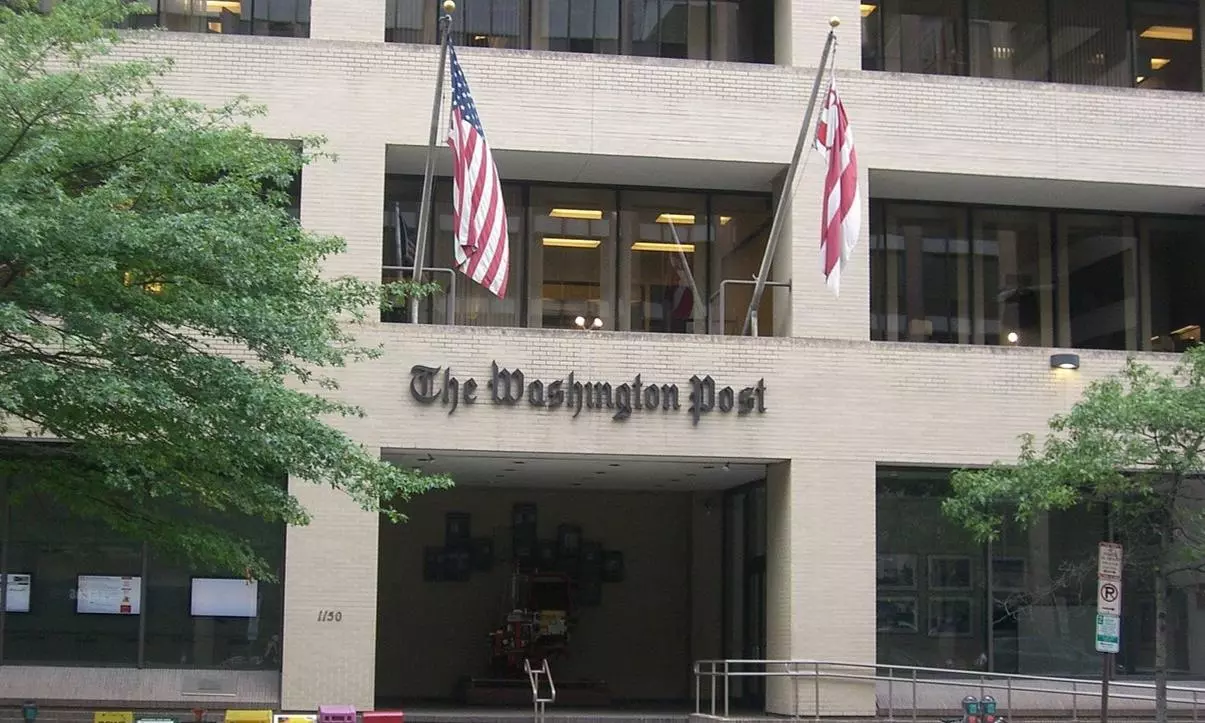
From Watergate to mass layoffs: Washington Post’s 8 biggest controversies
The newsroom pink slips are just the latest; the Post has faced editorial battles, historic investigative triumphs, shocking takeovers and more; here’s a list

The Washington Post has long been regarded as a pillar of American journalism. Yet, like many legacy news organisations navigating digital disruption and political polarisation, it has repeatedly found itself at the centre of controversy.
Sometimes the disputes have stemmed from its reporting; at other times from internal decisions that have triggered backlash from staff, readers, and the wider media industry. In 2013, it hit the headlines across the world when Jeff Bezos officially bought it for USD 250 million, marking the end of the Graham family’s ownership.
As the newspaper faces renewed criticism over large-scale layoffs, here is a look at some of the most notable controversies in its history — ending with one episode that stands apart from the rest.
Also read: Washington Post cuts one-third of staff, Shashi Tharoor’s son laid off
1. Large-scale layoffs and newsroom uncertainty
The most recent controversy surrounding The Washington Post has been triggered by sweeping layoffs amid falling digital subscriptions and mounting financial pressure. The 150-year-old newspaper has cut about a third of its workforce, affecting more than 300 newsroom positions. Journalists and unions have warned that deep cuts risk weakening coverage and institutional memory, while critics argue that strategic decisions under billionaire ownership have prioritised scale and growth targets over newsroom stability and morale.
2. Editorial direction and opinion page turmoil
Changes to the Post’s opinion section in recent years have sparked internal dissent and public criticism. Staff exits and subscriber cancellations followed concerns that the paper’s editorial voice was being reshaped by ownership priorities, raising broader questions about the separation of business interests from editorial independence.
Also read: Who is Beth Galetti, the Amazon HR leader behind the company’s latest job cuts?
3. Not endorsing candidate in 2024 US presidential election
In a break from long-standing tradition, The Washington Post chose not to endorse a candidate in the 2024 US presidential election. The move angered many readers and journalists who saw endorsements as part of the paper’s democratic role, while management defended the decision as an attempt to maintain neutrality in an increasingly polarised political environment.
4. Reporting-accuracy disputes and corrections
The Post has periodically come under fire from government agencies and lawmakers over high-profile stories that were challenged for alleged inaccuracies or lack of context. While corrections and clarifications were issued, these episodes revived debates about the tension between speed and rigour in the competitive digital news cycle.
Also read: TCS to retrain 1 lakh employees yearly to meet AI demands
5. Accusations of bias in international coverage
Coverage of international conflicts, particularly in the Middle East, has drawn criticism from multiple sides. Detractors have accused the paper of bias, selective framing, or uneven language, highlighting the growing difficulty of sustaining trust in foreign reporting amid intense political sensitivities.
6. The ‘Jimmy’s World’ fabrication scandal
One of the most damaging episodes in the paper’s history emerged in the early 1980s, when a Pulitzer Prize-winning story about an eight-year-old heroin addict was revealed to be entirely fabricated. The Washington Post returned the Pulitzer and launched internal reviews, while the scandal prompted wider soul-searching across American journalism about verification, newsroom pressure, and editorial oversight.
Also read: Satya Nadella addresses Microsoft layoffs, defends job cuts amid AI push
7. Lobbyist access and the ‘salon’ controversy
In 2009, the paper faced backlash over plans to host exclusive off-the-record dinners that would have offered lobbyists access to senior journalists and policymakers. Although the events were cancelled following public criticism, the episode raised ethical concerns about proximity to power and perceived conflicts of interest.
8. Watergate: Controversy that was fundamentally different
Watergate stands apart from the controversies above because it was not caused by misconduct or internal decision-making at The Washington Post, but by its journalism. Reporting by Bob Woodward and Carl Bernstein uncovered a break-in at the Democratic National Committee headquarters on June 17, 1972, and a subsequent cover-up that ultimately led to President Richard Nixon’s resignation two years later.
Also read: Voice of America shuts down? Over 600 employees laid off
At the time, the investigation was deeply controversial. The paper faced political pressure, legal threats, and public attacks, while its reliance on anonymous sources drew scepticism even from rival newsrooms. In retrospect, however, Watergate came to symbolise the highest ideals of investigative journalism, transforming The Washington Post into a global benchmark for holding power to account — a sharp contrast to later controversies that questioned, rather than strengthened, its institutional credibility.