‘Delhi cops should have used water cannons; pellet guns meant for rare cases’
Ex-CRPF inspector general explains why riot police must follow graded response; former UP DGP says police bungled up whole issue by first denying pellet gun use and then accepting it

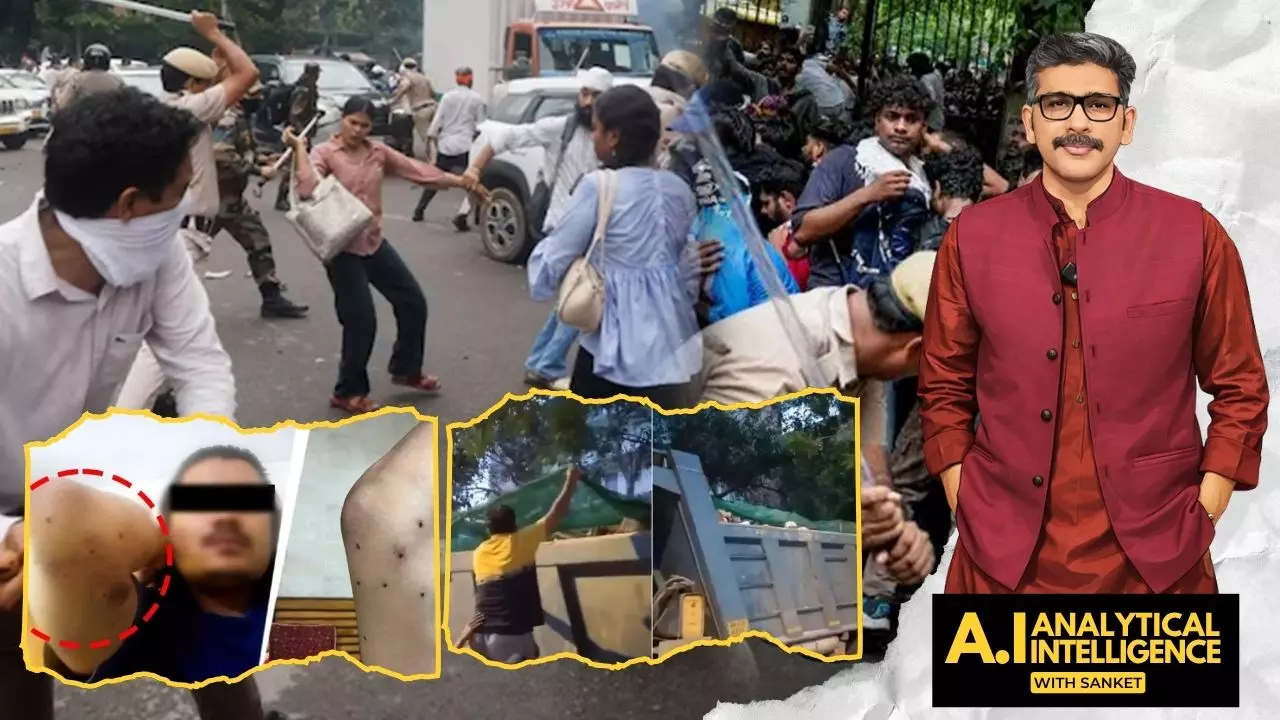
At a time when the Central Reserve Police Force (CRPF) is facing scrutiny and criticism over the use of brutalities by Rapid Action Force (RAF) personnel on protesters at the July 20 students’ agitation in Delhi, reports quoting an internal inquiry have confirmed that pellet guns were issued to personnel and used on agitators that day.
Former Uttar Pradesh Director General of Police Vikram Singh, while defending many aspects of police functioning at the July 20 protest, says that the police “bungled” the whole issue by initially denying the use of pellet guns and acknowledging it later. Retired CRPF inspector general MP Nathaniyal, on the other hand, says that alternative crowd-control technologies like water cannons should have been used first at the protest as pellet gun use is reserved only for the rarest of rare situations.
The observations came in a discussion on The Federal programme hosted by Sanket Upadhyay. The discussion, which also featured former JNUSU president N Sai Balaji, examined whether the events of July 20 pointed to operational failures, excessive policing or systemic lapses.
‘Police should have been transparent’
According to Singh, transparency should have been maintained from the outset itself. If pellet rounds had indeed been fired following proper authorisation, the police should have immediately disclosed the decision instead of allowing speculation to continue for several days, he says.
He also questioned whether intelligence gathering had adequately anticipated the scale and complexity of the protest. According to him, if procedural lapses occurred, officers responsible should face disciplinary action following an inquiry.
Also read: Use of metallic pellet guns permitted in exceptional circumstances: SC
The former DGP also said police training needed improvement. Referring to internal security drills and BPR&D manuals, he argued that riot-control exercises should be rehearsed more regularly so officers can respond proportionately during large public demonstrations.
‘Cops have constitutional rights too’
Singh, however, cautioned against accepting allegations from only one side. He said that more than a hundred police personnel were also reported injured and argued that police officers, too, possess constitutional rights and deserve equal consideration.
He also defended the existence of standard riot-control procedures, explaining that crowd management normally progresses through graded steps, including warnings, tear gas and lathi charge before stronger measures become necessary. In his assessment, violence against police personnel and damage to public property could not simply be ignored while evaluating the events.
Singh also urged caution against concluding before investigations were completed. He argued that police officers and former police officials were equally concerned about professional standards and insisted that any assessment must also consider reports that police personnel had been attacked during the violence.
Questions over aggressive police tactics
Host Upadhyay pointed to multiple unresolved issues, including the later admission regarding pellet gun use, the presence of a truck reportedly under police custody near the protest site and allegations involving plainclothes policemen participating in baton charges.
Sai Balaji rejected the suggestion that the protest had become violent enough to warrant such force. He alleged that police barricades had been fitted with electric wiring that caused shocks when students attempted to move them. According to him, students who were attempting to march peacefully towards Parliament encountered increasingly aggressive police tactics instead of dialogue.
Also read: Several RAF jawans issued pellet guns for July 20 CJP protest, finds internal inquiry: Report
Balaji argued that moving barricades should never have resulted in the use of pellet guns or tear-gas shells. Stating that many students were injured during the protest, Balaji questioned the use of baton charges and tear gas even after protesters reached Jantar Mantar, where they had been directed by the police themselves.
Who is accountable?
Balaji maintained that the protesters were largely young students exercising their democratic right to march peacefully. According to him, the Delhi Police repeatedly redirected demonstrators from one location to another without a coherent crowd-management strategy, creating confusion that ultimately escalated tensions.
He also alleged that several women protesters were subjected to inappropriate physical handling during the police action.
He questioned the chain of command behind the operation, asking whether the orders originated from the Delhi Police Commissioner, senior paramilitary officers, the Union Home Minister or higher political leadership. According to him, fixing accountability was essential because, in his view, the force used far exceeded what the situation demanded. He argued that merely transferring officers would not answer the larger question of who authorised the force used on protesters.
Plainclothes cops, stone-loaded truck
Questions have also been raised on the presence of plainclothes personnel carrying batons and of a truck allegedly loaded with stones at the protest site.
Also read: RAF identifies personnel linked to alleged pellet gun firing in Delhi protest: Report
Singh observed that intelligence personnel routinely operate in civilian clothes during major deployments. However, he expressed reservations over whether such personnel should have been equipped with lathis, suggesting that this decision also deserved scrutiny. Also questioning how the truck allegedly carrying stones reached the protest area if it had been under police custody, Singh said it was an issue which demands a satisfactory explanation.
Nathaniyal said only an investigation could determine why such a vehicle was present near the protest site if it was indeed under police control.
‘Pellet guns meant for rare cases’
Retired CRPF inspector general Nathaniyal approached the issue from an operational standpoint. Drawing on his experience in riot-control duties, including deployments in Jammu and Kashmir, he explained that security forces are trained to follow a graduated response while dispersing crowds.
According to Nathaniyal, a properly executed lathi charge is itself governed by detailed procedures before authorities move to tear gas, water cannons or other non-lethal crowd-control measures. He stressed that pellet guns should be considered only in the rarest situations and noted that recommendations made by the Bureau of Police Research and Development (BPR&D) had discouraged their routine use after earlier experiences in Kashmir.
Alternative crowd-control technologies
He also referred to alternative crowd-control technologies, including stun grenades, chilli grenades and water cannons, suggesting that these methods could reduce casualties while allowing police to maintain public order. According to Nathaniyal, water cannons appeared to have been a viable option before pellet guns were considered.
Also read: No justification for AK-47 on students, says ex-BSF officer
Nathaniyal agreed that a detailed inquiry was necessary to establish whether the force used was proportionate. While noting that officers on the ground are often best placed to judge operational requirements, he reiterated that riot-control procedures normally progress through graduated measures before stronger options are considered.
He maintained that water cannons and other modern crowd-control technologies should have been employed before pellet guns. Nathaniyal also questioned the intelligence process, observing that if individuals with criminal backgrounds had infiltrated the protest from the outset, police intelligence should ideally have detected that earlier rather than after the event.